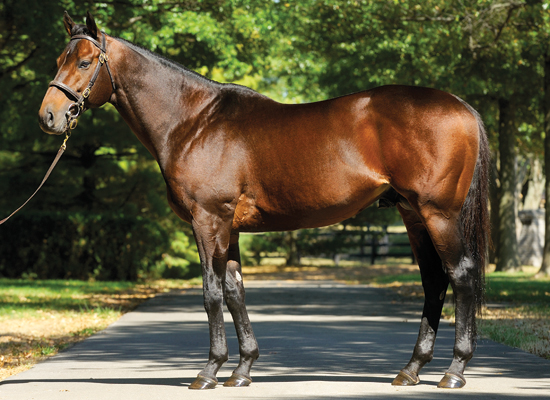
In the last week or so when one thinks all there is to know, comes the most interesting to date.
Through Rodolph distaff (Harts Maria (USA) – Rodolph daughter Chloe Anderson (Glencoe), her daughter Novice dam of Norfolk (USA) and distaff to Americus , sire of Americus Girl, ie Lady Josephine/Mumtaz Mahal f.f. 9-c, Nasrullah
Navigating strains models the veritable work of Kathleen Kirsan (speed + stamina + 5th gait Types at foundations, galloways and hobby’s.
World-champions inherit ‘Gimcrack’, a name to oddly mean, ‘showy but cheap.’
The early founders of the American Stud very well knew what they were about when they bought Medley and Clockfast, the granddam of Medley, as well as the dam of Clockfast, being got by Regulus. (The Horse Breeders Handbook, Jos. Osborne)
This will mean today’s Gimcrack sources are only through the (USA) roots, bred in.
To last post (@ End/ additional section), identified some pedigrees that carry Gimcrack.
Gimcrack gave gait and pace rather than alone expressively speed and stamina.
How he transformed pedigrees shall take first-light…
...any rate a great thing to have kept alive the memory of that gallant little horse, which I don't suppose stood over fourteen hands, for nearly a century and a half. He was a horse which I think anybody would fear to possess now with the conditions that he was to run two or three four-mile heats every week for fifty pounds; and having been so valuable and admired as to found a Club of his own. He constantly changed hands and was once even allowed to become the possession of a foreigner. There must have been heavy hearts in York when Gimcrack became the property of a Frenchman. But he was reclaimed and lived to a good old age and so immortalised himself. (the Frenchman Count Lauragnais had a heavy wager, to find a horse able to compass 22,1/2 miles within an hour, came to England and bought Gimcrack winning him the 'match').
The period 1756 to 1765 was notable, not only for the three great horses born within its cycle Herod (1758) – Gimcrack (1760) and Eclipse (1764), but for the quickening of impulses where leading to the Golden Age of industry. (Tattersalls – Two Hundred Years of Sporting History, Vincent Orchard)
Gimcrack serves as a formative foundation, and his blending crosses reveal his distinct morphological identity that over the 300 years plus became increasingly remote yet one of high importance.
For example, Black Caviar (Aus)
In brief, Black Caviar – Royal Academy – 3×4 Vain below – Green Desert – Silly Season, Menow.
Below Vain and his greater female family.
“Best wishes for a wonderful Christmas and a brilliant 2026!”
Unexpectantly for punters a roughie 2-year-old filly lead start to finish for one spectacular show. Amongst the expected performers was Wootton Bassett’s colt Vatican on his debut run being placed 5th. Early days however!
Vatican was a high-profile purchase, secured for A$1.2 million at the Inglis Easter yearling sale by Tom Magnier of Coolmore.
As of December 2025, Vatican recently made his debut in the A$400,000 Inglis Nursery at Randwick, finishing 5th. He had two trials leading up to his first start.
Fastnet Rock’s impact in the breeding shed far surpassed his racetrack achievements. Like his sire Danehill, he became a champion sire in Australia twice (2011/12 and 2014/15). His legacy includes:
Progeny: He sired nearly 1,200 individual winners globally, including 197 stakes winners and 44 G1 winners, a record for an Australian-born sire. Notable offspring include Atlantic Jewel, Avantage, Merchant Navy, and Via Sistina.
Versatility: His progeny were known for their versatility, winning G1 races at various distances.
Broodmare Sire: His influence continues through his daughters, who have produced over 150 stakes winners, making him a top-ranked broodmare sire.
The filly’s sire – Trapeze Artisthttps://widden.com/stallions/trapeze-artist/ distaff family 2-r. This distaff hints fame to none other than Phar Lap and Sunline. T.A. is the sire of G1 Griff, 2023 Caulfied Guineas winner and the curiosity where family 2-r may align to.
To get an idea, Trapeze Artist’s racing below – he goes wide, his spectacular turn of foot in beating Redzel, a back to back winner of The Everest.
Trapeze Artist – 5×3 Bletchingly (Star Kingdom/Hyperion male direct) – 4×5 Storm Bird by Northern Dancer to 3x N.D (with focus to Peace Chance/Fair Play). This has the profile expansive.
Trapeze Artist encompasses a true-type of types, both kernel and nut-shell focusing Relic – War Relic – Man O War – Fair Play – Hastings – Spendthrift. This backbone is the grand-sire Snitzel’s distaff In Reality ➡️➡️3×3 War Relic to 3x Fair Play through Discovery.
Trapeze Artist broodmare sire Doomsday > Damascus through sire Sword Dancer with Man O War distaff – evident how that cross is working.
T.A. distaff – 3rd dam Elegant Walk (AUS) 3x Hyperion, which also notes a dam 4×5 Honey Buzzard by Papyrus. She is the dam of Honeyway (GB) and why peculiarly, coincidentally (?) upon ff. 2-r, has alike influence to our great New Zealand mare Australian Hall of Fame – Sunline (Desert Sun)
Honey Buzzard/Honeyway also influences Fastnet Rock through 4th dam Hondalae by Better Honey.
To further observe @Where’s the Circus distaff > Sir Ivor from a Man O War daughter @ 3rd dam. His son Sir Tristram 6×5 Papyrus. Papyrus repeats to line Star Kingdom, 4x Star Kingdom. The upfront profile @2x Danehill, has through Ribot, to the 2nd dam by Papyrus, dam Barbara Burrini. (post – Papyrus Princequillo)
T.A. future matings should or may bring Nijinsky/The Minstrel duly to the dam Flaming Page. Flaming Page has 4th dam by Man O War. She also carries 3 strains to the great Musket. For phenotype – the two ‘bone’ sires Man O War and Musket are ultimate true-typesetters – they represent the heart of the breed itself, a breed of breeds.
Where’s the Circus 👇👇
Nijinsky
6×5
The Minstrel
7×5
One cannot mistake the consistent prepotency – this unbeatable MOW backbone (each n’ all, a specific line ‘marked’ with good reason) alike to Golden Sixty & Ka Ying Rising where KYR has just matched Golden Sixty’s record of 16 wins straight.
We wanted to know just exactly what obscure dominancy? What earlier strain/ trait bred-in may have developed a superior pedigree, which surpasses all. For reference, this focuses Man O War male line parentage inclusive and with descendants et al collective.
Let’s uncover the gem: Harts Maria (USA) > 3x Medley by Gimcrack (GB). The dam Harts Maria is significant female influence to Spendthrift, Man O War’s 3rd sire.
Gimcrack (above) – a grey, foaled 1760 and though only a little over fourteen hands high won a great number of races, and in fact made a very big mark on the turf. He began his running career when four years old and won races when he was eleven and his victories were very greatly in excess of his defeats. Gimcrack is elsewhere documented as a Galloway from a hobby mare whose daughter is Brocklesby Betty family 23.
Sire, Man O War (of his blue-bloods) has the great son War Admiral and there in, a super potent genotype X: accorded again by 5×4 Gimcrack (Medley & Gimcrack mare) to produce American Eclipse. (n.b. his daughter/ dam Lize has another strain Gimcrack through his grand-son Bell-Air. Lize’s daughter Lida is dam of Enquirer (USA).
Cornelius van Ranst’s AMERICAN ECLIPSE – Northern color bearer in his victorious match race with Sir Henry. (photo – The Thoroughbred World, Walter D. Osborne)
Enquirer (USA), sire of Mannie Gray, dam of Domino. This carries ‘geno’ to Sweep (USA), a champion two- and three-year-old from dam Pink Domino. Sweep is the b/m sire of War Admiral, daughter Brushup.
@Where’s the Circus profile, > the Nijinsky son the beautiful Royal Academy thru Crimson Satan , sire Spy Song @ 3×3 Peter Pan/Commando/Domino – 4×5 Hastings by Spendthrift.
What’s that trait about?? “the best racers of their day, although they were generally small; but their limbs were remarkably fine, and they were distinguished for their ability to carry weight ” ➡️https://www.tbheritage.com/Portraits/Gimcrack.htm
additional
(Hot! take on board pedigree Sally Ward, founder of f.f. A4 > 6×5 Medley by Gimcrack). Readers know this… as California Chrome (Lucky Pulpit – Love the Chase) 7x G1 winner. 2014 Horse of the Year and Champion Three-Year-Old Colt – 2016 Horse of the Year & Champion Older Male – Richest Kentucky Derby Winner in History
{‘Shocky’ shown here sharing a moment with Flemington strapper Deep after notching up his 14th career win in the Listed Testa Rossa Stakes. The remarkable Here to Shock, Kiwi-bred son of Shocking, is our evergreen 8yo galloper whose reliability, consistency and personality have earned him a large share of real estate in the Lindsay Park team’s heart. It was an excellent ride by Mark Zahra who rated him perfectly in the running before skipping clear on straightening and holding on for a well deserved victory despite carrying the 60kg top weight. Wonderful result for the great Slade Bloodstock ownership group! } Credit ref: FB Linday Park Racing, & Photo 👇
Testa Rossa Stakes I Here To Shock
Here To Shock narrowly sees off Persian Spirit, who was absolutely jumping out of the ground into second ⚡️ A brilliant front-running ride by Mark Zahra.
It also mentions little-known English sire Robert the Devil who competed regularly against Bend Or. Not considered successful as a sire, his type-set goes 3x Guiccioli blood which made it to our antipodean shores.
‘Robert’ again surfaces to Sir Dane (NZ) by Summertime (GB) #GA/GB where infused upon Australian family distaff, through his dam Frescoes (Aus), she by Lonhro.
the prototype reflects 3x Guiccioli (f.f. 11) – St Angela f.f. 11 – f.f. 4 Wenlock
Today speed advertising makes its common appeal for breeding progeny successful, competitive, athlete. Conspicuously the decline of stamina influence is surely one powerful background under played. What can be the Geno to reflect it?
Today the market is dominated by commercial breeders who are guided by fashion and stallions need to adapt to the prevailing commercial parameters, currently initial success and speed are everything. Consequently, the bloodlines with more stamina and class are not flashy because they are not shiny and, unfortunately, are not fashionable. Therefore, the demand is low and these paternal lineages are disappearing. CREDIT – https://purosanguedecorrida.blogspot.com/2025/
Of course, the subject of bloodlines is not as simple as favoring one paternal lineage over another. Each stallion represents a mix of influences, and as such, there are opportunities to be taken advantage of. There is an argument that the health of the PSI will not benefit from the current situation, the lack of genetic variety of decades ago already takes its toll in terms of the durability of the breed. And this is an important aspect that must be considered https://purosanguedecorrida.blogspot.com/2025/
Nature of the beast – true classic speed gears with a stamina phenotype, as old day bloodstock writings saw such racehorses as genuine ‘flyers’.
The classic ‘speed ‘ factors were set long, long ago yet modern conjecture implies it appeared or ‘evolved’. By seeking out determining facts rather than premises applied through popularized narrative and other works US researcher, Kathleen Kirsan’s newly released book sets finer parameters. Its clarity has well documented history. It also begins to unravel a modern dilemma just what goes into breeding. Kirsan’s book has an ultimate level of discernment and gathers examined accounts in all matters.
In similar study, we’ve gone re-visiting our old books as this information reveals the curiosities of earlier breeding developments, the why’s of in-breeding and it accounts today where geneticists determine –
Whalebone.
Whalebone heritage records, are thrown as the Father of ‘modern’ racing thoroughbred, stamped to Haplotype TB-dW1, a crown HT-3, born 1807. (Fig 3)
The Historical records development of racing & the Thoroughbred went into a resting period due to the political unrest between 1795 and 1815 (Ireland and Britain were deeply affected by political unrest, rebellion, and war). Breeding and racing trials (testing breeding material) went neglected from 1795 & recommencing 1815. Prior were regular races in different localities (to observe the sire’s progeny performances) having all mixed ages, yearlings to older stock (even at 20 years) went gathered for spectators: the unequalled enthusiasm and sheer fun of the day for amusement and gambling on running horses.
What really weighed out however, would peak at the second half of the nineteenth century that the weight carrying capability of two- and three-year-olds was thought to be much improved; three-year-olds had almost approximately reached that point of weight carrying capability which was formerly held by five- and six-year-olds.
There came however a newly ‘formed’ retrogression of the development where existence of the many short Handicaps for the higher numbers of two-year-old racehorses exceeded the number of three-year-olds making for an obscure turning point that came upon re-producing a lesser resisting power.
Sound familiar?
The ‘mutation’ Tb-dW1, Whalebone (sire, Waxy) has by studbook full brother Whisker (born 1812) Derby winners and full sister Wire born 1811 and at 3 and 4 years a good racer. She had 17 foals ( 15 GSB) and lived to 28 years of age.
Wire is the ancestral dam to stand out sire & racehorse, War Relic (Man O War) – sire of Relic, sire of Pieces of Eight daughter Eight Carat, dam of Octagonal, sire of Lonhro.
Whalebone, Whisker are the sire factors with female factors @ Family 4 & 11, bred on as f.f. 3-m. What is largely significant to this cross has Sister to Regulus, the Grey Robinson – sedbury mare(s) (these feature to last post)
A modern representative Nashua broodmare sire of Mr Prospector and you will see how that begins to line-up. (Here to Shock – 4×5 Mr P)
The ancestress focus is dam Amazon and her daughter, Antiope (Whalebone) f.f. 3-m akin Isinglass, male line of Swynford (he, 18x Whalebone + 4x Whisker).
Notable sire Star Kingdom, his distaff 4th dam/daughter by Swynford, sire of Biscay (Aus), Here to Shock, 3rd dam distaff.
Such type captures Consols (FR)f.f. 3-m > 3×5 Mieuxce (Fr) observed to sire Shocking’s distaff through Right Boy (IRE) daughter Right Bank.
In the framework of what is a thoroughbred – other european pedigree tables had existed of the later 1800’s – Herman Goos – Frentzel – Antwerp and Lamplighter.
Later Captain Bobinski whom Federico Tesio was a contributor to the compilation of the Bobinski Tables later taken up by Toru Shirai (1989). Breeding Racehorses by the Figure System compiled by Bruce Lowe 1895 supplements the GSB though foundations are revised by geneticists, the GSB still stands.
In consideration of Whalebone’s mutation, full brother and sister, the possible answer is that he, Whalebone, was a half-bred and stated so. The author thought along with a number of others that the necessary in-breeding as required (remember, it was a ‘time’ of setting the blood) proved difficult. As follows…
Half-bred stallions, excellent in their conformation but with insufficient inbreed support as for example Optimus – Whalebone – Sorcerer are often very difficult to mate to get the best results. As in the pedigree of Half-Breds, Thoroughbreds are generally the best ancestors, it is recommendable in Half-bred breeding to direct the inbreeding as far as possible to a Thoroughbred ancestor. B. Von Oettingen Horse Breeding in Theory and Practice. 1907*
To the above, appreciate its true source accounts running horse female families 4 – 11 – 13 and f.f. 3-m through Sister to Regulus, Grey Robinson et al, codex family.
The breeding to Ka Ying Rising – heads up a remarkable Ancestry.
Sister to Regulus, the Sedbury Royal Mare – Family 11, 13, 4
Sister to Regulus – full brother Regulus (Godolphin Arabian) studbook origin, @family 11 and its branches @ Haplotype I2a1. Details to: mares Grey Wilkes & Hautboy mare/ > Sister to Old Country Wench = GREY ROBINSON https://www.pedigreequery.com/grey+robinson
Regulus daughter Sister to South, 4th dam Grey Royal https://www.pedigreequery.com/grey+royal Family 13 (1687) ancestress to Sovereign Edition, sire of K.Y. R’s 4th dam, Taiona. The scrutiny to 13 families (by G.S.B.) – the New Zealand sire O’Reilly (f.f.13-b) would also take another geno-type-affinity.
@ K.Y.R., the St Simon blood runs focus to female conduit, dam St Angela (f.f. 11-c).
(Pompeii Court/Tell – et al The Prince Lines – Indian Ridge – St Simon direct male descendants)
By Teddy multiples > his male line Orme from dam, Angelica, the daughter of St Angela. (again, f.f. 11-c). Super Champion NZ stayer sire, Le Filou has 3×4 Teddy plus, of S.S male line, >7s x 7d the big Fil goes seen to Grosvenor’s 2nd dam Gay Poss, her daughter My Tricia by Hermes is interestingly distaff @ f.f. 11-d.
Referencing Orme it is worth noting his direct male line culminates to Sir Cosmos sire of Knight’s Daughter dam of Round Table, sire of Tell, sire of Pompeii Court & seen to Sir Tristram.
8x War Admiral (MOW) his dam Brushup, from his distaff @ f.f. 11-g carrying St Simon through his son Persimmon with his daughter Permission carrying 5 strains to branches 11. All branches (according to Studbook) Sister to Regulus foundation. (note, ⚠️reserving, family 11-g haplotypes are of two: I2a1 & N2a, this considered generallyto Family 1)
Man O War – through Sir Ivor daughter/distaff Salaminia (USA) + daughter Speed Boat (Damascus) & son, American Flag (Raise A Native). > 5X4 Sir Tristram.
5×4 Sir Tristram (Selene) family 6-e with KYR broodmare Per Incanto (USA) family 1-u are designated @ Haplotype L3a1b. 9x Selene, family 6-e, thru Pharamond male-line Buckpasser, Halo, distaff Sir Ivor – Hyperion, Moon Priestess + Schiavoni to Last Tycoon.
@ KYR distaff, family 7-d infuses Orme daughter Vane, 5th generation to New Zealand mare Hauteur, matriach breeding dam Taiona, dam of Melbourne Cup winner Guerners Lane (Australian Horse of the Year) beating Kingstown Town, though KT carried 3 kg more. Full brother Sovereign Red (a multiple G1 winner, distances 1000m to 2500m!) & full sister Trichelle, a G1 performer with 6 wins from 1200m to 2200m.
How the pedigree had evolved with attention to the ‘uncommon’ sire of the G.S.B. foundational pedigree is 🏇Robert the Devil.
History documents Robert the Devil and Bend Or met five times, where Bend Or won the first and last of five races, he could not stay the St leger distance and most certainly Robert was his superior as an autumn three-year old. Robert was undoubtedly the better stayer of the two and endured racing scandals of the day to Bend Or’s identity with alongside the objections to Bend Or’s running, the fowling upon Robert the Devil’s credibility.
Should it happen that Robert the Devil is awarded the bets, more than one bookmaker has expressed his intention of resigning the business rather than re-settle…. {The Judges’ verdict therefore remains undisturbed}. credit reference – https://www.thoroughbredracehorse.co.uk/investigation12.htm
Robert the Devil’s son Chittabob to race & train was unmanageable. It was stated ‘he would have proved himself a great horse if it was possible to train him’. Chittabob however did sire a chestnut daughter named Carlin producing a son Demosthenes who was a leading sire in New Zealand 1919/1920. His grand-daughter is Hautere (NZ).
Type-set > Robert the Devil has 3 strains to mare Guiccioli (IRE), matriarchal, a racing phenomenon @ family 11.
Born 1823, Guiccioli at 2 to 6 years was a very good racer. Ran as a 6 year old, after foaling and again in foal producing a healthy foal. Ran six times, won twice in the King’s Plates over 4 miles with heats in September at the Curragh and in Northumberland Handicap in October at the Curragh of 11 starters, amongst which were such good horses as Skylark, a 3 year old and Napoleon a 5 year old. 13 foals amongst which were Birdcatcher & Faugh-a-Ballagh. At 21 years living twins one of which was Gramachree, a foundation mare in family 11. At 24 years St John (later Carlow), a good racer 2 to 7 years old.
Guiccioli is the 6th dam distaff Sister of Regulus from Grey Robinson by Bald Galloway.
Striking geno similarities between Grey Robinson (family 11 & Grey Royal family 13, as Sedbury Royal mare(s), dated by 15 years) through sire Darcy’s White Turk, Places White Turk , are same (sire of Hautboy) + of family 4 Historical records: Mitochondrial DNA has shown that Family 13 shares the same maternal line as Families 4 and 11. As there is no identifiable link (?) between the families in historical records, the Sedbury Royal Mares which are the Foundation Mares of Families 11 and 13, and the Layton Barb Mare, Foundation Mare of Family 4, must all share a common maternal ancestor which predates the historical records. (ex-https://www.pedigreequery.com/sedbury+royal+mare)
(n.b. update – ERROR! – the haplotype family 7 > L3a1a), equivalent > f.f.17-b & 22)
Robert the Devil
New Zealand breeding
Three days before the 1980 Melbourne Cup, New Zealand bred Sovereign Red won the VRC Derby. Sovereign Red, one of Sir Tristram's first crop, was from the Sovereign Edition mare Taiona and Melbourne trainer Geoff Murphy got him for a mere $55oo at the 1979 Waikato Yearling Sale. When Sovereign Red went to stud himself, syndicated for $1.6 million. He had six Australian Group One wins to his credit. A year after she gave birth to Sovereign Red, Taiona mothered another Sir Tristram colt. This one had all sorts of problems as a youngster - an accident with a fence that endangered his life, and a wind affliction. On top of that he was an ugly foal. He was not good enough for the sale ring and eventually sent to Murphy by Hogan for $7000. Named Gurner's Lane by the syndicate that bought him, the horse was not as brilliant as Sovereign Red as a spring three-year-old. However, he won the AJC and VRC St Legers in the Autum at the same time as Grosvenor, Cossack Prince and Sir Trout all by Sir Tristram. As a four-year-old in the spring of 1982 Gurner's Lane began his march to the Caulfield-Melbourne Cups. Gurner's Lane took the Caulfield Cup, bolting in by 5 lengths on a sodden track, and earned a three kilograms penalty to take his Melbourne Cup weight to 56. Kingston Town back to his best after a long layoff, won the Cox Plate for a remarkable third successive time from Grosvenor and Axeman. Gurner's Lane was a good seventh. Sir Tristram won more newspaper space when Grosvenor captured the Victoria Derby a week later. Kingston Town, a Cup certainty according to Tommy Smith, stayed in his stable on Derby Day but Gurner's Lane ran a slashing second to Axeman in the McKinnon Stake. Gurner's Lane, ridden coolly by Queenslander Mick Dittman, got a lovely run on the rail and finished brilliantly to catch Kingston Town 15 metres from the line and score by a neck. Gurner's Lane victory made him only the seventh horse to win the coveted Cups double and the first since Galilee in 1966. (credit extract November Gold by Max Lambert)
Gurner’s Lane & Kingston Town near the finish line of the 1982 VRC Melbourne Cup.(photo credit The Australian and New Zealand thoroughbred – Ross du Bourg
https://www.pedigreequery.com/trumpets+dam -The third earliest mare in the lineage of Family 4. Dam of an unnamed mare by Brimmer through which the maternal line of the family continues. Ancestress of many top class racehorses including Sir Harry, Alice Hawthorn, Thormanby, Apology, Kincsem, Iroquois, Seabeeze, Thebais, Common, Rock Sand, Bruleur, Man O’ War, ☑️Coronach, Nearco, Assault, Ribot, Dan Cupid (sire of Sea Bird II), Generous and many others…
Grandam of Brown Farewell, the grandam of Matchem (Champion Sire 1772, 1773, 1774, sire of 354 winners of over £150,000, sire of Hollandaise (1778 St Leger); Tetotum (1780 Oaks); Conductor, sire of Trumpator (Champion Sire 1803, sire of Sorcerer, Champion Sire 1811, 1812, 1813); and progenitor of the Godolphin Arabian direct male line to (fading) the present day)
Thoroughbred bloodlines master Ken McLean (2021) advocated * –
{had Northern Dancer never covered mares with a source of French champion Teddy (best son of Ajax), I truly believe he would not have become a champion sire}
It raises an interesting observation – classic backbone shall not alter. It rather persists dominantly.
Perhaps its epigenetics we do not know; yet the interpretative cross in-type/of-type is applicable.
Physical type is therefore an important ingredient in mating. With excellent individuals, breeding good with morphologically good is probably the best way to preserve your conformational strengths. With defective individuals, one must choose a partner who can compensate for these defects.
Before Northern Dancer, grandsire Nearco/ Phalaris, thence Cyllene tail-male family 9e ‘G’ Haplotype structure, #Bend Or (Clemence)
Admittedly from studbook, seeking modern diagnostics makes for one’s greater guess however should G haplotype sequencing (of traits) be of a racehorse, a reasonable conclusion the pheno distributed to ‘Teddy’ culminates elite racing type. Remembering Teddy’s 2nd dam is from Bend Or.
Phalaris represent the Cyllene branch of #Bend Or(see reference)
To forward McLean’s supposition to colt, Bayaan>> 4x Northern Dancer as crosses with 5×4 Mr Prospector (@5×6 Teddy) – 6×5 Buckpasser (@4×4 Teddy) – distaff, 3rd dam Flood 5x5x5 Sir Gallahad (Teddy).
Sire of G.1 Tornado Alert (IRE), (juvenile stallion) Broadsiding (Aus) & mare, Fallen Angel, stallion Too Darn Hot @female distaff @ Delsy (3 strains, 5x4x6 – Teddy) – 5×6 Tourbillon #BT .
His broodmare sire Singspielwhilst 5×4 Almahmoud, significantly has >5×3 Herbager & Herbager is 3rd dam/daughter of Teddy + 3x Phalaris + Singspiel – 5×3 Hail to Reason > 2nd dam/daughter Sir Gallahad/Teddy.
Teddy – a chestnut foal with a strong build, which was given the name Teddy. Sold as a 2-year-old by a disheartened Blanc during the war, proved himself to be the best of his generation while racing in Spain. He then became an extraordinary sire, much to the delight of his owner, J-D Cohn. (https://www.france-galop.com/en/content/history-edmond-blanc-tribute-founder-saint-cloud?)
Credit references & reading
💌It is not my job, or that of any other analyst, to defend or even attack this or that theory. This would be like you yearn to turn into a monster. It is up to us, analysts, – not the monsters – to explore the results, analyze them in an unbiased way and present theories of why they may have “something in common”. And when this particular “something in common” starts to seem with a certain constancy, try to create a way to treat and explore these “coincidences”. (🏆albatrozusa.blogspot.com)
To a second start of her career, the filly Well Written (Written Tycoon) took victory by six and three-quarter lengths.
Purchased for NZ$80,000 from the 2024 National Online Yearling Sale @ Gavelhouse Plus to the recent high-profile purchase of a 50% share by global racing giant Yulong.
TBL profile: When one becomes aware of how superbly impacting the Byerley Turk/St Simon lines come, the pedigree shall ‘shape’. (n.b. when you get it, you get it…👉Updated TBL post who is Byerley Turk?cross examines sire type, sire haplotype with science & photos)
Her sire, Written Tycoon viz#BT lines are Milesian & Better Boy. Her Broodmare Sire, Sebring 2nd dam Lady Moulin (AUS) typesets 5×4 Djebel, where through Djebel tails Better Boy (My Babu).
To her distaff female family 3-b, the ancestral Byerley Turk’s Sister One True Blue (ref, updated post has also yesteryear accounts to the True Blue’s)
Her 3rd dam Torolosa (NZ) has 3 strains Nasrullah.
His sire More Than Ready (Halo male line) was a leading World Sire with the quality as outright game and determined in action. He stood 16 hands and had an excellent temperament. More Than Ready was a versatile stallion with top progeny on both turf and dirt and had Grade/Group 1 winners from sprint distances up to 2400 metres.
More than Looks TBL profile has – First Landing sire of 1971 Champion 2yo Colt, 1973 Champion Older Horse & 1998 Racing Hall of Fame the great Riva Ridge.
🏆✅👉For some time, we’ve taken an increasing interest to this wonderful, yet much less talked strain@ First Landing. Breeding talks to much of speed – much less of bone & phenotype.
Grandsire, More than Ready> 3rd dam/daughter Good Landing (First Landing) >> 2x La Troienne (Teddy) + 2x Black Servant are all high-quality speed factors.
Penny (Chenery) Tweedy led in the winning Secretariat, but then sought out Riva Ridge later explaining, “I have the greatest admiration for Secretariat, but I love Riva Ridge.
Insights @ Riva Ridge (First Landing) figures through to 2025 $5,000,000 Fasig-Tipton Kentucky Fall Mixed Sale 2025 black-type producer mare, Puca. (Big Brown). Puca’s 5th dam Castle Ridge by Riva Ridge. Puca is the dam of 2023 Kentucky Derby winner Mage, 2024 Belmont Stakes winner Dornoch, Gr 1 Winner Baeza.
First Landing dam Hildene designated Blue Hen mare, Reine-de-Course was also dam of Hill Prince (Princequillo). 4×4 Ben Brush (Bramble) – 5×4 Commando (Domino) they’re gold: old-stock American bred genes with toughness and brilliant speed with 5×5 Hampton.
Sire, More Than Looks (US) has the pedigree well stacked with the back-lines Teddy ✅🏆& Princequillo ✅🏆. His female distaff @ family 2-N signals co-affinity inheritance to Teddy (also 2-N) and likely gets the G haplotype winning (the winning Chromosome? homogozity admix. Hildene (family 9-b) > G Haplotype. (note More Than Looks sire More Than Ready has Sea-Bird, also a family 2-N)
More Than Looks sire pedigree is for mine, one that should go places…and genetically anywhere. The important genetics furthers@ his 3rd dam Vanquished (5×3 Dr Fager &Empire Maker @ 4×3 In Reality, direct male descent of champion Man O War by Fair Play) )being the optimal carriers of the thoroughbred. The type-setter Man O War (Fair Play) stakes upon grand-sire More Than Ready in 3rd dam Sea Saga (5×4 Discovery> Display> Fair Play).
Teddy (direct Orme male line) and Princequillo (direct male line – St Simon line) is the Long Term Plan to advancing invincibility – a very meaningful pattern in pedigrees of horses.
Quality determines bone & phenotype, alongside speed.
The Belmont Stakes was Riva’s kind of race. No mud, no surprises—just a long, grueling stretch where the best horse would prove himself. And when the gates flew open, Riva ran like he had something to prove. There was no contest. He powered home seven lengths ahead, an easy, effortless winner (ttps://www.facebook.com/search/top?q=riva%20ridge%20colt)
Sire, More Than Looks is USD $15,000 in the United States and AUD $22,000 (inclusive of GST) in Australia for the 2025 and 2026 breeding seasons.
As of October 2025, Skyglider’s sire Flying Artie (Aus) has overall winners-to-runners ratio of 62.1%. This statistic includes all seasons of his progeny’s racing performance.
Total numbers: From 306 individual runners, he has produced 190 individual winners.
Stake-winners: An article from June 2024 notes that his first crop produced six stakes-winners, and his second crop produced 49 winners from 72 runners, including stakes-winners.
Success in Australia and New Zealand: Among his notable progeny is Fierce Flight, a six-race winner in New Zealand, and Coin Toss, a Listed winner in Australia and Singapore.
Sire-line reputation: While Flying Artie was a high-class juvenile, he comes from a sire line known for producing horses that mature and improve with age, a trait his progeny have demonstrated.
Winners-to-runners ratio for Flying Artie has varied by season:
2024/25 Season: 46.9% winners-to-runners (147 total wins).
2023/24 Season: 46.2% winners-to-runners (146 total wins).
2022/23 Season: 48.8% winners-to-runners (138 total wins).
"If you had a stable full of horses like this bloke, it would be an easy job," – stable representative Darren Beadman speaking about @cwallerracing Skyglider after winning the @kiaorastud Brian Crowley Stakes pic.twitter.com/vYppFarb99
Pedigree discussions place a certain sire and tribe lineages – Almahmoud, Cosmah et al. These discussions are not critiquing better or for worse with ND; it is the scale of the thoroughbred’s ecological balance, his TB Sire Clade for that considered phenotype influence.
Northern Dancerwas arguably the most successful stallion of the 20th century and his descendants have been the dominant sire lines in Australia and Europe for the last quarter century. https://www.nature.com/articles/s41598-019-57389-5
Topically @ Byerley Turk what remains to Byerley Turk male & his family line determinations gets ‘tragedy of the commons’.
Breeding must Identify…
Clear as day, the Byerley Turk has unique clade branch of the hybrid-Thoroughbred – the DNA sequences are the specific allelic variant being used to identify this genetic lineage.
Figure 1 Tables (link) the specific Tb-oB1 remembering the Tb-dW (Whalebone/Darley arabian) has deepened, escalated over 176 odd years of breeding. (The global spread of Oriental Horses in the past 1,500 years through the lens of the Y chromosome where Oriental (generic term) appears its of an ancient or of Wild origin extraction per brief & reference below)
Domestic horse lineages have an ancient origin. Thus, given the 6000-year origin suggested by the archaeological record, numerous matrilines must have been incorporated into the gene pool of the domestic horse. High mtDNA sequence diversity of horses implies an unprecedented and widespread integration of matrilines and an extensive utilization and taming of the ‘wild horse’. https://www.science.org/doi/10.1126/science.291.5503.474
The complexes of what may determine the well-bred athlete goes by observing where elite pedigrees are clearly dosed with a # BT/St Simonmale line crossed to the Whalebone clade. Take that famous mare Somethingroyal (dam of Secretariat & Sir Gaylord) by Princequillo, descendant of St Simon. With running approximated @ 1 – 2% of the population #BTSt Simon male line is obviously an outstanding potent contribution to the racing thoroughbred, therefore, is the alone classic phenotype required.
Skyglider’s sire Flying Artie has 5×5 Better Boy. Octagonal My Babu/Klairon. The too-short siring life (3 years) of Dr Grace by Sir Tristram My Babu & Twig Moss (Fr) – all these are #BT factors.
Better Boy (IRE) sired something genetically extraordinary.
(As above by Better Boy), the brilliant filly, Better Draw for 10 wins – 2 at 2 from 1000m to 2,500m. (One wonders what speed aptitude has not yet ‘discovered’ to the Byerley Turks?)
Better Boy was a 4-time Champion Sire in Australia (1965-66, 1970-71, 1971-72 and 1976-77). Sire of 35 stakes winners – Champion Broodmare Sire in Australia 1978-79.
Flying Arties 3rd dam Better Fantasy – the dam of Better Loosen Up (8 G1 races including Japan Cup)
Cox Plate @ Better Loosen Up 🎇🎆🎇
In practice the breed today is almost entirely carried forward through the Darley Arabian’s male line @ 95%. It is subjectively purported commercial breeders place Darley Arabian alike descendants because it indicates the modelling of proven numbers.
Yet as sharply distinctive that a modern pedigree captures, refines necessary genotype and phenotype quality to the Byerley Turk integrity and its accounted brilliance.
Shisospicy @ Mahmoud – dam’s distaff has @ 7th dam by Mahmoud. To follow back into Mahmoud via Northern Dancer @ his 2nd dam Almahmoud. Same to Halo >> Harlan, Harlan’s Holiday, Into Mischief
Haplotype @ L1, 9-c female family hence Nasrullah & Tudor Minstrel, 2nd dam sire Blushing Groom (FR).
6×5 Caro – male line Indian Charlie (Mitole) & broodmare sire Unbridleds Song.
Caro (IRE) – considered a good sort of colt, lengthy and strong. Commented to stay a mile and a half so well that the distance was not thought the limit of his stamina. Said to act on any going. His noted qualities were gameness and consistency. His sire Fortino was a sprinter and dam Chambord a good stayer galloping the opposition into the ground – 1st Royal Standard Oaks, Newmarket Oaks, 2nd Yorkshire Oaks and 3rd Park Hill Stakes. (TBL photo)
Research notes: @ Mitole distaff (f.f.11-d) his 7th dam features the French bred @ Capella 5×4 Asterus remarkable Marcel Boussac’s breeding *Ardan (by Pharis, 3x Cyllene, 2x St Simon) a champion at 3 and 4. He stood at Spendthrift Farm, Lexington, Kentucky. Lifetime sire of 183 foals, 152 starters, 124 winners, 11 stakes winners – Lifetime AEI = 1.35.
Mitole‘s 4th dam Merces Miss > 5×5 *Ardan (Pharis) daughters with Nasrullah X.
Boussac’s Pharis was finest bred although limited as a classic sire, marginalized by WW II.
Bearing Cyllene in mind…5×6 Storm Cat from Secretariat daughter Terlingua Secretariat – as never seen before & Field of chestnut Gold…Cyllene 1895. Cyllene # G haplotype (family 9). Science figures speed chromosome on # ‘G’ (also 2N) though complex as it is, fathoming why the quality is ‘up’ for another deep enquiry.
Cyllene sired four English Derby winners – Cicero, Minoru. Lemberg and filly Tagalie. Leading sire in England 1909/1910 and also leading sire in Argentina. Here was horse that could accelerate more than once during a race and he was able pass this gift to many of his progeny. Ken McLean – Designing Speed in the Racehorse
(n.b. At this point acknowledgment to American researcher Kathleen Kirsan whose valuable work is about to be released (date to be advised). In short, her work on American sporting horse lines has evaluated extraordinary history before the thoroughbred. For my work here, it has been a ‘turning point’ and makes for more germane evaluation before the 1791 Studbook, thoroughbred records.
Establishing how pedigrees may ‘step-up’ or upgrade the layer in Type the indications find the Mitole filly Shisospicy inherits an obscure profile as early befuddled names by the earliest studbook; the pre-thoroughbred females.
By Shisospicy sire distaff (f.f. 11-d) and dam distaff (f.f. 2-N) may amass some non-coincidental co-affinity ancestrally through two sisters.
***Sr Mathew Pearson’s little Bay Mare, full Sister to his sorrel Running Mare; which sorrell Mare was Old Merlin’s Dam
***out of Sr Mathew Peirson Running maire wch was the most famouse maire in my time
you reach the stage where you finally begin to understand the real ancestors that supply strength and speed.
Ken McLean
These mares DNA thread their way through the studbook. The conclusion has their unique female consanguinity exposes a powerful biological wonder.
It accounts like this “Ormonde sired a brilliant son named Orme, a colt out of a mare named Angelica, sister to champion St Simon. Orme sired a Triple Crown winner from his initial foal crop, the high-class Flying Fox. Flying Fox was the leading sire in France and his male line flourished via Ajax’s son Teddy, the champion 3 year old in France, sire of the inluential brothers Bull Dog and Sir Gallahad III, (see Shisospicy >>Gold Liaka distaff) also Asterus, Sun Teddy and the elite mare La Troienne.
Who would have thought a couple of running mares had so much influence on the thoroughbred.
***horses supposedly bred at Hampton Court during this period were, in fact, bred at Sedbury
Let’s hope breeders recognize Boussac bloodstock is not a thing of the past but has the essential thoroughbred itself.
Rejoicing the New Zealand thoroughbred success and the passing of a great stallion, So You Think (NZ) – (2006 – 2025).
A stallion of true class to blood lines High Chapparal (Sadler Wells), broodmare sire Tights by Nijinsky and the little acknowledged Long Row (GB) by Linacre encompasses the old bone stayer. Additional lines, Foxbridge – Cyllene male line @ Matinee Idol (Aus)… So You Think daughters/broodmares are to be the admired broodmares of the future.
New Zealand breeds for versatility and over the last few weeks sporting interests took serious note.
World best sprinter – Ka Ying Rising (NZ) takes out the Everest.
A dominant New Zealand sire line places the winner, 135th running of the 6.9 km Czechoslovakia steeplechase Velka Pardubicka , as named Stumptown (IRE) by Laverock by male line, Octagonal (NZ) by Zabeel (NZ). https://www.pedigreequery.com/stumptown noting, Octagonal sire of the exceptional Lohnro (Aust)
🏇 Ka Ying Rising is currently recognized as the world’s top-ranked sprinter, and his Timeform ratings take elite status: Ka Ying Rising’s consistency and dominance across international turf make him a standout in modern racing.
📊 Timeform Ratings Overview
Peak Rating: 132 — achieved earlier in 2025 during a race in Hong Kong.
Everest 2025 Rating: 128 — earned during his victory at The TAB Everest in Sydney. Although slightly below his peak, this rating still ties for the highest ever recorded in the Everest’s history.
Hong Kong Jockey Club Rating: 137 — his official rating as of October 2025
The youngster himself, Ka Ying..
Best of luck to this 🚀 today! So proud our farm raised him as a young horse for the Auret family & can’t wait to see our brand racing in the Everest 🏔️ #KaYingRisingpic.twitter.com/SsUPoOjb8w
🏇 Stumptown (IRE) made history in 2025 by becoming the first Irish-trained horse to win the Velká Pardubická, one of the most grueling and prestigious steeplechases in Europe.
🏆 2025 Velká Pardubická Victory Highlights
Race Date: October 12, 2025
Jockey: Keith Donoghue
Trainer: Gavin Cromwell
Course: 6,900 meters with 31 obstacles, including the infamous Taxis Ditch
Challenge: Stumptown struggled early, especially at the Taxis Ditch and fences 8 and 9, but rallied late to overtake High In The Sky on the final stretch.
Marcel Boussac – practical and astute in his approach to building his ‘brand.’ He consistently sought to identify and rectify any flawed process, correcting as fundamental policy each issue and of every matter diligently.
A nonconformist in his own way, he obstinately refuses to read notes or statistical tables. All this only serves to confuse the mind, he assures. The only thing that counts is the discussions, the inspections in the field.
With nostalgia reflected to the Boussac breeds @ pedigree comes the 2025 winner of the Arc de Triomphe. From generational ‘D’ bred females by daughter line from Boussac’s home-bred sire Djebel to arise Daryz by Sea the Stars from Daryakana. https://www.pedigreequery.com/daryz
Boussac’s breeding & by his name alone widely distributed itself to a global population.
These are the Daughters of pre-potent sires and are inheritances that time (genetics) cashes on. ‘If only’ known or ‘should’ know what or where success heads; encompassing genetics that Marcel Boussac ever so accurately bred.
Boussac the meticulous, bought the best thoroughbreds, crossed the most beautiful cracks
An old horse book (1901) covering the English thoroughbred of those times has a remark that had Herod (@#BT) held for brilliance & Eclipse for consistency. Apparently even to those times Herod (oddly) had trouble in finding his successor – all changed when St Simon came to the breeding scene.
@TBL research – a recent discovery isolates an astonishing detail to the superior and quality merit of Djebel’s breeding – the plain fact to the immensely powerful mitochondrial DNA at originating mares, and in particularly one is striking that eventually leads into Loika, Djebel’s dam. f.f. 5-j.
It is she at origin, whom unfolds with the elite type-integrity written above inbred or line bred. (n.b. this Framework will be accounted to next post @ Barnavara (Calyx)(subscribe)
For Daryz – this source dam appears via…
‘D’ distaff/Djebel – Selkirk & Sharpen Up✔️
Sea the Stars – Green Desert, Ahonoora, Miswaki ✔️
…….
Boussac was a leading French owner 19 times, and the leading breeder 17 times. Breeder of Pharis, whom he considered a prisoner of war when taken by enemy forces WWII. He refused to acknowledge any German bred progeny by Pharis.
Pharis was considered Le Cheval de La Ciecle [Horse of the Century] and the paradox where (seemingly) so little of Pharis blood to contemporary bred appears. However and ever profoundly…the Boussac bred Pharis did exactly influence top-class. https://www.thoroughbredracing.com/articles/2516/was-real-horse-20th-century/
The ‘A’ distaff, female family 9-h to Galileo and Daryz’s sire Sea the Stars, is namely Allegretta. Her 4th dam is German derby winner Asterblute by Boussac’s Pharis.
In Boussac experimentation, his sire Pharis produced Phidias. At six years Phidias is exported to Argentina becoming the country’s 7x leading sire & 10x leading broodmare sire. Phidias is the half-brother of Djebel, out of Loika.
Like Boussac, the Aga Khan legacy at elite breeding are foundation families with continuous principle.
By distinguishment, the pedigree focuses Black Maria (USA) 1923 alongside ancestress Queen Mary: a critical mass for Australian bred 4-year-old subject mare, Treasurethe Moment by Alabama Express (Aus) from Street Cry mare – Draconic Treasure (USA)
Black Maria was a Champion 3yo Filly, 1927/28 Champion Older Female for 18 wins. She defeated the best milers winning the Metropolitan Handicap to a weight of 116 pounds.
Black Maria had the only one foal Black Queen. Black Queen (Pompey) had early juvenile speed and as broodmare, produced seven winners. The daughter Black Polly (by Polymelian, a sound muscular horse with powerful hindquarters for exceptional speed & a huge over-stride) produces Polynesian, a US champion sprinter/miler. Sadly, Black Polly never produced a filly that would carry on her exceptional female line. (credit references – Ken McLean Designing Speed in the Racehorse)
McLean sights Polymelian acts as 2/3 genetic brother to Phalaris, specifically Polymelus by Cyllene & alongside sprinter ‘S’ genes, aka Sundridge ex-Sierra & Sainfoin, dam Sanda. McLean notes fault characteristics ” be aware of Pompey’s brilliance came with structural weakness in the ankles”.
Polynesian sire of Native Dancer, sire of the great mare Natalma, dam of Northern Dancer we can further understand how these pedigrees came to explode with Mr Prospector. Through pedigree development theyforward. Yet your contemporary breeding profile for gaining potency is not alone with same duplication; it is genetic material @variance of same.
Treasurethe Moment – her 4th dam Market Slide (USA) > 5x5x4 Polynesian. The Polynesian daughter Banquet Bell (reine-de-course mare) dam of full brother & sister Chauteagay (champion 3year old colt) & Primonetta (1962 Champion Older Mare, 1978 Broodmare Of The Year) @ f.f. 16-h by Swaps. Polywich (f.f.10-a) through Forsythia (Broomstick, male line to Queen Mary) + her distaff to Hampton/Queen Mary + Disguise, his 3rd dam Queen Mary. Additionally @ 2nd dam by Pennant has (Hampton/QueenMary) – War Admiral through MOW (Merry Hampton/Hampton/Queen Mary & b/m sire Sweep ‘Y’ line to Queen Mary through son Bonnie Scotland.
Notably to McLean’s advisory @ ‘S’ speed (Sainfoin/Sanda & Sundridge/Sierra/Sanda to War Admiral as these influence, Polywich (Polynesian).
Queen Mary – the 1st ancestraldam has great significance
there is always something beforeto look at…
Queen Mary is a fine Type-setter gathered to jumping and of the sports bred as well subject, racehorse. Her 1st dam ancestral records by ‘Y ‘ Lister Turk / Snake / Williams Squirrel. She, Fair Helen, where her probable native breeding records the owner a grandson via his mother to Catherine Manners/Duke of Rutland peerage where numerous earliest mares introduced Racehorse thoroughbred runners.
Once the heart of high society and thundering hooves — the old racecourse holds stories of the Manners family’s sporting legacy. https://www.instagram.com/reel/DM8L9Y1o0O0/
Further to survey Lister Turk (1687, also known as the Stradling Turk) has close identical biographical to/with Byerley Turk (1680) and by research conjectured, one n’ same – reference/credit https://www.thoroughbredracehorse.co.uk/investigation8.htm(n.b. further their breeding dates can vary). The clue or answer may lay to Y Chromosone gene (2022) where classed to Tb-oB1 (a) (b) (c). https://doi.org/10.3390/genes13020229
about Lister Turk takes – 5 strains Eclipse. The Lister Turk, brought into England in the reign of James II was purchased by Mr Lister and covered in Lincolnshire. Coneyskins by the Lister Turk was a grey horse bred in 1712 by the Duke of Rutland, breeding not preserved. Another daughter of Coneyskins. Snake by the Lister Turk brought into England by the Duke of Berwick (illegitimate son of James II) from whom he was purchased by Mr Lister. The stud book gives no account of the dam of Smith’s son of Snake, although he begat Williams Squirrel in 1719. ( note, these are earlier bloodstock notes to old studbook 1901) . Lister ownership is likely Matthew Lister or Dr Matthew Lister, a physician well connected to Manners family & Duke of Rutland. https://www.tbheritage.com/Portraits/ListerTurk.html
Two sisters by the Lister Turk make for a lasting impression to this very day Brocklesby Betty (f.f.23) & (f.f.23-b), the hobby mare. (see further, Bounty Lawless). Example f.f.23-b, US sire Ghostzapper & Chief’s Crown. To Australian interests – Exceed and Excel (Danehill) f.f.23-b.
Another Lister Turk mare/Black Lister mare is more remote – said to influence family 14.
Lister Turk/Snake – sire of 2nd dam to Regulus (Godolphin Arabian)
Lister Turk/Snake – https://www.pedigreequery.com/molly+in+the+moss Full sister to top class racehorse [William’s] Squirrel, triple King’s Plate winner in 1725 and 1726; and to the stallion Easby Snake, sire of Mother Western, grandam of Eclipse.
Treasurethe Moment as ‘type-template’ appears similar Deputy Minister (Can) – 5×4 Polynesian + 5×4 Bounty Lawless.
Bounty Lawless sire Ladder thru 3rd dam Court Dress (USA) has 3 strains Queen Mary. Ladder only produced Bounty Lawless & a filly, a female line likely gone extinct.
Clearly the QM potency stamps, sighted to US sires – Curlin sire of Journalism. 3rd sire of Ghostzapper to sire of Justify. Sire of Dehere to Omaha Beach, sire of mare, Kopion. An influence to City of Light, sire of Eclipse Champion Two Year Old Male 2023 – Fierceness.
The gold Queen Mary & Black Maria declares Black Maria’s sire Black Toney from dam Belgravia is distaff to Queen Mary + QM son n’ sire Bonnie Scotland is the Y male @ 5×4 QM.
Appreciating historical phenotype: Hampton began not as a classic horse – he began life as a selling plater, his first win being scored on the old Hampton race-course – (Hurst Park) and from the victory he so obtained his name. Sold he left platers class, becoming a high-class handicap horse of sterling merit. Hampton’s two strongest points were gameness & stamina. He could fitout a long-contested finish as well as any racehorse of those times and the longer the course the better he ran. Not being a classic winner he had to make his way at the stud against the feeling which exists with regard to breeding from handicap horses, but managed in capable hands, soon made a mark. Three winners of the Derby, Merry Hampton, (f.f.22-c) Ayrshire (f.f.8-h) & Ladas (f.f. 1-l) + *^Sheen (10 wins f.f.2-d).
Of the Fillies Florizel (f.f. 7-f) 11 wins, & *Perdita (f.f.7-f) sire of Persimmon & Diamond Jubilee, a huge genetic influence to Argentina. Sire of Bay Ronald, sire of **Bayardo (2x Q.M + f.f. 10a) sire of Gainsborough, (sire of Hyperion) & Gay Crusader. Hampton/Bay Ronald sire of mare Rondeau, dam of Teddy.
Queen Mary(an engraving by E. Hacker after the painting by Harry Hall)Blink Bonny, daughter of Queen Mary (artwork as described above)*Perdita with Persimmon (a painting by J. Hanson Waler, Junior)Diamond Jubilee (dam Perdita by Hampton) photograph. Won the 1900 Derby in 2 minutes 42 secs (12F). Swept English Triple Crown of 1900.
examine by deep detail
Treasurethe Moment through sire Bounteous (@3rd dam Invincible Spirit) has 4×4 **Bayardo + Bosworth (a, Y male line Bay Ronald/Hampton. Jamaica f.f. 1-l) has 3x Hampton – Hampton – Ladas – Sheen) > 4th dam @ Street Cry.
Dam Draconic Treasure (USA) explodes to Queen Mary bloodlines. Remembering the factors @Native Dancer by Polynesian running through Northern Dancer & Mr Prospector is the express train BUT also remembering Disguise – MOW – War Admiral are as much the integrity to Show Lady (USA) thence Redoute’s Choice & Royal Applause (Best in Show) to Treasurethe Moment’s sire Alabama Express (Aus).
Individuality must have been exceedingly conspicuous in such famous stud matrons as Giantess, Beeswing, Alice Hawthorn, Martha Lynn, Pocahontas….(1901 – Book of the Horse, Charles Richardson)
In his two juvenile starts Brant remained unbeaten, capturing his debut then the Grade I Del Mar Futurity at 7 furlongs in 1:21 .92 on a fast track.
He is a ‘Type-set’ reflective of famous stud matron Martha Lynn. Brant’s distaff female family (f.f.2-h) where his 10th dam Doggin It (1946) has 5×6 Sandfly, dam Sandiway – Clemence – Eulogy – Martha Lynn.
A US$3mill purchase, son of Gun Runner, the sire’s immense bloodlines firing Fappiano 4×4 + 5×4 Lyphard.
Brant’s b/m sire Liam’s Map ➡️(4th sire Fappiano). Spearing @Martha Lynn is Dr Fager (Rough n’ Tumble) to 4th sire Sting (1921) duplicating 4×4 Sandiway et al. Sting’s sire Spur echoes to those foundational matrons introduced – importantly Spur’s 2nd dam by Ayrshire 4×4 Martha Lynn. Rough n’ Tumble 4×4 Spearmint by Carbine (NZ), @ Carbine’s Martha Lynn distaff.
To Fappiano – 2nd dam sire Correlation his b/m sire Roidore (GB 1922) is the male line Le Samaritain (Fr) grey, a Martha Lynn distaff through dam Clementina.
– Brant’s genes & gray coat – The gray gene (G) is an autosomal dominant gene.[1] In simple terms, a horse which has even one copy of the gray allele, regardless of other coat color genes present, will always become gray. This also means that all gray horses must have at least one gray parent. If a gray horse is homozygous (GG), meaning that it has a gray allele from both parents, it will always produce gray offspring no matter the color genetics of the other parent. However, if a gray horse is heterozygous (Gg), meaning it inherits one copy of the recessive gene (g), that animal may produce offspring who are not gray, depending on the genetics of the other parent and Mendelian inheritance principles. Genetic testing is now possible to determine whether a horse is homozygous or heterozygous for gray.[9] The gray gene does not affect skin or eye color, so grays typically have dark skin and eyes, as opposed to the unpigmented pink skin of white horses.[1] ref, Wikipedia
“its that we have moved the entire breed to a different conformation”
“we’ll breed to anything that produces a fast horse”
“We (the author here is Ellen Parker @ reines-de-course) have seen some very meaningful patterns in the pedigree of horses he (A.B. “Bull’ Hancock) stood at stud and the families he collected over the year. The main line he seemed to fancy was St Simon. Nasrullah was inbred to St Simon, Princequillo was St Simon line. Round Table was inbred to St Simon. The beautiful Le Fabuleux was also St Simon line.” ( ex-reference, http://www.reines-de-course.com – The Hancock Patterns)
St Simon – an original photo
Tesio never liked to give away secrets but he did mention St. Simon was a stallion who changed the conformation of the English racehorse. Tesio believed St. Simon transmitted conformational differences such as a sloping croup and different shape of hocks that gave his descendants athletic advantage. He attributed the difference in physical structure to genes transmitted from St. Simon’s broodmare sire King Tom, son of famous mare Pocahontas (by Glencoe), with noting Glencoe is of the Herod/Byerley Turk male line (credit ref https://www.stallions.com.au/2021/10/18/battle-of-the-sexes/)
Everyday breeders and researchers will look through individual pedigrees not perhaps fully comprehending the modern thoroughbred goes akin to the simple basis of either two and of other in selection, ‘types’.
Many pedigree fans simply fail to draw out the striking opposite patterning and these categorically are the competitive type to the lines of Byerley Turk/St Simon.
The comparisons how the modern breed possibly changed and whilst one cannot accurately judge, one of the unique anatomical traits of the Arabian is that it often has 𝟓 𝐥𝐮𝐦𝐛𝐚𝐫 𝐯𝐞𝐫𝐭𝐞𝐛𝐫𝐚𝐞 𝐢𝐧𝐬𝐭𝐞𝐚𝐝 𝐨𝐟 𝟔, and 𝟏𝟕 𝐩𝐚𝐢𝐫𝐬 𝐨𝐟 𝐫𝐢𝐛𝐬 𝐢𝐧𝐬𝐭𝐞𝐚𝐝 𝐨𝐟 𝟏𝟖, contributing to its compact and strong frame. Simple comparisons follow –
Feature
Arabian
Thoroughbred
Stride length
Shorter
Longer ✅They rely on covering maximum ground per stride rather than rapid turnover
Stride frequency
Higher – they maintain speed without overextending
Lower – Lower stride frequency but longer stride length.
Efficiency
Energy-conserving, endurance
Speed-maximizing, sprint ✅
Best suited for
Endurance racing, uneven terrain
Flat racing, sprint distances
Racing Thoroughbreds (longer back):
Result: longer stride length, ideal for sprinting and flat racing.
Extra vertebrae allow more flexibility and extension.
Longer stride means they cover more ground per step. (*** see below)
It is breeding to Types that has coursed history: ‘certain parallels between England and Arabia to both were for centuries developing and consolidating a certain breed of horse; in Arabia for war, in England for sport’ -The Arab Horse in Europe, E. Schiele
The Byerley Turk foaled about 1680 and is said to have been brought by Captain Byerley, as his share of the booty, taken from the Turkish army before Vienna. He came to England about 1684 and was ridden by Byerley as his charger when he was stationed in Ireland in 1690.
Genes as progenitor of the English Thoroughbred, as so named of three foundational sires, the Byerley Turk today arises as the near extinct male-line to the modern era racehorse breeding.
His TB-o1 signature is a real and scientifically recognized Y-DNA haplogroup; he carries a powerful ancestral story.
The highly acclaimed bloodstock writer Rommy Faversham states ➡️{*The Byerley Turk would go on to sire a number of highly influential daughters, most of whose names do not survive. These include the taproot mare for Bruce Lowe’s female families, #1, #3, #8, #17 & #41. } – (credit excerpt-*Faversham)
Dam of the Two True Blues (ancestral Sunday Silence)
The second Byerley turk mare of the dam of two grey colts by Honeywood’s arabian (also knows as Williams Turk and Sir Charles Turner’s Turk). These grey colts were foaled in 1710 and 1718 and it has lately been the custom to describe their dam as the dam of the two True Blues, the colts having been known as True Blue and Young True Blue respectively.
Between 1710 and 1718 (the exact dates not been give) the dam of the two True Blues foaled two grey fillies to Honeywood’s Arabian, and in turn the elder of these fillies bred two fillies to Bartlett’s Childers, and from her many of the best known race-horses are descended. There is no need to give a full list, but the names of the Flying Dutchman, of Stockwell, Rataplan, and King Tom, of Galopin, Isinglass, and of the famous fillies Memoir (St Simon) and full sister, La Fleche may be mentioned. (excerpts are 1901 The New Book of the Horse).
Reading a pedigree the Byerley Turk blood shall always captivate to his honourable presence. Yet it is the puzzling demise how an outstanding breed has silently coursed an exhaustion: a withering of the vine 1980’s onwards.
(ex-Faversham) We don’t really know the extent to which biodiversity is being forfeited when a sire line dies. It does, however, stand to reason that if one chooses to acknowledge the value in recognizing the spectrum of sire lines, it should in turn, be difficult to believe the breed suffers no meaningful loss when you eradicate one.
Let there be no doubt Byerley Turk Horse & Type, has structural backbone genetic or otherwise.
Milesian by My Babu @ Tb-o1
son of The Tetrarch (male line Thormanby/Herod) – compare the pheno to the Tb-o1 structural as also representive, Polish Arabian, (below).
To contemplate the genetic relationship among those Tb-o1, shall credit a ‘distinctive’ genetic ‘value’ incomparable. His relationship and value as thoroughbred originates from the Turkoman horse (Akhal- Teke). These origins to be spread widely by English Thoroughbred stallion descendants. In presence of clade Tb many European breeds has no documented influence of English Thoroughbred stallions which shall certainly demonstrate the influence of Turkoman stallions, as independent of the English Thoroughbred.
With references @ (** 2022 science publication **) see Fig 1 & Table 1 (cited below) – @ Clade T@ Tb-o1a,b,c, the given type thoroughbred alongside original arabian clades are the given Type to be critically observed. These cited and selected arabian identities (Table 1, pg 12) is to assess what Byerley Turk (Tb-o1b) gets for an ‘elite’ genetic capability.
These two photos below are representee to TB-o1.🏇✅ these are classified as Polish Arabian yet maybe comparable to other sire lines TB-o1, observing Byerley Turk ancestral type.
Kuhailan Afas’s mother – Kuhailat Afas, photo from the book “Under the Bedouin Tents”, 1933
Kuhailan purity is preserved while one may discover exquisite jewels within this heritage, prudence is essential in making acquisition.
Kuhailan Krusch, sired by the esteemed dam Kuhailat Afas, exhibits the quintessential attributes of an ideal horse. She possesses a robust physique, characterized by low-set legs, a long and well-coupled body, and remarkable withers. Her neck is elegantly elongated and noble in appearance, complemented by a refined head that embodies Arabian lineage, featuring large eyes and a delicate-skinned muzzle, albeit with slightly soft pasterns. Her hind legs are of impeccable quality.https://polskiearaby.com/en/breeding/35784-from-the-desert-to-poland-90-years-of-polish-kuhailans-part-1
The significant observations indicate that this distinguished horse @typology possesses qualities that go well beyond foundational storytelling.
The TB-o1 type characterizes a diverse breeding spectrum, which is likewise proportionately reflected to elite pedigrees.
Isinglass – female family 3-m, a Byerley Turk female line. The pedigree has 3×4 Pocahontas. Isinglass is sire line of Blandford.
Twig Moss by Luthier – (influence to Australian champion sire – Fastnet Rock (since dec.) @ distaff)
TB-o1 assigns the arabian Latif 1903. He was an outstanding stallion, excelled for French bred anglo-arabian winners.
⬇️⬇️⬇️
(above) The desert-bred stallion Latif (b. 1903, by Hamdani El Samra) was imported to France in 1909, where he helped shape early 20th-century Arabian breeding with his authentic desert type—dry, balanced, and correct. He sired 38 purebred Arabians and left a lasting legacy through his chestnut son Denouste, the most influential French sire of his era (credit info- FB Arabian Horse Database)
(above) Steel won the Waxy Cup at The Curragh 1817. 4x Herod over 5 generations (Eclipse patri-line)
Bay Malton has 7x Herod (with Herod’s tail-male line) over 5 generations from a Byerley Turk distaff. @Family 35, no Haplotype records.
With reflection to Byerley Turk’s Tourbillon tail-male line – France’s most successful sire line in the mid-century, successful crosses aligned My Babu – Ambiorix – Klairon to Turn To male line where his 3rd dam Sweet Lavender complemented. The investigation into the crossing of the blood of those relatives found disproportional levels of success throughout much of each (and every) strain to worldwide pathways. (Excerpt ref. A relative Matter – Rommy Faversham – Thoroughbred Times 7/12/1996 & Inbreeding to Superior Females)
Ambiorix
By breeding horizon, The Byerley Turk appears abandoned and yet it is to ask how, what or why arose this cause n’ effect circumstance? The Byerley Turk at times appears unusually judged for slow development, problematic surrounding successive sons & sires, stayer or hurdler type and or, not appealing the commercial 2-year-old precocity type for the marketplace, hence, culminates the decline.
Although ignorance persists; it is to scientific enlightenment exactly refining what the elite racehorse has to their brilliant performance.
***– : {Elite racehorses reach peak speed by predominantly increasing stride length rather than stride frequency [15]. Over the last 200 m of any race, horses that can maintain stride length and/or frequency tend to achieve a better finishing position.} {We suggest that aptitude for superior performance is variable for each individual racehorse, relying on unique physiological factors. Furthermore, race-day performance prediction can be equally influenced by intrinsic aspects such as the sex of the horse (colts have a greater chance of winning) and their particular aptitude for race distance where stayers also more likely to win} ✅https://www.mdpi.com/2076-2615/14/9/1342
The Quest for speed dominance alone has surely made representational over-refinement. The over saturating the blood, a term of the old school breeders with insight for hybrid vigour replacement. The racing thoroughbred population has clearly become disproportionate at expense of T-C geno, where higher proportion of shorter races favor horses with sprint-type C-allele. The Darley Arabian has taken a long expanse evolving dominance @Tb-dM1a (Mambrino / Hambletonian type). (Fig 3 – https://www.nature.com/articles/s41598-019-42640-w
Hambletonian – Original, from an early engraving after the painting by Francis Sartorius.
Whalebone – from the painting by J.F. Herring. The Whalebone mutation around 1800 has the haplotype TB-dW1. This genetic marker is almost fixed in modern English Thoroughbreds, with the paternal lineage of the Darley Arabian (Eclipse’s sire) now representing almost all male Thoroughbreds.
By statement (ref link) : Genetic diversity in the Thoroughbred breed has been reduced in recent decades due to the increased commercialisation of popular stallions providing large genetic contributions to the population.
Retaining high level of genetic variability is the key to robust allelic richness and a moderate heterozygosity supports genetic health of populations – the continual foundation for future breeding.
The #BT trait, its locus indicates a potential breed-specific fixation of the allele. It is the aerobic function (to sustain energy at speed) versus non-aerobic energy production, sprinter.
Genotype
Racing Style
Optimal Distance
Muscle Profile
C:C
Sprinter
≤ 1 mile
Compact, muscular
C:T
Versatile
All distances
Balanced
T:T
Stayer & Endurance
> 1 mile
Lean, stamina-focused
Studies shall highlight how specificequus caballus Arabian genetic regions are containing unique genes vital for energy production, mitochondrial function, and motor control, these contribute to the exercise performance seen in Thoroughbreds with those of Arabian ancestry. {11 chromosomal segments unique to Arabian on ECA2, ECA3, ECA8, ECA12, ECA19 and ECA23. The Arabian (only) have selected regions contain recognizable equine exercise relevant genes inclusive COX4I129,46,47, PPARGC1A47,48 and DMRT349; all three of these genes have been identified within run of homozygosity in several horse breeds50 to indicate that stretch of DNA has been driven toward fixation of centuries of breeding.
Essentially the functions reflect superior oxidative clearance and optimal aerobic power to elite horses. Elite horses handle oxidative stress.
Gene
—
Effect on Mitochondria
Performance Impact in Racehorses
COX4I1 – Central to mitochondrial electron transport and maximal oxygen consumption – fundamental for prolonged, aerobic exercise.
↑ Complex IV assembly; ↑ VO₂ maximum aerobic capacity
+5 % endurance output; faster recovery times ✅
PPARGC1A – Master regulator of mitochondrial biogenesis, oxidative phosphorylation, fatty-acid oxidation and Capillary formation in muscle.
Science comes to ‘explain’ racehorse performance centers other phenological traits and are increasingly scrutinized. Individuals with a short-distance-suited genotype were distributed mainly between 1000 & 1800 m.
Using the very last Byerley Turk Sire Line stallion’s left in the world and what it means to the horse racing scene wherever so, can produce the brilliant quality and that particular horse with a different pedigree can flourish unexpectantly. As important are the daughters breeding and, in most instances, the #BT dam lines upon breeding today will display dynamic.
As campaigns go to save the sire, Pearl Secret (by Compton Place #BT), he went exported to Arrow Stud in Japan. https://www.pedigreequery.com/pearl+secret Yuki Shimomura, owner of Okaribe Farm in Hokkaido, hopes to save the sire line of the Byerley Turk by standing Pearl Secret at Arrow Stud.
The scarcity of his bloodline was the catalyst for the acquisition, as stated “He’s been keen on Pearl Secret for some time. Not only was he a classy sprinter, he’s one of the very few horses continuing the Byerley Turk sire line. “I think he’ll prove to be quite an interesting proposition for some Japanese”.
Those who breed desiring G1 performers, the genetic factors towards ancestral are to remain absolute. The Byerley Turk bubbles through the elite pedigree and how can he not when the science asserts his specific genotype as so described.
These below are recent 2025 winners with Byerley Turk/Tourbillon influence (n.b. other Herod lines are not mentioned ie, The Tetrarch, #BT amongst)
🏇2025 G3 winner, Shallow Now (BRZ) blk/br. F, 2020 {f.f. B3} 3rd dam Femme Fatale 3x Tourbillon through Coaraze (Fr) & Locris (Fr) Brazil’s Byerley Turk lines!
🏇Quisisana (FR) b. 5 yo mare – Prix Jean Romanet (Fr-Gr1) 2000m – 4×4 Konigsstuhl (Ger)
🏇2 year old colt Realize Sirius (JPN) – {13-b} – G3 winner, Niigata Nisai Stakes
🏇Australian sire Flying Artie > 2x Better Boy, 4-time Champion Sire in Australia (1965-66, 1970-71, 1971-72 and 1976-77). The Sire of G1 2025 Nunthorpe Stakes Asfoora (Aus). (New Post – where sky is the limit – Skyglider (AUS) by Flying Artie – refers contributions of Better Boy. 2) Well Written (Written Tycoon)
🏇3 wins from 3 starts Elle Sourit (NZ) ch. F, 2021 {5-h} – 4x4x5 Sir Tristram > My Babu + Klarion (Star Way) + Djeddah (Riverman)
🏇Twig Moss(pictured above) to deceased sire Fastnet Rock, sire of the international G1 performer & Australian based mare Via Sistina (Ire) at age 7 winning 2025 ATC Queen Elizabeth Stakes G1 2000m for 24 starts & 13 wins. Additionally noting her grand-dam is by Indian Ridge #BT.
Auguste Rodin (Deep Impact) champion 3yo in GB & Ireland. G1 winner at 2, 3, 4 years 7 – 12 furlongs. Female Family 3-d, the Byerley Turk foundation.
Additional Notes
Observing Byerley as of the Turk breeds – has both lean body mass and or musculature type. It needs pointing out that the Turks are of ‘type’ several, noting there appears 3 Haplotype clades @Tb-o1 > (a, b,✅& c) separate & distinct from Godolphin Arabian (TB-03Bb) and Darley Arabian (Tb-d). (cited – Y Chromosomal Insights etc, below…).
Problematic – blue print thoroughbred types. Clearly, they are not viz. Whalebone as pictured above.
The execution is to appreciate that necessary aerobic & essential circadian, mitochondrial functions are implicated by T/C geno.
Without what diversity remains, rare variants go lost and what places perfection is the overall balance, the distribution of all 3 contributors crossed. It is discussed to Bluebood article: Herod’s vanishing sire line by Rommy Faversham
Our TBL evaluation has cross-referenced numerous science publications & the most significant are cited below.
https://www.nature.com/articles/s41598-019-42640-w Figure 2, The third founder, Byerley Turk, born in 1680, was newly characterised by an allelic variation of the tetranucleotide microsatellite fBVB (GATA14/GATA15; Supplementary Table S8) that defines the Tb-oB1 clade + (Figure 3)
Bluebloods 2021 – Issue 4, hard-copy publication: Herod’s vanishing sire line by Rommy Faversham. (excellent article with graphed siring lines through Europe, Australasia and USA (Diomed/Glencoe/Hanover – demonstrates relationships dovetailing)
We continue to examine the significance of ‘Blandford’ genetics. (last post link)
In the context of establishing modern pedigrees, Blandford’s influences are mainly examined to standardization @ Nasrullah (specifically Mahmoud by Blenheim) and Royal Charger (notably Mumtaz Begum by Blenheim), particularly in relationship to the female family line 9-c. There, goes an appreciation with ✅Northern Dancer, Halo, et al.
Exploring further Blandford/Blenheim diversity, it is lines Honour and Glory (Relaunch) when he shuttled to Australia and Argentina for 12 seasons and the remaining years at stud in Uruguay. Notably, his 3rd dam sire Correlation is from Blenheim’s male line, the pedigree also influenced to The Axe by Mahmoud/Blenheim through Relaunch.
As brood mare sire (he, Wild Event) to dam Variety Lady (BRZ) gets superb G1 filly Special Do Iguassu (BRZ) by Forestry (Storm Cat) has 11x Blenheim + as above.
@Chile racing – three year old G1 filly @ 1500m Diosa Del Rock (Timojin USA) . 4th dam Advertising 4×4 Mahmoud by Blenheim + 4x Northern Dancer
Chefs classic-sire Blandford echoes Madame Vullier (took over Aga Khan breeding) “My magic is science. My art is genealogy. A good pedigree reads to me as a Bach fugue sounds to a musician. It’s heredity that’s winning, not the horse. What difference does it make what the horse looks like, so long as he has the correct genealogy?” Quote credit – https://time.com/archive/6832622/sport-my-magic-is-science/
these Excerpts below, also astutely observe, what is the mastering...
Blandford🏆🏆🏆
At the center of our line-up, we find precisely the classics, that is, those that achieve perfect balance, which, as everyone knows, is a very rare thing and in fact, during the whole of this century, very few products belonging to an even more restricted number of strains have managed to rise to this coveted foot: Swynford, Blandford, Blenheim ⬇️⬇️⬇️
Isonomy has maintained its very refined classical expression and has, in this century, at least seven fundamental by – Swynford, Blandford, Blenheim (3x Isonomy), Donatello II, Alycidon, Big Game and Ticino ⬇️⬇️⬇️
We have here a situation in which it is easy to see that Blandford made his influence felt through his plurality of descendants of which Blenheim represents only one among many, although it is the most important
⬇️⬇️⬇️ Therefore, a breeder who reasons in practical terms must not only search for Blenheim’s blood but also Blandford’s and even Swynford’s, when he presents himself, by any other way than Blandford.
Like no other influence – Blushing Groom (Fr) >5x4x5 Blandford + 2x Blenheim + Northern Dancer/Mahmoud by Blenheim = CANDY STRIPES (ARG). B/m sire Influence@ Gun Runner (USA) 4×5 Blushing Groom + 3x Northern Dancer. By Gun Runner, the ill-fated mare Echo Zulu (G1 filly at 2years & G1 at 4 years) thru her dam Letgomyecho 4×4 Tatan (ARG) through his broodmare sire Donatello by Blenheim + 4×5 Nasrullah + 5×4 Northern Dancer.
Let’s further examine this frame-geno – what we believe is the ‘rare’ female type that doesn’t go mentioned, if ever. Her name is Guiccoli 3x Isonomy. Blandford 3x Isonomy.
The breaking of classic unity, which occurred in the Swynford Line during World War II, and from which this line never quite recovered was certainly the most dramatic happening in the Thoroughbred breed during the Century, and it is symbolic of the crisis in Western society which was precipitated by the corresponding political events. In the space of a few years, an impressive chain of events took place which it would have been impossible even for the keenest soothsayer to predict.
ref ⬆️Typology of the Racehorse – Varola ⬆️
The Phalaris line occupies the ‘vacuum’ left weakened by the Blandford line. (Varola)
Blandford – greatest classic sie of the early 20th century and the embodiment of the very notion of classicity. (Varola)
Struck by genetic-gods the 2022 Eclipse Horse of the Year and Champion Older Dirt Male 2022 Longines World’s Best Racehorse Flightline(Tapit) profile places amongst 11x’s Blenheim (**Blandford).
The first Flightline yearling through the ring sells for the equivalent of $1.3m at the JRHA Select Sale to Susumu Fujita. The colt from Northern Farm is out of G2 winner Selflessly (More Than Ready). pic.twitter.com/BszteUV6M4
Of Blandford deep veins implies a noteworthy connection to the multiple G1 winner at three years old, Journalism; his exceptional quality is indicative of inherent capability, which translates into his spectacular performance data.
The Gmax data for Journalism in the Preakness is pretty incredible. He ran his final furlong (12.30) over a second faster than his penultimate furlong (13.44) with all that trouble.
Similarly mind-boggling stride length data at that point, going from 23 feet to 25+ feet. pic.twitter.com/xCec1VWD8v
3×5 Deputy Minister > 4×3 Bounty Lawless (f.f. 23-b) ➡️2 haplotype branches @ either I2a, M1a.
Deep Profile
Journalism’s distaff/9th dam Silver Blue is by the Blandford son Blue Skies (FR). Raja Baba carries 3x Blandford – Blenheim, Umidwar, Badruddin (Blandford sons) to 16x Nasrullah (Mahmoud by Blenheim). There is also via In Excess / Uncle Mo >>4x Blandford (Blenheim, Bahram, Udapair) akin also to @ Flightline > Indian Charlie/In Excess. His sire Curlin, carries 6x Blandford through Blenheim & Windsor Lad.
Flightline’s 7th dam is by Whirlaway from Blenheim.
I don’t think ever seen a thoroughbred move like Journalism
Having spent my life riding/breeding dressage horses you dream of finding one with this cadence, rhythm, balance and hind leg power
Regardless of what happens Saturday i’m convinced this is the best horse in America pic.twitter.com/ugdaI0VDDp
Famed racing writer Steve Haskin wrote of Stage Door Johnny, “No one knows how great Stage Door Johnny could have been and how he would have fared against the mighty Dr. Fager and Damascus. More than half a century later, we are still left wondering, “What if?” (credit – Reference)
On the breeding side re-visited: the muse has answered Haskin and Hello – Stage Door Johnny as 3rd dam of Frankel.
The global reach to Frankel’s progeny has excelled across continents, with major wins in Europe, Japan, and Australia. Notable offspring include:
Adayar, Hurricane Lane, Soul Sister, Inspiral, Cracksman, Alpinista, Soul Stirring, Hungry Heart et al Group 1 winners: 37
Biomechanical at cadence & stride length is the class of the Frankel’s – an average winning distance of progeny @9.4 furlongs with a superb momentum ability to strongly finish.
Oxagon is again Eljazzi star pedigree that really just has to be turf gold. As distaff @Eljazzi (f.f. 7-a) seemingly betrothed to stallion making like Pride of Dubai (Aus) & Invincible Spirit (IRE), Pinatubo, Kodiac further hails https://thebreedingshed.wordpress.com/2020/07/12/prix-du-jockey-club-winner-mishriff-the-latest-star-from-eljazzi-family/ finds the ‘affinity’ in female family (Danzig f.f.7-a) & where upon Oxagon ped. > 3×5 Danzig integrates also Rockefella sire of Bounteous, Eljazzi’s dam and solidly builds @ Haplotype L3a1a.
Many a sire x dam – with lines follow a familiar & familial pattern.
– Frankel is (as was figured) places importantly Haplotype N2 (or family 1) to StageDoor Johnny & no surprise through (at dam) Dubawi >> Shirley Heights comes under its Table. + (f.f. 1-l) also emerges to Master Derby > Generous 3rd dam sire.
Haplotype L4 classifies the numerous australian colonial family and with distaff family @ f.f. C6, this G3 winning filly Bridal Waltz belongs to these.
Female Family C6 @Haplotype L4 bases influences collectively @ 2 family, goes mentioned as Burton Barb mare, however by established ancestral, the Chestnut Thornton remains to this day enigmatic.
The home-bred filly by Snitzel out of an Lonhro unraced mare clearly expresses the true Australian blue-blood type. However neverto be forgotten has 3x Star Kingdom son > 6×7Todman 6th dam sire and again…additionally 2nd dam sire, seen to Rubiton. The other Star Kingdom male line is thru Redoute’s Choice, sire of Snitzel.
Todman’s distaff is f.f. 1-u Haplotype L3a1b, equivalent to f.f. 6-e that rings to Selene, thence profile encompasses 18x Hyperion. There the Todman incline to Northern Dancer >Nearctic b/m sire Hyperion. Recognizing f.f.6-e factors to Sir Tristram, male line to Lonhro. L3a1b also akin to family 8 & family 20 – Lonhro & Century.
Northern Dancer’s son Voodoo Rhythm may alight more so memories 25x G1 wins @Winx (Street Cry) her 2nd dam sire. Interestingly, the Winx 5-b distaff haplotype suggests @L3a1 screened to the dam The Giggler.
Voodoo Rhythm – 1 race as a two year old, defeating Key to Content over six furlongs. At three he won over a mile at Aqueduct (subsequently disqualified) and proceeded to two more wins at Belmonst over six furlongs. As a four year old he won over 1 1/8 miles at Belmont and was placed third to Engine one & MISWAKI over 6 furlongs.
It is with working pedigrees – profiling an integration @Byerley Turk bloodlines (or Godolphin Arabian/Barb male line for that fact) summons necessary integrity. Whilst narratives to these 2 formative TB sires falls to collapsed/extinct history ‘stayer’ T type, it appears science now engages a much finer determination why these gene carriers are so very important.
These bloodlines upgrade what modern breeding critique has likely overlooked heavily – placing dynamic sprinter speed ahead. (Selective breeding for speed in the racehorse has resulted in an unusually high frequency of the C-variant (g.66493737C/T) at the myostatin gene (MSTN) ref. 2012 https://www.nature.com/articles/ncomms1644
Horses of the CC genotype are most suited to fast, short distance racing, those with the CT genotype are most suited to middle-distance races and those with the TT genotype are more suited to longer races which require stamina. In far simple terms anaerobic versus aerobic.
In Thoroughbreds, the T allele at g.65809482T>C is associated with increased vasodilation, meaning the blood vessels widen more effectively. To the Thoroughbred the T-allele is the ancestral ‘wild-type’ variant.
Implications for Breeding & Testing
The SINE insertion likely underpins historical selection toward sprinting traits in modern Thoroughbreds, particularly post-20th century.
Commercial genetic tests using the MSTN SNP may miss the mechanistic basis of performance.✅✅✅Hello?
Commercial speed is excessive, and racing programs may very will contribute to regression.
This diverse T Type – still critical to the racing thoroughbred – a genetic diversity essential for the continuing adaptability and resilience in the face of global contraction. Though intangible, breeding the asset is development and where pedigree interfaces with racehorse science.
From human athletic function: The Hercules Gene is labelled the MTSN (myostatin) gene and it controls how much Myostatin your body produces. One of the reasons you may not have seen it take over is because as with most mutations when you get an advantage you also accept some negatives. The Hercules gene allows you to exceed normal muscle growth but at a cost of excess stress to your bone structure, reduced speed and stamina.
The Equine Myostatin
Myostatin and Vasodilation:The myostatin gene (MSTN) plays a role in muscle growth and development, but it also influences blood vessel function. In Thoroughbreds, the T allele at g.65809482T>C is associated with increased vasodilation, meaning the blood vessels widen more effectively.
Performance Implications:This vasodilation is beneficial for racing performance because it allows for better oxygen and nutrient delivery to muscles during exercise, particularly at shorter distances where bursts of speed are crucial.
SNP Associations:The T allele at g.65809482T>C is not isolated. It’s associated with other SNPs within the MSTN gene, and these combinations can be used as genetic markers to predict a horse’s optimal racing distance.
Speed Gene: the MSTN gene, is often referred to as the “speed gene” and is used to predict a horse’s optimal race distance.
Genetic Diversity:While the T allele is linked to speed, it’s important to note that other genetic factors also contribute to overall racing performance.✅✅ The C allele, has only become more common due to selective breeding for speed in Thoroughbreds.
Minnie Hauk is not just efficient but also tactically adaptable — able to settle, quicken, and sustain a long run-in. Her 7.32m stride isn’t the longest, but her ability to stretch at key moments make the essential difference.
🏇 Minnie Hauk showed some impressive stride metrics during her win in the 2025 Cheshire Oaks at Chester: ⬇️⬇️
Average stride length: 7.32 meters — ranking her 3rd longest in the field.
Top speed: 37.51 mph — reached during a strong mid-race surge.
Acceleration: Took 6.2 seconds to reach 30 mph from the stalls.
Final furlongs: Closed in 12.54s, 12.79s, and 12.56s — showing consistent pace under pressure.
Finishing speed: 104% — indicating she maintained momentum through the line.
Winning time: 2:29.15 on good ground — competitive historically for this race.
🏇 Sire Frankel’s stride data was the stuff of Legends.
Stride length: Measured at a peak of 8.32 meters (27.3 feet) during the 2011 Sussex Stakes at Goodwood. That’s significantly longer than the average elite racehorse, which typically clocks in around 7.3 meters.
Cadence (stride frequency):2.4 strides per second, slightly above the average for milers (~2.3 sps). This balance of long stride and high cadence is rare and contributes to his sustained cruising speed.
Efficiency: Each stride covers more ground with fewer steps, meaning Frankel could maintain high speeds with less energy expenditure—an indicator of elite aerobic capacity.
A combination of long stride + high cadence is what made Frankel so devastating over a mile. Most horses excel at one or the other—he mastered both.
Watch #GoffsOrby grad MINNIE HAUK’S Gr.1 Oaks win again. 😮💨
The Frankel filly was sold by @camaspark to MV Magnier for €1,850,000.
Minnie Hauk proves too strong in the Group One Juddmonte Irish Oaks, pushed home by Ryan Moore for Aidan O'Brien, as her form goes from strength to strength 🏆@JuddmonteFarmspic.twitter.com/jBmhdSnFhV
— The Curragh Racecourse (@curraghrace) July 19, 2025
In the Irish Oaks, Minnie Hauk settled in third, quickened late, and won by 1¼ lengths, showing a deceptively relaxed style that masked her underlying power. The Efficiency to maintain speed with minimal energy loss—echoing Frankel’s hallmark trait of combining long stride with high cadence.
Heavy influence settles to Prince John (dam’s distaffCenshorship + Stage Door Johnny ) by 8x Princequillo (Rose bower, Round table, Somethingroyal, Milan Mill + Prince John)
** @Frankel’s distaff family 1-k, + Stage Door Johnnyf.f. 1-l + Minnie Hauk’s dam thru Dancing Brave b/m sire Drone (USA) f.f. 1-l = Ellen Horn, her grand-daughter Paraffin. (the ancestry to Chelandry & Lada) (story @ Ellen Horn here)
Haplotype Magic…🌟
@Haplotypes @ 1 branch all, possibly or likely indicate variantsN2a also attributed to Family 6 foundations Cream Cheeks,(notes should bere-attributed by PQ info ⚠ ⚠️
(note: reflects a USA equivalent @ (N2a) mitochondria DNA – Justify (USA) noting Hawaii (SAF) same female family 1-l. (n.b. not to female distaff, but an affinity in mitochondria DNA
Haplotype N ancestry >> Bromus dam of Phalaris & Shirley Heights (GB)
f.f. 1-k Roi Herode, sire of The Tetrarch & the sire of Cinq-a-Sept (Somethingroyal) & Bold Reasoning (USA). Twig Moss (Fr).
********
🐴– will there be a Frankel – Justify cross in the future??🤔
*********
🌟the name of Minnie Hauk is the pet name of Opera singer Amalia MignonHauck (November 16, 1851 – February 6, 1929),
Minnie Hauk was also in 1877, a mare’s race name.
Minnie Hauk is the distaff family of sire, half brother Kingman. Her dam Multilingual has a sire standing in Turkey, Tilsit (USA) a son of First Defence.
Some sales make headlines. Others redefine the game.
At JRHA Select Sale in Japan, a colt by Equinox out of dirt-track champion Midnight Bisou fetched an astounding ¥580 million (approx. $3.91 million)—one of the highest-priced foals ever sold in the country. For those in the business it stirs things. A timely reminder that when genetics figure for greatness, the foal isn’t just a racing prospect, it’s the breeding. It is the statement of intent to the future.
The 4-month-old colt by Equinox out of the extraordinary Midnight Bisou has just been sold for $3.9 million. Unbelievable! @SELECTSALE_jpnpic.twitter.com/vM9ge4JjVM
$5 mill dam, Midnight Bisou, a five time G1 winner on dirt with the proven class to the breeding shed and her legacy is clearly translated beyond the racetrack.
What does it mean? The pedigree is turning wheels and diversity is the new street, come the direction; breeding winners upgraded with hybrid character. Where Inbreeding has increased the necessary correction is addressed. https://pmc.ncbi.nlm.nih.gov/articles/PMC11634535/
Japan thinks ahead; purchasing select mares & unlocking potential. Not just sound mares, these carry back ‘unfamiliar’ lines and are the variants at play.
diversity is genuinely the name of the game from now on in the Japanese bloodstock game.
Diversity stimulates. International scouting for performance selection serves outcross. Strains @Midnight Bisou’s f.f. A5 Tour d’Or (USA) are under-appreciated, @ history Types forgotten/lost duly smashed through the 1913 Jersey Act. https://nslmblog.wordpress.com/2019/05/07/the-jersey-act/
one must occasionally breed to fresh strains, but always highly selected ones
The Japanese thoroughbred is more powerful than it’s ever been. It is a testament to not only their collection of bloodlines and evolving training methods but ability to appreciate the middle- distance horse and stayer, something that our breeding industry is losing sight of…
Not one French horse ever managed to beat the French-trained Riverman, who lost only three times in two seasons in the top company. Steel Pulse beat him narrowly in the Criterium de Maisons-Laffitte as a two year old. Brigadier Gerard and Parnell beat him more easily in the King George VI and Queen Elizabeth Stakes, and Brigadier Gerard again, this time by one and a half lengths in the Champion Stakes.
Few milers in France were capable of giving Riverman a hard race; two or three that probably were, notably Lyphard, came from the same stable and never took him on. Had his stable-companions been allowed to take him on no-one would be confident that his record of four wins from four starts in France as a three-year-old would have been different.
It was obvious Riverman would stay further than a mile; however, for the time being he was kept to distances of around a mile. His stable companion Talleyrand deputised in the Prix du Jockey-Club, Lyphard went to the Epsom Derby and Riverman took on an easier task, though not an easy one in the Prix Jean Prat at Chantilly on the same field, producing a tremendous burst of speed after being weighted with once again and winning as he liked from My Snot, subsequently second in Citheron and in front of Daring Display in the Prix Eugene Adam.
A stiffer test, a very stiff test faced Riverman in the Prix d’Ispahan at Longchamp later in June and he came through with flying colours. He won impressively by two lengths from Sharapour taking advantage in a few strides of a cap that appeared between Sharapour and Ballyhot, the leaders, when the former hung to the left at the distance.
For a horse untried in public over the distance Riverman could scarcely have had a stiffer trial than in the King George VI and Queen Elizabeth Stakes at Ascot, particularly if Brigadier Gerard proved anywhere near as good at the trip as at shorter distances. Apart from the quality of the opposition, one important factor weighted against Riverman – he would almost certainly be held up. In the event, he proved unable to give start to Brigadier Gerard and Parnell and win; he languished in a last of nine until approaching the short straight, appearing as he had sometimes done in France have little chance of getting in the race. He came wide on the turn and made up a remarkable amount of ground considering the ability of those in front of him and finished third, six and a half lengths behind Brigadier Gerard and five lengths behind Parnell and turning the tables on his old rival Steel Pulse.
Freddie Head gave him less to do in the Champion Stakes, and with two and a half furlongs to run had every chance of beating Brigadier Gerard. At this point Brigadier Gerard produced a startling burst of speed that took him clear. Not even a horse of Riverman’s pace, driven extremely hard, could stay with him immediately, but as they struck the rising ground Riverman still being rousted along began steadily to reduce Brigadier Gerald’s lead and kept on so well that margin of his defeat became only half that which appeared on the cards a furlong out. Riverman would probably have worked his way alongside Brigadier Gerald with another furlong to cover.
Here was a very fine racehorse – strong, very attractive and deep bodied. A good classic winner, whose performance in running Brigadier Gerard to a length and a half on his final appearance speaks volumes for him and provides him a better reference than is possessed by most of his contemporaries who, like, Riverman had been retired to stud.
American bred he purchased at public auction as was his stable companions Lyphard and Pistol Packer and cost 41,000 dollars as a foal at the Keeneland Sales.
His great grandam Azalea, was a lightly raced half-sister to two stakes winners, notably the stayer Pavot, winner of the Belmont Stakes in 1945. His grandam Nile Lily was a stakes winner; she won nine races. His dam River Lady by a son (Prince John) of Princequillo won a race at two years and another at three.
Riverman was River Lady’s first registered foal.
Riverman had not Mill Reef’s exceptionally fluent action – he was inclined to scratch his way along in his slower paces, particularly when the ground was on top, but he showed form on a firm surface at least the equal of his form on soft.
He was a very genuine and most consistent racehorse.
reference and credit: A. Head, France. Racehorses of 1972.
Additional
@ distaff, Man O’ War daughter Coquelicot (female family 10-a) > Haplotype L4.
His contribution to pedigree profiles is undoubtedly a most dominant influence. Pinatubo colt on the rise https://www.pedigreequery.com/komorebi5 8f winner in France an example.
Riverman daughter Waterway (Fr) dam of Helen Street dam of Street Cry & 2nd day of Shamardl are both female families 1-l. It is interesting these (1) families are variant @ Haplotype N of which are sub-clades.
2x Riverman daughters developed 2013 Cartier Horse of the Year.2013 Cartier Champion 3yo Filly Treve. https://www.pedigreequery.com/treve3, the Champions line Triptych by Riverman.
Perhaps it is only a good time when Riverman will start to appear to frequent further to linebred ‘clusters.’ This account provides beneficial insight – specifically re Mill Reef – https://www.thoroughbreddailynews.com/pdf/cau/cau041116.pdf
A sires’ breeding success is the pivotal evaluation for his genotype domination. Come 2026 Golden Slipper the showcase for Australia Group 1 racing for two year old progeny running over 1200 metre turf.
The Golden Slipper was created in 1957 by the Sydney Turf Club (STC) – ready to add a new and prestigious race to their autumn carnival. One of the foundation directors, George Ryder, proposed that the Club hold a race restricted to two-year-olds with set weights.
Track: Right-handed
Weight: Set Weights; colts and geldings – 56+1⁄2 kg; fillies 54+1⁄2 kg
Sprint-Oriented Sires: 7 (I Am Invincible, Snitzel, Zoustar, Home Affairs, Stay Inside, Written Tycoon, Farnan)
Miler/Stamina-Influenced Sires: 3 (Too Darn Hot, Wootton Bassett, Ole Kirk)
➡️ ~75% of the top 10 sires are sprint-focused, reflecting the 1200m nature of the Golden Slipper and the commercial premium on early speed.
Phenological traits encompasses the impressive Farnan, a Champion two-year-old claiming the 2020 Golden Slipper, where he expresses forward acceleration: stride length and frequency to quicken—hallmark of elite juveniles.
Farnan colt Farnicle from New Zealand’s G1 performing mare Jennifer Eccles (Rip Van Winkle) displays his sires determination.
The Miler Stamina type sire will balance through sprinter mares and close 2nd place getter 2 year old Regulated Affair (Wootton Bassett) takes class in female breeding 2x Easy Date.
The Dark Horse new sire Stay Inside, 2021 Golden slipper winner has the European sprinter profile in broodmare sire Anabaa. The Home Affairs distaff with 2x Loika dam of Djebel & 1/2 brother Hierocles are Hall-mark carriers of 2 yr old champions. (n.b. 1/2 brother Phidias, Argentina 7x leading sire @ genetic gold). The female family given to Loika (f.f. 5-j) is additional to the 5-j profile through Valognes, a legendary breeding influence to Australia’s very own Leica Lover & Rain Lover. (family line of note >> 2024 G1 winner @The Goodwood – Benedetta by (Hellbent)
🧬 Additional Sires with Notable Representation
Stallion
Entries
Wild Ruler
38
Pinatubo
35
Spirit Of Boom
34
Capitalist
33
Zousain
32
Exceed And Excel
31
Maurice
31
Extreme Choice
30
Hellbent
30
St Mark’s Basilica
28
Dundeel
27
Street Boss
27
Bivouac
26
Lucky Vega
26
Toronado
26
Frankel
25
Russian Revolution
25
Tassort
25
European & French bred into the sprint-heavy Slipper field make for their testing presence. Pinatubo benefiting the Australian bred mare through breeding lines Eljazzi (IRE) & Invincible Spirit + Danzig + Street Cry. As a performer he was in a class of his own and as sire, will he produce the Australian version of himself?
Winning on debut, Maurice has sired the ‘white’ 2yo filly Marga b/m sire King Kamehameha (1/2 sister Sodashi). Her action is interesting! 4×3 Sunday Silence.
2yo 1800m Newcomers (debut race) at Hakodate won by unicorn filly MARGA (Maurice x Buchiko) under legend Yutaka Take in the Deep Impact colors.
Australia is a chestnut stallion foaled in 2011 by the legendary Galileo out of the exceptional racemare Ouija Board (by Cape Cross). He was bred in the UK by Stanley House Stud and trained by Aidan O’Brien.
🏇 Racing Highlights:
Winner of the 2014 Epsom Derby, Irish Derby, and International Stakes
Known for his fluid action, balance, and turn of foot ✅✅✅
Rated one of the best middle-distance colts of his generation
🧬 Pedigree
Sire: Galileo – Champion sire, son of Sadler’s Wells, with over 90 Group 1 winners
Dam: Ouija Board – Dual Breeders’ Cup Filly & Mare Turf winner and European Horse of the Year
🐎 Stud Career:
Stands at Coolmore Stud in Ireland
Sire of Group 1 winners like Galileo Chrome, Order of Australia, and Broome
Known for passing on stamina, class, and a strong finishing kick ✅✅✅
Australia represents the fusion of two elite bloodlines, making him a classic influence in modern pedigree.
🐴 Australia’s 3yo filly Cercene and his 3yo colt Lambourn as featured.
— IFHA's Longines World's Best Racehorse Rankings (@worldsbesthorse) June 20, 2025
Lambourn, who took the Derby (G1) at Epsom, headlines the Irish Derby (G1) on Sunday. He will try to become the 20th horse to complete the English-Irish Derby double. pic.twitter.com/ZjveLJOMPB
— IFHA's Longines World's Best Racehorse Rankings (@worldsbesthorse) June 25, 2025
Lambourn’s stride-data 🏆
The colt Lambourn (IRE) shows impressive stride characteristics in his recent races, particularly during his Group 1 Betfred Derby win at Epsom on 7 June 2025. According to sectional data:
Stride Length: Peaked at 24.71 feet
Stride Frequency: Averaged 2.19 strides per second
These figures place him in the elite range for middle-distance Thoroughbreds. For comparison, Secretariat’s legendary stride was around 25 feet, and most top-level colts average between 23.5–24.5 feet at peak.
Lambourn’s stride profile suggests:
Efficient ground coverage, ideal for 12-furlong races ✅✅
A balanced gait, with no signs of overreaching or inefficiency✅✅
Strong closing acceleration, as seen in his final 2 furlongs at Epsom ✅✅
@ The Curragh
he (Lambourn) was only doing a minimum of what he could get away with – Moore
Lambourn’s cruising speed is high, and he can sustain it over a long stretch.
His acceleration isn’t explosive, but he grinds out a finish with determination—classic traits of his sire line (Australia and Galileo).
The final furlong was slower than the mid-race section, but tactically smart: Moore kept him focused and just ahead of the challenge.
Future pedigree patterns of the racehorse will depend upon the strains used by private breeders much more than commercial breeders.
The above quote comes from Ken Mclean’s book, Quest for a Classic winner.
Ken McLean observed ‘trends’ as did so Franco Varola to then commercial extravagance, leading to over-breeding and a lasting legacy upon few sire pools.
Commercialism aside, the bones to classic-bred from the moderate and irrespective of commercial value can be considerably ‘upgraded’. Plus, to an unfashionable sire, where these sample pedigrees show deep and clever genetic patterns like building blocks. They never fail and its acquirement to genetic consistency is fundamental of superior breeding.
That discernment goes exhibited by Japan’s Shadai Farm, their cultivation of selection of ‘varied parentage’ is the forefront of excellence.
Jantar Mantar dam India Mantuana > 5×5 Secretariat yet observe to her 5th dam Generals Sister by Count Fleet, the daughter of Pavot, a Teddy male-line descendant. Producer of Commissary (To Market) Senorita S., Del Mar Oaks, Vanity H. She, the ancestress of 7 G1 winners inclusive G2 and G3 winners to the United States, Europe, inclusive champions Al Bahathri 1985 champion Irish 3yo filly and highweights Lahib, Haafhd, and Hasbah. A distaff @ Family 9-e @ G Haplotype, the distaff also carries family 9-f @ Sun Again and by sire-affinity with Bates Motel (USA) Haplotype family 9-f & Ack Ack (USA) family 9-h.
Palace Malice has 5×6 Damascus, and the old American blood to 6×5 Battle Joined (sire of Ack Ack) ranges to 9x Domino, 13x Hermit. They are sheer natural speed makers. Odd to think Battle Joined only stood for $2500, yet the reality is the two genetic dynamos’ (Domino X Hermit) by ‘collective‘ or critical mass forward an undoubted excellence. They carry through Smarten (USA), his distaff, as strain & Double Jay, seen to Nodouble, sum total these carrier genetics are to grand-sire Curlin. (n.b. Double Jay also to b.m sire Wilburn)
Curlin is a powerhouse both in the U.S. and globally. He’s widely regarded as one of the leading dirt sires in the world, and his influence continues to grow. In the U.S., Curlin stands at Hill ‘n’ Dale Farms in Kentucky with a 2025 stud fee of $225,000, reflecting his elite status. He’s sired over 100 stakes winners, including eight Breeders’ Cup champions, and in 2022, he made history by siring three Breeders’ Cup winners in a single day
Jantar Mantar: 4×5 Mr Prospector to Count Fleet, as is dam’s distaff has Count Fleet > 7s x 9S x 9s x 8d x 6d
Promised Land – 7S x 8d x 5d (Teddy male line descendant) Promised Land @ Curlin, Spectacular Bid + @ 4th dam distaff. Promised Land (USA, 1954) – the prominent American Thoroughbred influence by Palestinian out of Mahmoudess. He won 21 times competing at times against Bold Ruler and Round Table. Yet he became aninfluential broodmare sire. His daughters produced top runners like Spectacular Bid, one of the greatest U.S. racehorses of the 20th century.
Thoroughbred genome diversity has been a subject of increasing study; breeders aim to balance performance traits with genetic health. In such case thoroughbred female families outside of ‘usual’ bred-lines may attract more interest.
Cool Archie’s sire Cool Aza Beel was Champion 2YO of his generation, securing victories in New Zealand’s Karaka Million 2YO and the Group 1 Sistema Stakes.
On pedigree the distaff colonial families C7, to also Sir Dapper (Vain) @ colonial-bred C25. Unfortunately, the Haplotype table appears no longer available for the public. However sight below C7 to also comparable La Chica @ f.f. 5-f, #Haplotype L2a2 foundations.
Cool Aza Beel has 5×6 Vain -a American bred distaff A10. @A10 pedigree – distaff ancestral takes up, @ Tyranny by Great Tom (a Harkaway male line + Lexington & American Eclipe, further back 2x Mary Grey a phenomenal US mare and dam of Wilkes Wonder, numbered @ 2 family, (n.b. a contributor to Count Fleet via Bet Bosley (USA, thence note Mr Prospector & to Cool Archie profile thru >> Timeless Moment)
Checking out and uncovering American families has mitochondrial diversity aplenty: Mitochondrial DNA analysis links these (cited below) Thoroughbreds to 9 of 17 previously identified mtDNA cladeshttps://www.nature.com/articles/s41598-024-73645-9.pdf.
Clades previously described that were not represented among the North American Thoroughbreds include Haplogroups C, F, J, K, O, P, Q, and R.
In that study a single Thoroughbred was sequenced and had 5.8 million variants. The comparatively lower number of variants for Thoroughbreds is likely due to 3 centuries of selective breeding with a closed studbook as well as a biasdue to theuse of a Thoroughbred for the equine reference genome (EquCab 3.0). As the reference genome is based upon a Thoroughbred, some of the variation present in other breeds is likely breed specific.
reference as above
By equine references, these science starting points went at the English Thoroughbred discounting (then) the variables. It is an important peculiar point to note. Inbreeding levels have increased over time, with horses born between 2000–2020 showing higher inbreeding than those born between 1965–1986.
Selection trends indicate a shift toward breeding for speed, with a notable increase in the frequency of a genetic variant linked to sprinting ability.
Workings at pedigree places Cool Archie from a Tale of the Cat (Storm Cat) dam, Aware (Aus). Broodmare sire Tale of the Cat (USA) was a commercially successful stallion bred for speed and precocity, standing at Coolmore’s Ashford Stud.
He produced notable US progeny such as Gio Ponti, Lion Heart, and Stopchargingmaria. His influence to New Zealandstrong to likes of Glamour Puss, Tell a Tale, Trusting, Falkirk, The Diamond One, Gathering & more…where he ranked 8th on the general sire list in 2008/09 and 10th on the broodmare sire list in 2015/16. Tale of the Cat passed June 2024, https://www.thoroughbreddailynews.com/coolmore-stallion-tale-of-the-cat-dies-at-30/. His son Battle Paint (USA) stood at Chequers Stud (N.Z) – & from memory an impressive specimen producing Battle Time, a G2 performer & stake-winners Affleck, Silent Battler. A wonderful son & stallion in Falkirk sire of H.K. Derby Fay Fay & Well Done, a Singaporean champion.
Cool Archie has 5×6 Damascus – @ Damascus, a highly competitive pedigree that maybe will never be mastered any better, it is the champions template and unmistakable how Damascus delivers to any pedigree. Study his pedigree! How I am excited by Damascus that it was the dynamo ‘perfect’ Hong Kong racehorse *Golden Sixty (Medaglia D’ Oro) whom showed just how impactful he is. It is not only about Damascus genotype but to morphological efficient, consistent tempo-gallop that marks his superior athlete frame. (n.b. Bu Medaglia D’ Oro with duplications @ 4×5 Damascus profiles G1 3yo filly, winner of the Kentucky Oaks , Good Cheer.
*Golden Sixty: 2021,2022,2023 Horse of the Year in Hong Kong 2021,2022,2023 Champion Miler in Hong Kong2021 Champion Middle Distance Horse in Hong Kong
Taking Damascus over to Cool Archie’s 7th dam we have Tom Fool/Menow/Pharamond, male-line (Cyllene) War Admiral & Teddy streamlining. It is an important established prototype to follow through at the back-line.
Menow named as Champion 2 year old colt, beat Bull Lear Bull Lea and Fightfing Fox by 4 lengths giving them weight in the Champagne Stakes and to the Futurity Stakes by four lengths from Tiger in a new world record time. (credit – Ken McLean)
@ 7x Native Dancer, the ***family 5-f in distaff which also runs to 3x Grey Flight 7D x 6D x 8D >> 2x What A Pleasure > Gilded Time, Tale of the Cat > Misty Day to Snippets.
It is a line known for ‘natural speed’ and early maturing speed.
La Chica was unraced but she produced 7 winners from 8 foals, among them Miyalo and Planetoid producing Grey Flight, a wonderful stakes-winning branch of the Family. Miyako would produce Geisha, the dam of champion Native Dancer. Ken McLean Designing Speed in the Racehorse.
More relevance to >Damascus X Native Dancer< has Sickle from Selene + Sickle & Pharamond are full brothers. Cool Archie > 4x Sickle + 4x Pharamond.
Cool Archie genotype of an outcross pedigree yet crafted subtle, subjected to the most powerful natural speed individuals.
Overall, it cannot be split nor decisive to what exactly is the Individual Type refined desirable. Yet if ‘hard-pressed’ to make such call, mine would go towards i) Sweep sire of La Chica ***(female family 5-f). ii) Sweep is also 4th dam sire Damascus. iii) Sweep is also 3rd dam sire to Semipalatinsk, 2nd dam sire of Savabeel.
Sweep a phenomenal racehorse, he was rated (1917) no. 1 sire of winning 2 year olds, and as broodmare sire created an extraordinary female line – his, substantial genetic impact from Domino, champion sprinter, nick name Whirlwind and leading USA sire with also Sweep’s genotype to 2xAlarm (Eclipse) X, 5x’s Lexington. Equally amazing to learn Domino was only 6 years of age when deceased. He sired only 20 progeny of which 8 were stake winners, amongst genetic explosive speed, Commando. Domino’s dam Pink Domino died foaling full sister Swan Song.
Desert Flower distaff goes famous to Family 2S, her 6th dam is Blueblood henSomethingroyal, dam of Secretariat & Sir Gaylord. She (Somethingroyal) dam of Swansea (Turn-To), been 5th dam.
Tesio suggests the steel is tempered a metaphor between tempered steel and his breeding philosophy. Tesio believed in refining bloodlines through careful selection, much like how steel is tempered to enhance its strength and resilience.
It is thoughtfully observed profiles surely must be with & dependent to ‘G’ chromosome availability, whereif or should speed aptitude go dependent on the Haplotype category. Its ‘mix’ to profiles is sourced to evolutionary bred, thus hybrid mix of old and new blood as introduced in certain development stages.
This is of exercise never simple & of course inexact science of pedigreevariability -nevertheless, it seems Cyllene lineage(s) appear to be a nucleus compelling. ie family 9.
To Desert Flower the 9×7 Ribot re-echoes 7x Cyllene & his (Ribot) 16x Hermit, 11xBend Or (Clemence factor +) impacts the pedigree >> haplo/geno branches as shown below. Ribot >> @Cyllene thru (Cicero, Seraphine, Cylgad, Polymelus, Cyclamen, Maid of the Mist) with Hermit 16x is principle.
@ Pedigree to Haplotype may confuse the traditional view. A simplistic modis operandi to scope > refining carriers 9-b,9-e,9-f, 9-g, 9-h) + 2-n thence therein comes upon Dubawi distaff + Galileo + Night of Thunder distaff thru Teddy daughter Tivoli, to sire factors. (Also observe to Desert Flower dam/@distaff, Buckpasser is of the Menow > Cyllene male line – review Cyllene with Teddy to 4th dam @https://www.pedigreequery.com/buck+the+tide. (sidenote – Bull Lea is a refined example 9f/2n) – an immense strain to any pedigree)
Taking branches upon, to Cyllene, Teddy, Bay Ronald, Selene far back as Hermit – this background band of chromosomes is perhaps playing to genetics ‘transposing’ enabling the superior type. Transposition genetics, also known as transposition or transposition biology, is the study of the movement of transposable elements (TEs), which are also called “jumping genes” or “mobile genetic elements”. TEs are DNA sequences that can move from one location to another within a genome, a process that can lead to mutations, genome rearrangements, and influence gene expression. They ‘back’ up, in other words.
Having almost completed this post… yet another pedigree on the racing calelndar displayed 5×6 Sir Gaylord, Family 2S, Somethingroyal.https://www.pedigreequery.com/nitrogen9 by Medaglia D’Oro. What these geno/pheno’s capture remains long impacting..
Nitrogen (US)
3-year-old filly, trained by Mark Casse.
Sired by Medaglia d’Oro, out of Tiffany Case (by Uncle Mo).
Career record: 8 starts, 5 wins, 1 place, 2 shows.
Teao’s sire Ya Primo foaled in 2015. He is sired by Mastercraftsman out of Yo Quisiera, making him part of a distinguished lineage. He gained prominence after winning the Gran Premio Latinoamericano (G1) in 2019. Following his success in South America, he was sent to the United States to race under trainer Chad Brownhttps://www.thoroughbredracing.com/articles/3954/watch-out-america-pride-chile-his-way-join-chad-brown/
Linebred notable ➡️
5×5 Balconajae (ARG) by Pronto #BT – https://www.pedigreequery.com/balconaje, a prolific Chilean stallion breeding successful G1 sires. His pedigree traces back to notable thoroughbred ancestors, inclusive Ksar/Bruleur – Embrujo/Congreve – Rustom Pasha (Son-in-Law), Bois Roussel, Hurry On, Papyrus, the hallmark carriers of toughness and adaptability.
Byerley Turk descendants, its typical case of disappearing recognition.
Argentina, Brazil and Chile had access to the best bloodlines in the world.
6x5x5 Mr Prospector – his genetic footprint is ubiquitous in modern thoroughbred racing, and cornerstone of elite pedigrees. The Speed and Stamina character – an explosive sprinting ability passed to progeny. https://www.americanclassicpedigrees.com/mr-prospector.html
Teao’s distaff looks to @Genetic siring heavy-weights @ Seductor (ARG) & overall thru 3x Rustom Pasha (Family 2-N) (GB) upon 5th dam Tanzania https://www.pedigreequery.com/tanzania5 all, still remain dominant.
The pedigree of colt Teao is the thoughtful reminder that Chile’s bloodlines are to be highly considered.
To this case – Chilean bred distaff is Kitasan Black (JPN) sire of international G1 performer (Timeform rating of 136) Japanese Horse of the Year in 2022 & 2023 Equinox (JPN). Kitasan Black distaff @ Chilean dam Noris + 5×5 Lyphard!! https://www.pedigreequery.com/kitasan+black also Female- Family 9g, a #G Haplotype!
With short preamble to deep horse history, G Haplotypes appear to be the genetic improvers. Pedigrees can’t explain this. Going beyond narratives, three-hundred-year history studbook with areas at science resources which also may yet bring a bigger picture.
Whilst so much genetic information hangs on the ‘speed’ gene, the lay-man interpretation has been (of late) whittled down to 3 categories, a RH type with domination in frequency. (n.b. for the record – am not science academic trained, however knowledge of EBV’s in the stock-game to grasp one trait development also goes to other traits considered.)
The combination of all ‘types’, come genotype arrangement @ I:I, NI or NN, C-C, C-T, T-T. As always… I like to think of the wiser words come Ken McLean.
Commercial racehorse breeders aim to meet the juvenile market by attempting to cross speed with speed. Do they realize that muscle fibres of sprinters are quite different in texture to those of classic performers? Sprinters possess muscle fibres which rapidly develop with a minimum of exercise – quite unlike muscle fibres of the stayer who needs long, steady exercise to develop peak fitness.
credit: Ken McLean – Quest for a Classic Winner
Elsewhere, its been mentioned there is not one domineering ‘preferable’ Haplotype for the modern bred yet the perennial questions are to remain what breeds?
The puzzle is not missing genetic information, rather sometimes other criteria applied.
From different sources, it came with wry surprise the family numbered 2N and 9 (exception 9-c) might be 1 n’ same, co-affinity ‘G’ haplotype. Here… it changes the whole ball-game of one’s analysis-interpretation because it may uphold pre-Dominant breeding ‘types’ dramatically.
The article as cited, refers another’s breed history, prior English TB and concludes the modern TB emerged upon different type-set (link) ➡️https://www.duruttya.com/?mod=regarding-the-breeding-nature-of-russian-thoroughbreds Additionally, the different conditions with purpose(s) to breed, ie long- distance versus short speed distance delivers bred ‘outcome’.
It is very important to see that ‘speed’ doesn’t act alone. Yes obviously this ‘speed’ has been prime objective and dictate of the turf, come modern English thoroughbred.
A criteria is getting the ‘true’ source as a first, the domestic bred, thence the carriers, the contributors and the critical mass improvement/upgraders.
At our last post, it was highlighted where Hyperion’s dam Selene via Cyllene, integrates to Teddy/Damascus, through G haplotype nutshell. Rather than lineation-fixed its route, has zig-zag recessive.
“She is a very very tough horse with a lot of ability and a good turn of foot.”
Vegas Queen (NZ) @ LOVERACING.NZ
Its exploitation upon pedigree, for G2 winner Vegas Queen by Proisir ex- Miss Vegas by Carlton House https://www.pedigreequery.com/vegas+queen4 has Star Way (6×4 Selene, + 2x Alchemist, fam. 9H)- Centaine by Better Boy (fam 2N). The complex zig-zag…#G Haplotype. Nature loves hybrid-vigour (different lines, same source).
“he’s just a war-horse” Tommy Berry on Gingotts (NZ)
Gingotts has a little different tilt @ line-bred 8x Native Dancer however 13x Hyperion, 11xSelene through her multiple son sires. But what goes so interesting… @ Native Dancer, has that lines Sickle/Fairy Play/Cyllene are displaying the co-affinity G Haplotype. https://www.pedigreequery.com/gringotts3
Common to each (Winx, Miss Vegas & Gingotts) has sire, Street Cry. Apart from an enormous upgrader and Elite sire – the big question is Why?
It is best explained Street Cry develops distaff Worden (FR) back through Teddy daughter Tara, + 10x Teddy. Relocate Family 2N as G Haplotype. (n.b. other sources Have family 2 as haplotype L4.)
@ Winx/Too Darn Hot & for mine goes to the familial around Too Darn Hot’s distaff to Delsy https://www.pedigreequery.com/delsyTourbillon male line & her #BT distaff, 5x Teddy, Pherozshah, Pharis, Marsyas (Son-In-Law) & Man O’ War. In a nutshell threading the uncanny to families 9e, 9f to 2N has that ‘streak of lightening’.
{**History has Persian ‘Nisaean’ horses from Nisaea, the lower parts of Bactria ( Located in Zagros Mountains in Iran (Persia). They were highly sought after in the ancient world. They were so much coveted that after an Assyrian victory a tribute to them was demanded. Dated about 400BC, shows a horse that today would pass for a small Thoroughbred, such was its conformation and quality.}
The breed Nisean greatly influences the ancestors of today’s Iberian horse breeds, such as the Carthusian, Lusitano, Andalusian, Barb (horse), and Spanish Mustang. Iberian, Andalusian and Barb haplotypes influence the Thoroughbred!
The Andalusian of Spain is an old established breed and an important one in the development of a number of other breeds, particularly the Lipizzaner. For centuries the mount of kings and emperors, the Andalusian was taken across to the ‘New World’ where its blood is found in both North and South American Breeds.
Breeding progression many a time came upon unforeseen circumstances with alongside its individuals.
9,9️⃣ not considered reputable by a System numbering, the Bruce Lowe Families no. 9 given to the chestnut horse Cyllene – a stallion exported to Argentina whose genetics thereof, opened and developed economic speed with stamina.
Of new interest, it was recently noticed pedigree ‘Experts’ have reallocated one particular line now classified, as pedigree number, to a family 61. (n.b. possibly (from memory) it formerly, family 6-x ?)
As fallen, the numbering pedigrees of old, our Aficionado readers just might sight the no.61 Family of very little significance. But heck no...
Mat de Cocagne (FR) (1948), family 61!
Mat de Cocagne (FR) (1948) – a sire sent to Brazil
Mat de Cocagne’s breeding has 4×5 Chouberski & 5×5 Polymeus (Cyllene).
Peculiarly, so very few of this distinctive in-cross line(s) shall appear today. Let’s remember Chouberski also flows doubly to the veins of the great sire in Lyphard through his dam, Goofed.
And…Polymeus, is the stayer blood of Cyllene which thus comes back on this Family 9 to G Haplotype progressing ‘variable’ availability.
By summing overall, pedigree integrity appears through genetic sameness to its versatility in superior elites. Again… are best to appear in and through superior numerous variance.
@TBL
Importantly, we really need to engage how this ‘superhot breeding’ also went tragically limited, exterminated or exiled duly then, from eastern-european ‘war’ blocks – their well-established studs upon the demolition were as developed from finest French bred lines ever.
Motan (chestunut 1942) won the Roumanian Triple Crown. Motan was a stocky, close-coupled chestnut by Firdaussi ✅. (to note the Cyllene male-line and Cyllene distaff https://www.pedigreequery.com/motan
Bloodstock Breeders Review 1945
With such breeding by the past, enters the Future.
The TBL last post references sire Wootton Basset, a genotype producer towards breeding Haplotype necessity…His son Almanzor with notable victories, stands at Cambridge Stud New Zealand.
Almanzor the European 3 year old champion victories are as follows…
Gezora’s dam Germance (USA) was a G1 performer at 3 years old (2000m). She has, – 3×4 Round Table (Princequillo) + 3×5 Hail to Reason. She comes from a Count Fleet distaff Fleet Flight whose dam by Bull Lea (Bull Dog/Teddy x. Spearmint).
For greater progression… figure through firstly, the deeper Dominance – it propels G Haplotype @Bay Ronald/Cyllene – a Family 9.
And, Nijinsky whose grand-dam Flaming Top by Menow male line 4x5x5 Cyllene.
Presumption was not long in changing to disappointment. My recipes for success were of no avail against the persistent successes of my rivals. The truth was that in spite of all I had seen and read I had not yet learned to reflect, – to reflect, that is, on the why and the wherefores.Senor Federico Tesio.
A recent discussion on forums has addressed the leading racing mares and the statistical observation that their immediate progeny may not replicate their comparable success.
To recognize this familiar problem are amongst complexes to the thoroughbred hybrid status.
A Table of representative Haplotype, to genetic variant versatility, tracing out in-built Types further deepens appreciation towards selection & Character.
Most fortunate has Japan’s model and racehorse development. They have scientifically positioned what the racing Thoroughbred requires to be athletic and more continues to knowledge & improvement.
In essence, home-base is the G haplotype where exists the chromosome. The first molecule sighting Chromosome 18 for racehorse genetics. Studies have explored how genetic markers on Equine Chromosome 18 (ECA18) relate to elite performance and optimal race distance, plus (apparently) the early prognosis to 2 year old fractures. Specifically, single nucleotide polymorphisms (SNPs) @ ECA18.
Chromosome 1 – Equine myopalladin refers to the MYPN gene, which encodes myopalladin, a protein involved in muscle structure and function. Myopalladin plays a crucial role in skeletal and cardiac muscle, helping regulate actin organization and maintaining muscle integrity.
In horses, genetic studies have identified MYPN as a potential target of selection in Thoroughbreds, particularly in relation to racing performance. Some research suggests that variations in this gene may influence muscle development.
G Haplotype ‘availability’ is the big clue.
A contemporary pedigree may still ‘figure’ to analyse such carrier strains: cross in/from or ‘link’ through numerous variable hybrid sources a ‘similar dominant potency to co-affinity in-origin Type’, which contributes homozygosity.
There are two main ‘at-origin’ G sources, however Byerley Turk line and Godolphin Arabian were not then tested (2010) for C allele. The Quarter horse from a Janus mare by the Godolphin Arab/barb is the founder of C:C quarter horse.
Above all, ‘contributors’ & #G contribution appear most necessary. Should it not carry G within (‘upgrade’ stallion) then a product is possibly ‘lesser’, muscle twitch fibre. Possibly this is where Ken McLean gave to his impression of dominant zig-zag genes, thru any superior individual.
Steve Roman recently demonstrated average Beyer Speed Figure for Triple Crown race winners has declined over the past 40+ years. Some theories ‘why’ include overbreeding ‘same-line’ Y stallions, diminished genetic variation, and commercial breeding practices.
By general terms: a quick suggestive overview of Australasian pedigrees terms may suggest that the nature #G is going ‘into existential crisis’ through unwittingly its direction to over breeding, an over-refinement ecologically of the Thoroughbred.
Note: @1973 – Radicalisation of behaviour (stakes winners vs. ordinary horses) credit source The Typology of the Racehorse, Varola
In contrast German breeding excels to stamina and soundness, the Allegretta influence says enough.
The G haplotype is the truer or deeper character of 1st type racing thoroughbred and well ‘established’ genetically before the GSB 1791 records. Pedigree breeding has gone through many ‘books’ (Versions) duly ‘wars’ that exiled and eliminated ‘other’ Lines, from ‘private’ Stud books, and as absorbed by the ‘official’ version international GSB. In many ways, GSB is the condensed version of ‘thoroughbred’.
Whilst matters remain unclarified, genetic availability is assured, further to rare variants & yet exposure to those has been limited.
by the very nature of natural inheritance, the practical necessity to carry over, present & re-vigorate the G Haplotype
@TBL
Effectively these carriers must represent by numerous variable availability; they ultimately MUST BE PRESENT as other strains are haplotypes (I), L1, L2, L3, **L4 etc. It is not a matter of alone, in-breeding or line-breeding. These carriers shall serve as dominant potency – co-affinity in-origin Type’, contribute the essential (ROH) run of Homozygosity. Equine homozygosity refers to a horse inheriting two identical copies of a particular gene from both parents. This can influence traits like coat color, muscle composition, and genetic health.
At a ‘cool’ 2025 Australian fee, $385k, the Coolmore stallion Wootton Bassett (GB) is the very fine example both by geno and phenotype (please note by reading our most recent posts, the #’G’ detail shall be evident to this remarkable sire).https://www.breednet.com.au/sire/premium/wootton-bassett
***(update) its only come to my attention that the L4 is also of a K Haplotype. To my spectrum this makes more sense where the origin source goes to, in effect. It will be a Post at a later date.)
Ecclesiastes 1:9 “What has been will be again, what has been done will be done again; there is nothing new under the sun.” A cyclical nature of life where despite advancements and changes, fundamental patterns of existence remain the same.
Camelot has the distinction of being both a Classic-winning racehorse and sire.
Coolmore's son of Montjeu is responsible for 11 Group or Grade 1 scorers, including Luxembourg, Sammarco, Sir Dragonet, Los Angeles, Even So, Athena and Latrobe.
@ nuts n’ bolts sire Camelot has his 3rd dam Fade influences in Cyllene blood 15x. Further, Camelot’s distaff @ Favourite below (note has additional key marker to Captivation from same familial dams as William the Third + Beppo)
Recent posts, re-directing pedigrees upon G Haplotype nucleus, duly the inclination to speed muscle fibre and race distance aptitude. Albeit science is comprehensive, the classic speed ‘turn-of-foot’ is firstly an undying stamina to stay, alongside elasticity stride/ flexibility/adaptability.
About ‘past’ & foundational breeds& the How of ‘Type’ and ‘Speed’
Of Equus caballus long ago, hunter-gatherer History (fundamentally) has wild native horse caught & crossed with domesticated specimen and the crosses over time continued to whatever function & geography hence hybrid and or Type culminating to the English bred, Thoroughbred 1791 studbook. The considered arabian–oriental is an admixture of all and of which are further strain-type ‘branches’ as were type sought or a-hem, stolen Arabian by invasion and migration.
The British thoroughbred speed prototype science places, the Shetland Pony, (galloway & hobby natives) to speed gene muscling (its about the muscle fibre not the size of the horse). There are however other crossed-in breeds also where it lands on the Fulani (Arab/Barb Breed Influence: Fulani horses often crossbred with Barb, Dongola, and Arabian horses, a hardy, agile, and resilient animal. From the Cameroon it is similar to the Basuto – a cross between arab, persian and native thoroughbred first appearing about the middle of the 17th century brought by Dutch and Portuguese to the Cape, then called the Cape horse, which also influences the Australian Waler. It is recorded about the Cape Horse as continually ridden at fast speeds over rock ground up and down hills, fearless, sure-footed and with amazing stamina.
{identified two populations with relatively high frequencies of C-alleles (Fulani, 0.33; Shetland 1, 0.50)
– neither the Byerley Turk nor the Godolphin Arabian sire lines were sampled in the historic data, we cannot preclude them as a source for the C-allele
Tesio saw not at pedigree but the ‘sum of these parts’. Whilst it is considered the modern racing thoroughbred is now fixed-type set, any phenotype comparisons can draw different conclusions as does the full genotype brother or sister.
Thoroughbred Breeding yields for Elite Phenotype: racing & type based on performances across age and race aptitude, distances ranging from 1000m to 3200m. Ken McLean in accounts of earliest and finest American breeders sighted ‘There is never quality speed without the stamina (long) built behind it purposely.’
Perhaps this is exactly why Camelot succeeds as a top genotype sire. His build appeals tough.
@ Pedigree
Camelot, as profiled >Favourite pedigree, a key marker to Captivation from same familial dams as William the Third + Beppo also profiles to Kingmambo’s dam Miesque, her 4th dam by Count Fleet by Reigh Count carries notably same familial line – Contessina/Pitti + Stefan the Great.
Count Fleet
(credit Pedigee Query – Stefan the Great, an ilk of G Haplotype muscle fibres)
Further G haplotype Cyllene sire of Minoru (Princequillo) – Ribot >> @Cyllene reveals 7 X’s (Cicero, Seraphine, Cylgad, Polymelus, Cyclamen, Maid of the Mist) with Hermit 16x
As described to hybrid in-breeding the groundfloor G Haplotype cross affinity to foundations L Haplotype (L1, L2, L3, L4). However (should readers have latched upon posts-past, we’ve introduced fam. 2N as G. Where family 2-e by haplotype classifies is indeterminable, however A haplotype has been suggested elsewhere. (probably Andalusian as the Haplotype also may place to L2 foundational) @Fig 6****below
L – Lipizzaners
Lipizzaner mare & foal
The Andalusian of Spain is an old established breed but an important one in the development of breeds, particularly the Lipizzaner. For centuries the mount of kings and emperors, the Andalusian was taken across to the New World where its blood is found in both North and South American Breeds. From times of the Roman Emperors up to the 18th Century was regarded as the supreme Horse of Europe. As a ‘type’ it is inclined to pass unrecognized however it lives on in the Quarter Horse (QH high frequency of C/C homozygotes) and others. (notice muscling…)
🐎 Los Angeles (IRE) a Allegretta dam family distaff (ie Galileo/Sea the Star) fam.9-h as a G2 Haplotype. Allegretta also carries Prince Chevalier, another G haplotype (fam. 9f).
Los Angeles dam to 3rd dam sire Riverman has 5 x Teddy. The 12 x Martha Lynn + 3x Spearmint/4x Carbine + 3x Pitti has a mix of G & L4 haplotype. To be clear this is not at all conclusive yet certainly and once again, ‘Pattern’ compelling. There must be a reasonable affinity between the types to be crossed. To note, the 4×3 Danehill is of a L4 Haplotype.
Whilst theoretical considerations made at lines in-breeding or how Haplotype might cross, the final ‘word’ is to back up judgement/assessment to practice what phenotype presents strengths & weaknesses considered.
Camelot & son Los Angeles phenotype? Lipizzaner, Andalusian, anglo-thoroughbred, barb ?? but certainly, strains helpful to the family 9-h plus alike grand-son of the great Montjeu.
In conclusion and again to credit 🙏Ken McLean, who wrote/spoke before these times @Science & Haplotype: “there are a number of “phrases” involved in the evolution of equine speed………………..(he considered) fast fibre muscle naturally evolved from a mixture of specific strains”.
Aidan O’Brien quick on his feet as he saddles leading Derby hope Los Angeles 👀 pic.twitter.com/Vc6Ue9qz2y
Broadsiding – the remarkable Godolphin bred Australianthoroughbred – a four-time Group 1 winner, and crowned Australia’s Champion Two-Year-Old after securing victories Champagne Stakes and J.J. Atkins Stakes.
As a three-year-old, he continued his success with wins in the Golden Rose and Rosehill Guineas. He is now retired to stud. He stands at Darley’s Kelvinside Stud in New South Wales, with a stud fee of $66,000 for the 2025 breeding season.
Broadsiding is sired by highly esteemed Too Darn Hot, one of the world’s leading stallions, and his dam is Speedway, a mare by Street Cry.
We noted a few of his offspring when sold at NZ Bloodstock sales, and whether colt or filly, they were a great deal at any price since his genetics will stay strong.
One may conduct an overview genetic survey to any of Broadsiding’s back-lines; all simply excel superb, and it is also evidenced by the lineage of Australian and New Zealand predecessors that exhibit equally robust genetic attributes.
It is here, the ‘good’ Eye goes with powerhouse 5th dam – 1977 New Zealand mare Gold Hope. https://www.pedigreequery.com/gold+hope – 1st Railway H (NZ-G1), Hawke’s Bay Challenge S (NZ-G2), Racing Personalities S (NZ-L) 3rd NZ Thoroughbred Breeders S (NZ-G2) 1982: 1st All Age S (AUS-G1), Doncaster H (AUS-G1), NZ Thoroughbred Breeders’ S (NZ-G2), QTC Katie’s Cup (AUS-G3)
These are the supreme bloodlines and should readers taken Cyllene‘s influences (link here) to recognitions of G Haplotype and exactly why it services the elite racehorse performer. It is exploitable when to realize it is these listed as genetic glue responsible – Cyllene, Selene, Teddy, Bay Ronald influences banded. (new to add Hermit, see further below)
Importantly the prime genetic sequences make horse competitive
The G haplotype in Thoroughbreds has been studied in relation to the EPA18 gene sequence, which is located on chromosome 18. This region is significant for traits like muscle composition and performance. Research has identified specific SNPs (single nucleotide polymorphisms) within this region that are associated with racing ability and other phenotypic traits.
– @distaff Gold Hope saturated with Cyllene through 3x Fairway. The Cylleen/Fairway male line to John’s Hope by Wilkes – Pharis 4×4 Cyllene – Nizami (Fr) >Cyllene + Bay Ronald – Donatello – Honeyway – Sabaean Fairway, distaff Selene – Bay Ronald.
Through our recent TBL posts, comments the built-in Type band revolves to itself. 3rd dam of Danzig, Steady Aim (G) (3×4 Cyllene + 2x Carbine ie Martha Lynn/Clemence) where Danzig (sire of Danehill) maintains the framework observing Northern Dancer tail-male to Phalaris – Native Dancer inclusive of Fair Play (ie family 9e @ G Haplotype) – Bay Ronald through Mahmoud – where Natalma is 5×5 Fair Play + Spearmint by Carbine.
It can raise a question what compels other classic and recognizable influences on pedigree. It cannot be directly answered, however curiously we found by Haplotype co-affinity branch through Polymelus (Cyllene) to Hermit (Newminster) (Credit Reference below… see Figure 2 –
In this scientific light, we find the great influences @ Hermit to Brueleur dam Basse Terre (Fr). Brueleur is the grand-sire of #BT Byerley Turk male line Tourbillon, sire of Djebel whose dam Loika (Fr) has Bay Ronald/Teddy/Ayshire 2x Martha Lynn. Further fun fact: Zabeel’s sire Sir Tristram to Princequillo/Selene through Minoru is Cyllene x Hermit daughter, dam Mother Siegel.
Now to line up Delsey 3rd dam of Too Darn Hot. Delsey 4×5 Tourbillon – 3x Teddy – 5×5 Pharos tail male to Cyllene. @ Broadsiding, to Mr Prospector @4×5 Teddy also of the Sickle from Selene male line. In Distaff Zabeel by Sir Tristram 5×4 Princequillo to 4th dam by Minoru by Cyllene/Hermit – 5×4 Sunny Boy by Jock, a Teddy male line, 3x Bay Ronald – 3rd dam by Friar Marcus/Cicero/Cyllene. Broadsiding distaff as discussed above re Gold Hope (NZ).
Broadsiding has a pedigree that simply Explodes! It will be a very exciting future for this young sire and equally rewarding to watch how his progeny cast an excellent type into the racing world.
From insight the remarkable threshold, the male line at grand-father Cyllene is unbelievably staggering. Getting my hands to 1960 New Zealand stallion registries, the spell-binding breeding significance of Cyllene descendants was and is still not to be missed. His lines are seriously present.
Cyllene – Captivation sire of Kircubbin sire of Chateau Bouscaut sire of *The Phoenix & Chanteur
Cyllene sire of Cylgad, sire of Kassala, sire of Pappageno II
Cyllene sire of Bridge of Earn, sire of Bridgemount sire of Foxbridge
Cyllene sire of Polymelus
Cyllene sire of Cicero, sire of Friar Marcus
Cyllene sire of Lemberg
Cyllene sire of Helicon
Cyllene sire of Cellini
Cyllene sire of Minoru, sire of daughter Serenissima dam of SELENE
Phalaris – Pharos sire of Firdaussi
Fairway, sire of Fair Trial: his full brother Pharos sire of Nearco
The Phoenix, best son of Chateau Bouscaut won the Irish 2,000 Guineas and Derby
By references (three stallion registers) what was apparent, then the major influences, to line @Teddy, the strain @ Carbine descendants (Spearmint) and with Hyperion from his dam @Selene (further to her sire-son influences Sickle, Pharamond, Hunter’s Moon )to another @ Bay Ronald’s line through son Dark Ronald & his son Gainsborough.
At tail-male Cyllene to a Teddy cross was ‘pre-present’ to Argentina genetic-giant British Empire (GB) 1937. He was bred by Lord Glanely and sent to Argentina 1940. He won four races as a 2 year old. The Teddy daughter Rose of England won the Oaks. His son Equinox (ARG) cross broodmare sire is Hunter’s Moon (Selene), further distaff influence Carbine (Clemence) +2×3 Hampton by Lord Clifden ex The Slave, Martha Lynn.
The Teddy male-line with Spearmint cross (daughter Plucky Leige) produced Bull Dog (FR) 1927 & Sir Gallahad (FR). Half-Brother Admiral Drake (FR) by Craig an Eran (GB) has broodmare sire Cyllene.
The ‘link’ between Teddy and Cyllene is Bend Or/Tadcaster back to distaff Clemence/Martha Lynn family assigned family 2-h. The Bay Ronald link and tail-line to these superior individuals is back to The Slave distaff of Martha Lynn. (n.b. whilst Martha Lynn families has L4 haplotype, I suspect the predecessor was also part G Haplotype – a formative cross sub-variant type to many Horse breeds.
An Australian Hall of Fame chestnut Heroic was the leading sire in Australian 7 times in succession. Heroic’s racing record speaks for itself – 1st: AJC Champagne S., AJC Derby, VATC Caulfield Guineas, VATC Caulfield S., MVRC W.S. Cox Plate, VRC Newmarket H., WmtnRC Underwood S., AJC Breeders’ Plate, VRC Maribyrnong Plate, Tatt’s NSW Chelmsford S., VRC Ascot Vale (2yo) S., AJC Autumn S., VATC Memsie S. (x2), AJC Cumberland S., MVRC William Reid S., VATC St. George S., VRC King’s Plate, WmtnRC C.F. Orr S.
RemarkablyHeroic has 3Sx3 Cyllene, 3x Hampton by Lord Clifden from The Slave/Martha distaff + 4x Bend Or/Tadcaster as prior mentioned. https://www.pedigreequery.com/heroic
TBL favourite character Court Martial (Fair Trial) by @Winkiepop distaff many a time profiles to Australian bred – do note Court Martial has >> 5×5 Cyllene + 5×5 Bay Ronald.
5×5 Cyllene + 5×5 Bay Ronald. Broodmare sire of Lyphard!
Re-evaluation upon Cyllene – Bay Ronald and affinities Teddy & Selene goes central. Our antipodean great sire Sir Tristram (Sir Ivor) tail-male Polymelus/Cyllene – 2x Princequillo >Minoru/Cyllene + Bayardo/Bay Ronald + Selene distaff. Sir Tristram’s best son Zabeel from Lady Giselle 2x Hyperion/Selene + 3×4 Sunny Boy > Teddy, 3x Bay Ronald + distaff Friar Marcus/Cicero/Cyllene.
What’s the Nutshell?
Since research here has of late, explores G haplotype in connection of formatting superior Types it is pretty much conclusive what the superior, bred Elite direction is. However, hooking into G Haplotype prepare to be befuddled at Ped. Tables, with literature side-stepping the greater picture; a hybrid-Thoroughbred framework as alone Northern European British bloodstock recorded goes clearly not that simple.
What we need to realize and exploit where probability arises….its pretty obvious by now why, to the Galileo potency. There are more…
As much taken by this sire Isfahan (Ger) https://www.ohlerweiherhof.de/deckhengste/deckhengst_isfahan.php the key-markers are reasonably evident. Leading Juvenile sire in England, among the leading Broodmare Sires in N.A. — Sire of 83+ SW and 10 Champions – headlines 4×4 Sharpen Up, himself of the Sickle/Selene tail-male 5×3 Hyperion/Selene + Carbine (fam.2-h) thru Felstead & Bois Roussel, sire Atan distaff 3rd dam by Fairway, Fair Play through Discovery, Rocchetta’s 4th dam by Pharos. The ‘band’ of ‘G’ genetic Players are all to see viz. Bay Ronald/Dark Ronald ie Birkhahn (Ger), Sickle (particularly Sea Bird),
In an era when we rarely concern ourselves with names beyond the fifth generation, we hardly ever encounter Cyllene. He is further back in pedigrees, and it is no exaggeration to state in all pedigrees. His Derby winners played their part, but the star turn was unquestionably Polymelus, five times champion at stud and sire of Phalaris, the most influential of all 20th century stallions. by Tony Morris https://www.thoroughbredracing.com/articles/3714/tony-morriss-100-shapers-breed-sire-who-became-staple-ingredient/
Cyllene a symmetrical chestnut colt, inherited a wonderful temperament. Cyllene sired four English Derby winners in 1909 and 1910 and also led the Sires List in Argentina. He was a horse that could accelerate more than once during a race and he was able to pass this gift to many of his progeny, especially to his tall son Polymelus. Ken McLean – Quest for a Winner
Cyllene never stops… to be one of the most penetrative potent influences ever and to end this dissertation (its never completed) the most important dam-line to sires in making is designated Reine-de-Course mare Striking (family 1-x). https://www.pedigreequery.com/striking To be Noted, Fair Play – Spearmint – Teddy – Cyllene
⬇️⬇️⬇️⬇️⬇️
2019 Japan Champion Two-Year-Old Colt 2020 Japan Champion Three-Year-Old Colt 2021 Japan Champion Older Horse 8th Japanese Triple Crown winner (3rd undefeated winner) – Contrail (JPN)
Lane’s End stallion profile “Liam’s Map’s pedigree carries only one cross of Northern Dancer in the sixth generation, so his pedigree will be an ideal outcross for mares inbred to Northern Dancer. Since Liam’s Map’s pedigree largely consists of horses bred by or based on pedigrees of horses bred by John Nerud, it should also be beneficial to emphasize female families associated with Nerud other than Aspidistra.”https://lanesend.com/liamsmap
One may nicely critique Liam’s physicality & form to his pedigree. These are exceptional bloodlines by no particular order, Great Above, Ta-Wee, Damascus, Free for All, Intentionally.
As it is & to date – our most recent TBL posts have now highlighted elite prominence to i) Teddy ii) Damascus iii) Selene. With now Secretariat (Cyllene, Teddy, Fair Play). What we’ve accessed is their powerful potency, a critical mass zig-zagging and it strongly suggests G Haplotype.
Burnham Square
(5×4 Mr Prospector > 4×5 Teddy) – Secretariat 7×4 – Damascus 5×6. Liam’s Map to 2nd dam sire Great Above > 4x5Teddy, Ta Wee >3x Fair Play (fam. 9e/G haplotype) & her dam Aspidistra 5×5 Teddy).
There are as identified two populations with relatively high frequencies of C-alleles (Fulani, 0.33 (Barb type) ; Shetland 1, 0.50 https://www.nature.com/articles/ncomms1644
Secretariat – the Thousand Words which never explain
Of countless social media posts, he is considered the greatest Champion of all time. His Triple Crown racing performances never cease to amaze.
Big Red had the most even and kind disposition than any other horse I ever knew ..he was bold without being aggressive he was a very calm horse he could be playful yet always ready to respond to you
his best game was around turns. He could fly around turns: faster than any horse I’ve ever seen, before or since. never saw a horse run as rast as he did that day, from a point leaving the backstretch to the head of the stretch.
The question – where or how does Secretariat breed to, or from.
The perennial complexity is to attempt a little more than usual accounts.
Nowadays science contains wonderful detail; recruit it and the details emerge.
It wasn’t till I discovered different modelling references and their Haplotype outcome to versions, the greater History of the old breed in Thoroughbred, that uncoiled finer and better appreciation that possibly merited and distinguished the great Secretariat.
The complexities and expanse narrowed to a pre-destined Type that was present and bred on, only to appear itself, as G Haplotype inherited through.
It is sum of the Parts and those parts introduces Haplotype: cluster affinities to explore that came surprising. This does not exclude or negate any other superior contributors, (hybrid crosses) but certainly different modelling references and their Haplotype outcomes represent.
Thus constructively, Secretariat unravels just a little more.
Finding the potent Type necessary I’ve often entertained can it appear to many duplications as reinforcement or to, one alone individual. Pedigree discussions are usually towards a Balanced sex arrangement, however there are many pedigrees that are just not so plainly obvious, unless onwards at depth 5th generation beyond.
We do know critical mass of seemingly differing yet ‘same’ source incurs its type, to splay deep the ultimate.
First principle assessment: the pheno-Type expressed & the Haplotype alike affirms the integrity. The integrity of the Thoroughbred, though Hybrid is cross-bred to either those strains or not. It is the responsible Haplotype that aligns and so….
integrity
Secretariat – Cyllene
The ‘Best Horse in the World’ – 5x Cyllene (family 9-e)
Cyllene a symmetrical chestnut colt, inherited a wonderful temperament. Cyllene sired four English Derby winners in 1909 and 1910 and also led the Sires List in Argentina. He was a horse that could accelerate more than once during a race and he was able to pass this gift to many of his progeny, especially to his tall son Polymelus.
Designing Speed in the Racehorse – Ken McLean
This contempt for Phalaris recalled the time when his own paternal grandfather, Cyllene, was equally despised. Winner of the Ascot Gold Cup (Gr.1), Cyllene had been exported to Argentina in 1908, before obtaining the title of leader in the statistics of winners’ parents in GB in 1909 and 1910. Aware of his mistake, the Crown of England sent a blank cheque to his Argentine owner, Mr. Raúl Chevalier – Haras Ojo de Agua, to retrieve the stallion. The cheque was immediately returned to the sender with the mention: “Sorry, Cyllene is priceless!”. And he stayed in Argentina… ttps://purosanguedecorrida.blogspot.com/search?q=cyllene
Comprehending Haplotye G – Cyllene alike influence is to take insights at Secretariat’s grand-dam Imperatrice.
Imperatrice has 4s x 7d Cyllene, its supporting pheno @ Haplotype G/family9-b has Dark Ronald + Teddy, family 2-n.
Secretariat’s dam Somethingroyal by Princequillo to Princequillo distaff, dam Mindful by Minoru by Cyllene.
Secretariat’s sire Bold Ruler: – through sire Under Fire (GB) 9-f distaff contributor + Fair Play (fam. 9-e) and the sire, Tail-Mail to Cyllene.
Numerously – integral lines are also heavily influenced by Bend Or where by the GSB stands its status-quo versus assertion (by science) Doncaster is Tadcaster, in factoring Clemence. Clemence (Martha Lynn) @ Haplotype L4. (Here, it is suggested the above shown Haplotype Tables G:L are co-affinity albeit ‘minimal’ occurrence, yet let’s say it certainly exists!) The Neolithic horse was G haplotype first, the whatever domestic breeding development L4.
By various documentations, both book references and scientific summary, leads a conclusion that the ‘waves’ of thoroughbred development are much longer than one can appreciate readily. Most English modern thoroughbred history has been examined to its 300-yr ‘history’ upon closure’ GSB and with that context, goes no further, thence as so speed-gene appears confined. https://www.equisport.pt/en/news/horse-racing/the-speed-of-the-thoroughbred-derives-from-the-shetland/
Bower et al. (2011) investigated the maternal origins of the Thoroughbred in context with a number of British and Irish pony breeds. The G haplogroup contains a large number of Shetland individuals.
Exploration of what classic-speed (a fast pace with stamina to do so) is to maintain upon an integrity, that has been rather narrated or defined to the source, Shetland.
As afore commented @ the G Haplotype, ‘it’ ancestral-central to the species. And one can find & naturally… stems to many across type bred. It it was already there…the prominent G haplotype has large phenotype landscape, again duly the ancestral state.
The “G” haplotype is one of the recognized mtDNA haplogroups in all horses yet further an inner ‘core’ to the modern superior thoroughbred.
It is remarkable that Ken McLean (australian bloodstock writer) indicated by his (then) much important research where Ken prompted those individuals to figuring those and to a period-in-time before Haplotypes were scientifically revealed.
He reveals…
“Cyllene and his son Polymelus have pedigree patterns skewed towards stamina whereas their male descendants Phalaris and Pharos have pedigree patterns reflecting a lot more fast fiber muscle, muscle type essential for early-maturing speed”.
“Since Polymelus descends in female line from Brown Bess, I need to show the relationship he has with Carbine, sire of English Derby winner Spearmint. The genetic connection is quite important. When the strains of Polymelus and Spearmint were united, it produced outstanding stakes winners, among the the Tesio-bred champion Nearco, the father of Nearctic, Nasrullah, Royal Charger and Dante”.
“Bend Or’s chestnut son Bona Vista (also the sire of Cyllene) is a vital link in the evolution of speed”.
How Secretariat goes recognized in today’s pedigree hallmarks more towards @G Haplotype much more than one can possibly suspect.
On pedigree, Forever Young has 5×5 Secretariat – 4x Somethingroyal.
Alzao (USA) broodmare sire of Deep Impact has family 9-h (Haplotye G2) Forever Young’s distaff to family 9 (Clever Trick) and his distaff 2-b dam Forever Darling refers reserves the G Haplotype (n.b. Haplotype table above.) The broodmare sire Congrats (USA) has distaff & 4x multiple to La Troienne family, a daughter of Teddy (fam 2-N) with 10x Teddy.
Secretariat challenged beliefs what a racehorse could do and as sire both the public or commercial expectations ran high “no pressure Red, but….”.
Curiously, he did lay the genetic framework – the lines that place integrity, are as follows:
Let’s see – Australian bred Kingston Rule, a Melbourne Cup race record with a time of 3:16:3 (Secretariat – Rose of Kingston by Claude 6x Cyllene + 2nd dam sire Better Boy, family 2N, daughter Terlingua > Friar Rock (fam. 9e) + Selene whose dam is by Minoru by Cyllene.
General Assembly – at 2 yrs, 1st Hopeful S. @ 3 yrs 1st Travers S.(G1,Sar) – 6×6 Fair Play + Sickle (by Phalaris/Polymeus/Cyllene from Selene
Secretariat daughter – 1986 Horse of the Year, Lady’s Secret from dam Great Lady M has 5x Selene + 10x Cyllene + 3x Teddy
Terlingua – Friar Rock – Menow – Teddy – 8x Cyllene & there, to her son Storm Cat …6x Fair Play – 12x Bend Or – 9x Cyllene + Bull Lea (the line of Teddy) + Chop Chop (the line of Teddy) + Sun Again (the line of Teddy)
“He was confident she could return in good style."
Last season’s boom two-year-old Velocious made her raceday return after a tie-back wind operation in stunning fashion when she stormed home to take out the (1150m) at Te Aroha on Saturday.
Velocious’s development from a yearling purchased for $190k (view yearling parade ➡️➡️➡️https://www.nzb.co.nz/sales/23kaa/412 , a G1 2 yr old winner, to her ‘back-in’ 3 yr old form was last weekend witnessed at local track Te Aroha (Waikato, New Zealand) .
The filly has a Type, spectacular!
Viewing the remarkable ability of Written Tycoon’s daughter – my phone captured videos – justreally don’t do her justice.
2024 analysis & Pedigree post when Velocious was G1 Sistema Stakes & Karaka Million winning 2yo, her pedigree is outbred.
Since post, a newer thesis @ 2023 Russian Thoroughbred science papers apply. (References below)
***references: a Haplotype has underlying affinity connection of family 2-N and families 9-b,e,f, h upholding a prototype produced upon Haplotype G. By hypothesis-modelling bloodline carriers: likes of Teddy ranging to Damascus, via Selene.
Having reviewed different modelling references, the pedigree constructs expressively sound.
It is this redirecting, upon a recessive-latent – ‘why’ I also believe Tesio pursued experimental refinement to a Type superior pure.
This is precisely what I {have} set out to prove. In hybrid animals, although they may be highly selected, the different physical and non-physical characters are passed on absolutely independently one from the other.
Breeding the Racehorse: Tesio
If they tell you that a horse flew, they are speaking of a chestnut
By classic breeding, besides speed or stamina elements – it is rather the characteristic latency to a ‘source’ genome variation which shall surpass. It is beyond the ‘given’ discernment to the modern Thoroughbred.
A genomic variation, the genes may be cloistered to high-adaptive stress load capacity, this from certain ancestral bred, that ultimately contributed to the hybrid-thoroughbred.
The ancestral Silk Road breeds (not simplyby term Arabic horse & other) states a long, collective horse History, the long-term crossings over nomadic with cultured oriental horses. Science also has each or ‘what’ to Haplotype. To the point here, the ‘G’ Haplotype is thought of an ‘old breed thoroughbred’ beforeclosure of General Studbook 1791.
In Type, this geno/Haplotype upholds the ‘pedigree’ to pheno capacity and its finer selection lines may appear by preferred pathways.
Whilst science will hopefully service the public something wiser, Tesio intelligently clearly understood the potential of Mendelism because he had worked out what the ‘pure’ principle went to or, from. As such, my belief has, this was to be his best kept secret.
At the beginning of the 19th century, to admit a small group of Arabian horses. The experiment raised expectations of fabulous results – the so-called re-stocking of the breed. It proved a dismal failure. The resulting products lost both speed and staying power and the new Arabian blood ended by virtually eliminating itself. Its descendants were incapable of winning good races so they were discarded and forgotten. Breeding for Speed/Breeding the Race-Horse: Tesio
The theoretical pedigree algorithm, its precedent model as replication/combination or either of the science using categories speed & stamina types, to foresee muscle fibre growth/development, remains questionable.
For mine, a ‘type’ responsible is not yet disclosed sufficiently and the science yet to find further potential.
However let’s say… it is remarkable how superior design matings shall find the zig-zag pathways. I think both pedigree and haplotype can open to superior lines and make for a reasonable probability what bloodline are carrier(s) essential.
These subtle details do continue…. Velocious by Written Tycoon – a distaff family 5-H – D1-b Haplotype. Dam-side infused @ Prince Chevalier (fam. 9-f), Damascus, strains to Secretariat ( we can better understand the magnificent Secretariat😉 and @ sire lines are Better Boy, Wilkes, My Babu through the Lavendlar/Marchetta 1-W family are likely indicating.
Strikingly the modern-classification D1-b – a cold-climate breed may also be possibly attributed to G Haplotype, been dominate of the Don breed horse. A type integrity defined by soundness, a capacity to superior quality, a race performance achieved with ease.
Nature has endowed the breed with a very strong constitution, unpretentiousness, good distance abilities, undemanding conditions for keeping and feeding, and high performance. Modern horses of the Don breed are characterized by good conformation, dry strong limbs, and strong hooves.
The Genetic Diversity of Horse Native Breeds in Russia, is a scientific publication authored by L.A. Khrabrova, A.A. Nikolaeva, N.V. Blohina, and S.I. Sorokin.https://www.mdpi.com/2073-4425/14/12/2148
GENETIC DIVERSITY OF MITOCHONDRIAL DNA HAPLOGROUPS IN THE DON HORSE BREED L.A. Khrabrova, A.A. Nikolaeva, N.V. Blohina, S.I. Sorokin
1st LR Efes Kosusu 1st G3 Piri Reis Kosusu – 1st G1 Yildirim Beyazit Kosusu – 1st G1 Ankara Kalesi Kosusu 1500m (race below) 👇
9 wins from 16 starts Dirt Track
Dapper Man sired by Marcavelly (USA) Storm Cat sire line – Mohito (Tur) from Unaccounted For (USA) (sire line Private Account/Damascus
Sire Marcavelly had a racing career with 8 starts for 4 wins, and 3 places, earnings $338,283 in total. He was a two-time graded stakes winner. Contributing to Turkeys successful racing, Marcavelly has sired several successful racehorses. One notable offspring is Patrick Star, a colt foaled in 2022, who has achieved impressive results with 4 starts, 3 wins, and 1 place, earning ₺2,410,400. Patrick Star’s victories include the Çaldıran (G1-İst) and Tay Deneme (G2-İst) races.
Marcavelly’s dam Dark Jewel is a full Sister to Hidden Light, dam of Artie Schiller.
The🐎GENOTYPE
Dapper Man, takes excellent genotype, the pedigree built to ‘type’ set-strains, @ post Teddy/Damascus influences.
Genetic ‘research’ updates are further explained below.
Damascus – 5 x 4
Teddy – 11x
11x Selene, noticeably to Damascus via Pharamond & Sickle
*Hot Update!
Hot news: Russia Thoroughbred Riding Horse article, has surprising detail that places a 2n family line assigned to ‘G’ Haplotype (n.b. i.e., classic sire, Teddy distaff 2n).
Elsewhere, On-line resources has 2N family publicized upon Haplotype L4.
The G haplotype parallel might indicate the affinity to German bred lines, specifically elite sire Galileo IRE (dam Allegretta thru family 9h, inclusive 9f, 9b) and sire, Sea the Stars (IRE).
Now it is to engage why ‘G’ haplotype has a place amongst a G1 genotype pedigree.
Haplogroup G turned out to be typical for mares of the 2nd and 9th families, each of which was characterized by peculiar haplotypes of the mtDNA D-loop
The “G’ haplotype highlights to a Russian bred Champion Miler, Bolding, https://www.pedigreequery.com/bolding notably sire’s dam distaff & to overall 10x Teddy, Damascus, sire Dotsero (USA) distaff family 9-e.
We further see the G prototype pattern to Medaglia D’Oro upon 2n & 9e +9b families viz Bailjumper (Teddy/Damascus sire line), and daughter Cappucino Bay. https://www.pedigreequery.com/medaglia+doro
Again, Medaglia D’Oro sire of Golden Sixty (Aus) – 4×4 Damascus, broodmare sire Distorted Humour (USA) co-affiliates into a G Haplotype. https://www.pedigreequery.com/golden+sixty
Patterns forward… the Medaglia D’Oro grandson sire Dr Schivel (Violence) https://www.pedigreequery.com/dr+schivel exhibits remarkably G Haplotype. Dr Schivel has 5×4 Damascus, b/m sire Mining for Money with Kennedy Road (Can) noting his dam Nearis has Teddy 2N/distaff 9-b
Kennedy Road (Can) – Canadian Champion 2 & 3yo Canada
Taking into account the Selene dominance, the question raises why she, 🏆Selene, crosses alongside?
The G Haplotype family 9f connection has Cyllene (GB) to the Selene pedigree.
G Haplotype at source
G haplogroups occur in the highest frequencies in the East Asia region. In turn, according to Achilli et al. (2012), both the G and B haplogroups -representing the exact JN398412.1 and JN398391.1 reference sequences, respectively -were assigned to Arabian horses and to an unspecified Syrian Breed from the Middle East. …
G Haplotype adjusts Type with a marked character. Dapper Man has another G type from his dam – the champion sprinter Honeyway (GB), a most genuine breeding sire line that made his presence in the most phenomenal racehorses of our time. Sunline (NZ), Shergar (GB), Grundy (GB), Kris (GB), Diesis (GB).
2YO Mcgaw (ex Niki Piki Milo) puts another win on the board and claims the VOBIS Platinum Showdown for @Em_spartaracing at @MelbRacingClub Caulfield 🙌 Bred by Havaparty Investments, he's by @SwettenhamStud's I Am Immortal.
Eljazzi – the development of her distaff + Rockfel (GB) dam of Rockefella, as based on Haplotype. Her daughter Rafha elite dam of Invincible Spirit (Kris) & Kodiac (Danehill). Rockefella 8x8x8
The pedigree indicates linebreeding @ 19x Hyperion, noted direct to Eljazzi + 5×4 Nureyev thence dam Special 6 x8x5 @Sadlers Wells sighted to 4th dam sire, I Am Immortal (Aus).
Genetic nuts in bolts phenotypes: Gyr (USA) by Sea Bird (FR) – Feria (ITY) ala Sea Bird’s strain to Suckle: variant Hyperion source Selene, Biribi (Fr) (think Lyphard), & dam’s Papyrus dam line influence back on Mcgaw’s broodmare sire Librettist (USA). Gyr was 2nd in the Epsom Derby to Nijinsky and his sire Sea Bird (FR), the 1965 English/French Horse of Year & 1965 English/French champion 3yo male
comprehend 7sx8s Star Kingdom, 7Dx7D Ribot, 9x Princequillo + Gyr are PAPYRUS DAUGHTERS!! (n.b. just what Ken McLean was always saying….)
Papyrus 20x dam Guiccioli (dam of Birdcatcher). Her racing feat, not well acknowledged in modern day records. However old references have: 2 – 6 years termed a very good racer. Ran as a 6 year old after foaling (1st foal) and again in foal running six times, winning twice in King’s Plates over 4 mile heats. Ran over the Curragh and Northumberland Handicap. 13 Foals. # 4x Harkaway, the Irish Eclipse legend & # 20x Sultan sire of Glencoe et al.
Mcgaw, is much a clever genotype and more could be discussed with further notes to Byerley Turk type (My Babu/Djebel) however time today is short.
The short n’ simple is recognizing 🏆Eljazzi (IRE).
A prior research @ Farnan post (September 2020) far out speed…Farnan (AUS), 1/2 brother in sire Sandbar (Snitzel), the sire of 2yo, Pierro Plate winner 1100m, gets the gelding Shaggy. Those two sires focus their dam family: to arrive head in genetics – Lion Hunter (Aus) thru Godswalk thru Intentionally (USA) taking affinity to Snitzel via 3rd dam sire-line In Reality (3×3 War Relic, 3x Fair Play) by Intentionally.
King of Pop broodmare sire All Too Hardcircles the f.f. 1-P assigned family probability 2 Haplotype ‘family. In a hypothetical schedule, Court Martial, sire of Wilkes, thence Rory Jester, CM grand-sire of 2xVain – 4th dam sire of Lion Hunter, Claude’s (ITY) sire Hornbeam (4th dam sire of African Queen, Troy in Street Cry) and likely, the sire nick-cross in Farnan/All Too Hard.
King of Pop’s female family 2-c, suggests Haplotype L4 – generally designated upon families 2.
The quality of any pedigree is keying to what set the Type across. Complex. In regards to last article, the re-visitation of classic chef Teddy is transformative refining and goes a long road breeding stilldynamite.
In 1940, Sans Tares was sent to the U.S. by breeder to avoid appropriation by German Army during the II World War (from The Thoroughbred Record Jun 15 1940).RRE sent to France in 1947. Died in 1965. Dam of 5 SW, including Washington DC International S. winner Worden and Wilkes winner of the Prix Edgard de la Charme and Champion Australian Sire 3 times
To Notes (available) on Breeding in France post WWII, reveals that French breeding had to live on its own resources, utilize to the utmost with their notable successes to native blood lines. For example, in 1945, one third of the prizes distributed in races was won by the descendants of 🏆Teddy, Bruleur, Alcantara II & Massine.
understand…
To re-examine ‘Teddy’ daughters, his fine recognizable influence is very, very relevant. 4×4 Teddy = Buckpasser, in Danehill. Dancing Show (Bull Lea/Mr Busher) – Teddy daughter Tara, grand-dam Wilkes Crown Jester – Hitting Away > Easy Date, Mr Prospector, Troy/Helen Street > Worden (Fr), Godswalk (USA), Wilkes/Vain, 3rd dam to Casino Prince , Garden Green (IRE) 5×5 Teddy, Helsinge, More Than Ready > Good Landing 4×5 Teddy, + Woodman (Mr Prospector) and King of Pop’s distaff Snippet’s Lass, is to a Teddy daughter Britannica (FR), exported to USA.
Why? Its since the genetic clean up @ Bend Or records (correction Tadcaster) @Teddy – the prototype individual is a Martha Lynn type. Martha Lynn is He…Teddy provides Haplotype L4.
Pedigree is designing... science informs protein-allele synthesis & the racing model suitably depicted. Yet fundamentals ‘if’ an overly rapid expansion in production of 1 trait is to the expense of other traits, it ultimately proves itself detrimental to other.
Breeding how’s are – He, brings himself back across his daughters. Teddy.
In Ken McLean’s words: in every instance their pedigrees reveal a heavy build-up of similarly related ancestors connecting up with each other.
Teddy. (caste aside by British breeding, his potency upgraded US breeding to a supreme level. ARTICLE
APOLO DEZ (Stud São Francisco da Serra) Male / Chestnut / 2020 Grande Prêmio Paraná (G3) The star Apolo Dez, the best arena horse in Brazilian horse racing today, became the champion of the 2024 GP Paraná (G3-2000mA), held in December at the Tarumã Racecourse. With the disqualification of the then winner No Bien Ni Mal, Apolo Dez inherited the victory, earning another important point in the campaign and remaining undefeated in the current 2024/2025 season. The son of Holding Glory and Pleine Lune (Crimson Tide), bred by Ulisses Lignon Carneiro, has 13 victories, 12 of which are classic and 8 graded. The duo formed by jockey W. Xavier and trainer J. C. Sampaio was crowned with this special achievement, not forgetting the groom Sirlei and veterinarian Maria Cristina Vieira, who carry the ‘rocket’ Apolo Dez on their laps. The spectacular horse from Stud São Francisco da Serra, read Luis Antonio Ribeiro Pinto, will be back racing next March, facing the GP Professor Nova Monteiro (G3-1900mA). TECHNICAL INFORMATION: Jockey: Wilkley Xavier Trainer: Julio Cesar Sampaio Breeder: Ulisses Lignon Carneiro Owner: STUD SÃO FRANCISCO DA SERRA Date: 12/1/2024 – Sunday – 9th Race Distance: 2,000m (AM) – Tarumã Time: 2’06”94
The topic of Y Diversity derives a mute, stuck, or so-what discussion, pointedly the two male lines much common.
Whether to debate or lament Y sire lines, solutions are short. Arising up another, its ‘dormancy’ just may open new doors. Intro a Teddy male line – Damascus – Private Account (USA) – (dec.2021) Holding Glory sire of Apolo Dez (BRZ).
As also the Teddy Y male-line – Alcorano, sadly deceased 2024 (article link) https://www.pedigreequery.com/alcorano, a G1 and G3 performer for 22 starts 6 wins. However Alcorano is sire of Altetico el Curano (URU) and his racing video’s are featured below.
Behind classic breeding as went French bred Teddy has really much a tragedy of the commons development. That choice point went with fate, or the calculated fortune goes finely explained below.
Due to the outstanding ability of Teddy for ‘siring sires’ his line always played a primary role in French racing, and expanded to the United States though Bull Dog, Sir Gallahad III and Bull Lea enjoying supremacy until dethroned by the functional rehabilitation of the Phalaris-line sires.
Franco Varola
The sale of the Marcel Boussac bred La Troienne (Teddy) proved to be a disastrous result for the French and a pot-of-gold for the US as was then purchased, approved selection by advisor Olin Gentry whom opened those doors and in came, Buckpasser and Private Account, Poker, Case Ace, Smarty Jones et al. La Troienne still continues her legacy…
the various descendants of Teddy, Rabelais or Vatellor, whom the Frenchmen know how to produce in permanent flux, have been triumphing... (https://purosanguedecorrida.blogspot.com/search?q=teddy)
Indeed Teddy! Teddy’s daughter Assignation is Secretariat’s 4th dam! It wasn’t till I sighted this photo that gave a fine appreciation where Teddy is purely classic genotype- phenotype perfection. Teddy is the picture of 1,000 words.
Teddy – (Photo acknowledges Quest for a Winner, Ken McLean)
Whilst scientists may suggest/advise there are ‘probabilities’ by females mitochondria ‘variants’, a non-diversified breeding program goes commonplace.
What magnificence appeals to exceptional phenotype as so clearly produced by Teddy. Teddy – Family 2-n, 7x Martha Lynn + 5×3 Bend Or’s sire genetic correction to a Clemence/Martha Lynn distaff, Galopin’s sire male line (science has Delight) takes 2x Selim. There can only be one conclusion Haplotype L4 is superior!!
Tadcaster/Clementina (by Doncaster out of Clemence) which is extreme potency and typesetting and it explains his long genetic reach. (Kirsan)
@Teddy, 5 sire Generations down produced Damascus by Sword Dancer whom @ distaff in Man O Wars daughter Speed Boat, a sister to War Relic mating across My Babu broodmare sire. Whilst Blue Larkspur & Selene is evident – the mint is more perhaps to Commando (USA) assigned family A15 as himself fleshed with the greatest, Lexington. But what really Damasus blood says is also the potency of still the undermined & somehow not determined publicly, what designates A15 Haplotype.
Understandably its nerdy deep but Teddy infusions are upon his individuality to line-breed again. Apolo Dez’s sire Holding Glory has 12x Teddy and Alcorano @ Teddy 21x’s!
Apolo Dez (BRZ) has 12x Teddy.
May let the aim to restore bone integrity: make ‘choice’ vigour for the hybrid TB, create or explore at least an alternative. Breeding for the future requires still philosophy, making for the course correction in soundness and longevity. In all shapes and forms…Stamina crosses are high cruising speed.
Increased diversity shall remain at the heart of the ongoing challenges in fostering vitality. South America is pleasantly consistent. Apolo Dez highlights that Brazil’s prowess is knowing the silverware.
From the cross-combination of French, English and American strains found in his collection of broodmares, Boussac raised a new type of racehorse that would dominate the French Classics.
Goes Humbling for a stallion as advertised @US$5k to new 2025 stud fee of $US 2k.
Coal Battle has been making waves in the racing world, winning several key races on the Road to the Kentucky Derby. He went purchased for $70,000 at the Texas Thoroughbred Association Yearling Sale.
he’s just different, he’s kind of unique
Coal Front (USA) 11 yr old sire of 3yo colt Coal Battle fires the pedigree across mare Wolfblade by Midshipman for 6x Seattle Slew lines.
Seattle Slew’s dam My Charmer is inbred 3×3 to the sisters Striking and Busher who are both by War Admiral from Baby League, a daughter of La Troienne. Concentrations of **Blue Larkspur in Seattle Slew geno: sourced to Alablue, Nothirdchance, and Myrtlewood.
Ken McLean
With heroes and their yarns, Life is on the qui vive, there comes the man and horse“A horse has got 216 bones in his body, and they’ve all got to work,” Lonnie Briley states (credit LINK)
As so to, the qui vive mating goes much satisfying for the deceptive non-commercial sire with mare.
Coal Battle’s dam Wolfblade has Caro’s 4s x 5d x 5d, a 1971 French champion older male, sire-line of Cozzene, Siberian Express (Uncle Mo (USA), Winning Colors and With Approval and as broodmare sire Unbridleds Song.
🐴Caro (IRE) as strain, was bred with Fortino the sprinter & the stayer dam was a Varola design for breeder, Countess Margit Batthyany
5s x 5d Roberto – Roberto is the strain to 4×4 **Blue Larkspur, the commanding three year old colt considered to be a super horse. Sired by Black Servant from the very fast Blossom Time to the inbreeding of 3×4 imported Padua. A test-mating of the times…to see ‘if’ it would provide a racehorse with classic speed, as then designed by Olie Gentry.
Olin Gentry highly esteemed Blue Larkspur as one of the all time genuine greats of American racing. Sire of several champions he was considered a prepotent sire transmitting his own sound type.
“Olie Gentry – was responsible for the mating that produced Roberto, winner of the English Derby and Benson and Hedges Gold Cup, & Coronation Cup. Olie Gentry’s success due to applying commonsense and being aware of how to manipulate pedigrees and raise a classic winner” Ken McLean
The genetic fruits of another’s home-bred labour – Coal Battle colt profile distinguishes remarkably.
A lesson: (the Not) of Inbreeding viz., one Northern Dancer stats by Doctor Bryan Mayoh, founder of Eskdale Thoroughbreds, a breeder of UK National Hunt Thoroughbreds. His article expresses the not of in-breeding and or (as much) directing diversity to the thoroughbred pool.
The method of outbreeding is valuable for getting away from heavy duplications in the pedigree. It acts like an outcross where one of the parents is already inbred or linebred or both. The purpose is: breed away from intense concentration. Quite effective for producing high class performance! Really, it is to maximize an overall genetic expression. That is, it is over and above reckoned pedigree duplication via linebreeding & (hopefully) plugging into recessive/latent alleles whereby best practice, targeting to newer type. The exercise can use very good but non-commercial stallions proviso the overall profile ‘gathers’ multiple, potent variable sources and or, are not just ‘fixed’ in one individual. Yet, it just ‘fits’ well & with depth it creates.
This fine example upon 2025 G1 Grande Premio Henrique Possolo winner by #GA/GB male @ Put It Back (USA) – Square Dance (BRZ) a 3yo filly https://www.pedigreequery.com/new+dance6 (BRZ) carrying 10x Man O’ War. Princequillo influential factor to appear @ 5×5 Speak John, a ‘notable’ factor that appears to be increasingly thru many a superior pedigree.
The overview about the South America’s Brazil/ Argentina/Chile/ Urugay remains still to old gold-rich diversity; its bloodlines that no one in the western commercial reach out to. Having encountered only to south americas is Old Man (ARG) (former family 6-x, its now reassigned family 61), was a broodmare sire of a genetic giant Rico (ARG)
Old Man (ARG) ancestresses: with critical mass 3x Alice Hawthorne & 8x Guiccioli Fomento (ARG) has 5sx5s of Old Man (ARG) to be 6th dam sire of star-filly, New Dance (BRZ).
Put It Back (USA) has a sire son in Billon Dollar (BRZ) a producer of very fast horses where his gelded 4 yr old son https://www.pedigreequery.com/eletrizante+dollar Eletrizante Dollar (G1 winner) has broke at the Gavea Racecourse a new track over 1000m record which was previously stood by grand-sire Put it Back. His 4th dam reveals Jovita (URU) has, 5x5x5 Old Man (ARG) . FB Race Video below
These gems can still turn up unexpectantly. The perplexing becoming more as enlightenment by the odd truth: the Bruce Lowe tables failed the best & old female lines in Northern America and actively discriminated for that astonishing theory came based in Family numbers 1 and 2 progenies allotted to England’s classic races as represented to The Figure System.
Future pedigree patterns of the racehorse depend upon the strains used by private breeders much more to than commercial breeders.
Many breeders still believe in the mathematic coefficiency table with displays a rapid decline of genetic impact from ancestors in each generation of a pedigree. The hybrid horse need not transmit anything like the tables suggest. One specific ancestor can mess up the statistics.
The Australian bred Blue Hen – Easy Date credit informant PQ: Blue Hen broodmare has established bloodline of descendants including: Snippets, True Blonde, and Forensics. The raffle that is thoroughbred breeding is illustrated by the celebrated broodmare Easy Date, a daughter of Grand Chaudiere, culled at a 1984 Scone bloodstock sale for $5000 with Snippets (by Lunchtime) inside her.
3yo filly Leica Lucy (NZ) by Derryn from Dynamite Lucy by Sir Percy – Easy Date (Aus) : 5x5x5d. Easy Date – Mumtaz Mahal 7s x 6s x 5d x 6d
Leica Lucy showcased star potential at Fillies Classic 2000m as smallest opportunity presented her true class; from when pocketed at the 200m mark.
Her sire Derryn (distaff Easy Date) standing at Grangewilliam Stud Wanganui New Zealand (4×4 Easy Date) sire of G1 performer Antipodean from a Per Incanto (Street Cry) dam and has a mile winner in Hong Kong. He is a stallion that really begs more attention for quality numerous bloodlines as his dam goes by Lonhro (Octagonal) plus as a grand-son of champion sprinter Fastnet Rock (Aus) he as much readily influenced by the lineage @Byerley Turk, to this sire seen below.
– Blue Hen, Easy Date has her legacy in Australia’s hottest sire on the current market King’s Legacy (Redoute’s Choice) and its pretty easy to see herself in King’s Legacy progeny to date 2yo filly Kujenga for 1 start/1 win. Interestingly… another King’s Legacy winning 2yo filly reflects to our comments in Open Secret with the Byerley Turk blood influence via *Crested Wave & thru Koblenza (Fr) by Hugh Lupus, 3rd dam of High Chaparrel (IRE) .
For mine the Leica Lucy pedigree also places Haplotype(s), particularly through families 20, to further peculiarities that come for remark. The Haplotype in general is I2a1, additional L3a1b and M2 & A1a and obviously the pedigree cannot be conclusive…however, there come indications as notably Blakeney & *Crested Wave assigned family 20C.
Pushing along ‘what’ phenotype has superior, sound morphological Blakeney says it all Sport-Type, Temperament & the Morphological “Heathersett (by Hugh Lupus) also sired the Epsom Derby winner Blakeney, who William considers to “the most beautiful mover of the modern Thoroughbred generation.” Blakeney in turn sired St Leger winner Julio Mariner, who became a hugely successful sport horse sire in Germany and Holland” (reference here)
“Blakeney was the ultimate Thoroughbred in temperament and ability, a one of a kind stallion.” further note: Blakeney @ Byerley Turk male line.
*Crested Wave, 2x influence Olympia from dam Miss Dolphin (@ noting sire Crozier/My Babu: Byerley turk male influences as bred by the great US breeder Fred Hooper – entered stud in 1982 in New Zealand earning the 1990/91 NZ Grosvenor Award.
Will Breeders ever note ? it is still gathering foremost lines of Byerley Turk blood examples Twig Moss, Blakeney & Crested Wave, inrefinement of classic racehorse.
And foremostly sports distinguished Phenotype!! Lunchtime family 7-f: the article (link pdf) here.
Lunchtime who produced the most beautiful show types. His children were so very successful. He was the father of champion race horse and stallion Snippets, originally owned and started by show jumper Jane Napier.
Equestrian Memories Australia’s Post @FB
To round all off… Leica Lucy’s distaff has ancestress Pretty Polly
The recent edition of the Aga Khan’s private stud book revealed a broodmare band comprising approximately 160 individuals – their produce records reflecting a commitment to continual experimentation. In method to breed and experiment, a diverse selection of stallions went consistently utilized, although the pure sprinter seldom employed, and numerous mares were not bred to the same stallion on multiple occasions. This approach characterized the stud’s philosophy over an extended period and yielded substantial rewards.
A good summary of what the Aga Khan creation is today could be written as follows: it has been built, for more than a century, on the assumptions of trust and patience. In it, there is never room for the fads of occasion.
Aga Khan Stud – the breeding of past and present Legends: From highly recognizable foundation mares Mumtaz Mahal, Teresina & Cos amongst additional elite, Tulyar, Nasrullah, the studbook’s supreme rule & still ruthlessly dominant today. The Aga Khan owned five Derby winners in all – Shahrastani (1986), Kahyasi (1988), Sinndar (2000) and Harzand (2016) were the others – and four winners of the Prix de l’Arc De Triomphe, including the brilliant, unbeaten filly Zarkava in 2008. https://www.facebook.com/AgaKhanStuds/videos/2233741213677972. The dam of Zarak, the ‘Z’, (‘ 9-c family) storms the French turf to the likes of Zarigana (Siyouni) G3, 2yo winner over 1600m & colt Ziabiari (Wootton Bassett).
In the traditions to the Aga Khan’s ‘S’ family ie distaff of Sinnadar, has the colt Sibayan – a 1900m winner a son of the US stallion Blame (US $25k stud fee) and its high praise acknowledgment for Blame, a sire of terrific value.
The Aga Khan’s ‘K’ family to colt Keran (Blue Point) from distaff (back) The Tetrarch daughter Fourfold. This is a pedigree bred to speed.
The ‘C’ family by Sinnidar is represented by gelding Calandagan (Gleneagles) a G2 winner whom pushed along winner City of Troy in the Juddmonte G1 International Stakes, seen below.
The famous Aga Khan red and green silks capture and evoke the racing spirit, dedication from the rich bred traditions. Every pedigree is like a story of racing passion; the dexterity in champions that transcend the ages. And there is no doubt so many more shall come. https://www.agakhanstuds.com/Stallions/Index/en
@research I was lucky to score this book below about Nijinsky as it was penned during his earlier siring years.
Nijinsky by Lesley Sampon
Most account for Nijinsky by his sire Northern Dancer, the Darley Arabian sire of sires, a game-changer of the racing breed.
Having hunches there was more than a Northern Dancer verve to Nijinsky, it was the renowned dam Flaming Page where she did indeed throw herself into Nijinsky’s’ type.
For mine, the strong appealing head really says much & all: the emphasis to Type thru pedigree which emphasizes Musket bloodlines 🐴Flaming Page has 4x Musket. >> ***Torpoint/Trenton/Musket daughter Torpenhow (GB).
observe the Musket head, neck and shoulder
Musket was much more than thoroughbred, he was a breeder of breeds for New Zealand and his breeding went as afar to Argentina, Brazil and the United States. https://teamvalor.com/Library/Musket.pdf
Why did Musket produce better and superior? The answer to muse, will point to one thing and those several or equal nature in-bone (i.e. Man O’ War, Count Fleet, Princequillo) as this wisdom of the bones is gaining Type @ stamina morphological.
Harnessing to that Bone is nucleus. There is really absolutely no getting away from substance. Its importance still relates core-bloodlines and those genetic traits in Thoroughbred horses. Particularly, those related to the sire Musket and by his influence on subsequent generations. The objectiveis that the genetic “nucleus” come core traits are passed down through these bloodlines, contributing to the overall quality and performance of the horse.
For Type: Musket’s type alike bloodlines, has 7/8 sister in Quiver dam of La Fleche, the distaff to Cinna, & of @ Uganda dam of Umidar by Blandford seen to 3rd dam sire Brushing Groom (FR).
Similar @Type influences ⬇️⬇️🐴
In Distaff, La Fleche the dam of Beau Pere produced New Zealand, Australian and US performers breeding Champions like Flower Bowl dam of His Majesty (US) and Graustark; her daughter Hall of Racing Fame, Bowl of Flowers, dam of Whiskey Road.
2NOTE: Graustark (Ribot) has 4x Quiver + 3x Trenton by Musket.
La Fleche distaff dam of Beau Pere – he produced New Zealand, Australian and to US performers building champions like Flower Bowl dam of His Majesty (US) and Graustark, her daughter Hall of Racing Fame, Bowl of Flowers, dam of Whiskey Road.
Appealing Musket to Nijinsky’s 1st sired progeny & at pedigree, furthers the Musket influence through French champion 3yo colt Caerleon.
Its for sure astute US breeder, A.B. Hancock understood what importance of Musket bone. Jim Gaffney (USA) had little demand & went competing in California at 3 years. Further later in Western Canada, a paltry $500.00 selling without any takers. His first crop of foals of six, came in 1913 and by 1924, he went owned by Hancock to stand at Claiborne.
Jim Gaffney is seen to the pedigree of the Nijinsky son Dancing Spree in 6th dam Flivver. Dancing Spree was a G.1 winer at 4 and 5 years.
The Musket integrity to his grandson Spearmint, sire of Catnip, grand dam of Tesio’s breeding in Nearco. A Musket grandson ***Torpoint sire of dam Hamoaze (GB) as dam of St Germans (+La Fleche) & Buchan, the sire of 3rd dam to (Tesio’s) Ribot’s dam Romanella.
1946 Triple Crown Winner Assault (USA) has 6×6 Musket + La Fleche.
The fated Nijinsky son Ferdinand carries additional Musket through son *Foul Shot to the US sire in Double Jay.
This is further evidenced to Musket/Nijinsky heading to the US$250k sire Justify (USA) sire of City of Troy (USA) as since retired to Coolmore stud duty.
City of Troy (USA) with The Musket bone: *Foul Shot 3rd dam of Double Jay. Artillery (NZ) and the Musket mare The Great Ruby influences On Watch (USA) > Market Wise. The Musket mare Gisela (GB), the 3rd dam of Willonyx William the Third) > Johnstown. Then follow…dam Plucky Leige (Spearmint/Carbine/Musket) namely her magnificent sire influences, Sir Gallahad, Admiral Drake, Bull Dog, Bois Roussell
Plucky Leige: Admiral Drake and Sir Gallahad are strains in essence @ Hail to Reason
— History of Horse Racing (@horsevault) March 7, 2024
One can never forget the magnificent Nijinsky, just as one cannot afford to dismiss ‘what’ power still lays bones in Musket with the female type adjacent in La Fleche.
2YO filly O' Ole (Ole Kirk x Vellor) charged down the @GCTurfClub straight and took out the R. Listed @mmsnippets 2YO Classic for @BBakerRacing last night 💥
We realize now … Family 2, 8, 16 are lineages same back to the trail in tail of earliest source TB. That configuration pattern is evident (enough) to Last Tycoon (Fam.8-c, 3x Vain, Zabeel, fam. 16a and as will the Sepoy dam Vellor fam. 16f.
@Vain, go back to his assigned A10 American family and to observe 3×4 Mary Grey thru Madam Bosley (USA). Mary Grey and her American family was the greater cornerstone of American bloodstock. She is their Family 2. Through the American Civil War and the horrendously awful Jersey Act that literally wiped out American bloodstock from registration added to the famed Bruce Lowe numbers used by the GSB also had eliminated American families to the disgust of many American bloodstock breeders of the day. Mary Grey (4x Regulus) was the dam of Wilkes Wonder (USA), progeny commonly the Jolly Roger mares, where particularly came of high class racehorses.
The 7x7x7 Lunchtime is influenced by another 1-P family in Hornbeam (Hyperion). Snippets runs to 3x Nasrullah and the influences of family 9c et al genetic affinity @ Octagonal sits to Haplotype L1a. Late in the day (research), have read/found the Mixbury sire stood at 14 Hands.
Clemence distaff dam to Bend Or X Carbine reflects in Concerto b/m sire Star Kingdom.
Discovering Bend Or/Tadcaster to son Laveno (GB) is a real eye-opener since (re:post @Barnes (USA) since Laveno is the brood mare sire of Black Servant >> 3×4 Bee Mac seen to 5×5 Marscay’s dam Heart of Market (USA). The greater handle @Bend Or influence to Clemence is genuine Disclosure. (refer Figure 2 above)
Best is the very best: the perfection of pedigree running 5x Star Kingdom and 7x Princequillo = 12x Papyrus > 17x Guiccioli (see last post @ Guiccioli info)
(nb variances @ haplotypes is about remembering the Thoroughbred is hybrid. A haplotype can help to diagnose a pedigree however importance really gathers upon synergetic blending to a Type)
Barnes has Storm Cat – 4×5 , (Storm Bird from Terlingua ex-Secretariat)
Social media on racehorse and sire Secretariat re-lives 50 years on. One may remember the restlessness as Secretariat failed to produce to his superior ilk. Yet slide timeto generations, those Big Red descendants, particularly the daughters surely came special.
Somethingroyal – ‘thoroughbred ‘blue-hen’ upgrader sits 7S x 8D x 6D x 8D x 7D, dam of Secretariat & Sir Gaylord
Secretariat (Bold Ruler – Somethingroyal by *Princequillo)
Barnes – @ 9x Princequillo: the sire of Quill, dam of One for All (sire’s Into Mischief distaff.) Quill takes up a strain in Second Hand, a full sister to Doncaster, thence takes up position to the true ‘might’ of thoroughbred breeding. Thence Bend Or (Doncaster) has his Identity > ✅✅@Tadcaster (Doncaster/Clemence) + (imo) draws discussion point (below) in Birdcatcher – however not ignoring illustrious Pocahontas & Whisker from Waxy from dam Maria.
Where Secretariat always goes examined to his much-distinguished phenotype further defined to the ‘X’ heart factor theory. and whether agreeing or disagreeing to the X factor, large hearts are a marvel of nature where legends are famed as was New Zealand’s bred Phar Lap. A fun fact also to the New Zealand champion sire Mellay (Never Say Die USA) whose post-mortem revealed a larger heart than Phar Lap’s.
Large heart considerations or not, the muse sits on back influences at *^Bend Or is ✅✅Tadcaster (Clemence/Martha Lynn) and further Galopin Delight not Vedette) sire, *Birdcatcher genetics from dam Guiccioli by broodmare sire Bob Booty, distaff to Ringtail Galloway. The accounts speak volumes.
Born 1823, Guiccioli at 2 to 6 years was a very good racer. Ran as a 6 year old, after foaling and again in foal producing a healthy foal. Ran six times, won twice in the King’s Plates over 4 miles with heats in September at the Curragh and in Northumberland Handicap in October at the Curragh of 11 starters, amongst which were such good horses as Skylark, a 3 year old and Napoleon a 5 year old. 13 foals amongst which were Birdcatcher & Faugh-a-Ballagh. At 21 years living twins one of which was Gramachree, foundation mare in family 11. At 24 years St John (later Carlow), a good racer 2 to 7 years old.
Guiccioli is the 6th dam distaff Sister of Regulus, full sister to Regulus from Grey Robinson by Bald Galloway.
Pocahontas (daughter of Glencoe) was historically mentioned at 14 hands 3″ high. She ran 9 times without winning during her 2 – 5 year season. Her first foal was at 6 years and she lived to 33 years of age. Dam of Stockwell, Rataplan, King Tom, The Knight of Kars, Ayacanora, and more she produced 15 foals. Its been noticed The Knight of Kars is an influence to QH breeding. Her spectacular breeding success of sire of sires, was probably towards sire Glencoe, an enormous and successful influence to early American female bloodlines and went sold before British bloodstock breeders had noticed a ‘bad’ mistake letting Glencoe go to the new Colony offshore.
Of heritage importance, ‘then’ breeding books installed marvellous pheno details. It is poorly gathered to modern TB’s. By utilizing science it appears and delightfully, the source and breed.
It was discovering one pure source, Old England sire factoring to the Irish Eclipse named Harkaway where noticing the Old England mares were phenomenal weight carrier(s) and ran all day. Old England ‘set-up’ family 2 and 4. His dam is the Little Hartley Mare as re-named Amorett. The Old England daughters where generally named as Old England mare(s) and one as named Sister to Pioneer, from a Traveller mare by Traveller trails to the grand-dam of stamina blood in Beeswing & 3rd dam of Newminster, sire of Hermit and Lord Clifden.
Pointedly, Birdcatcher’s sire Sir Hercules is of dam, in distaff Old England mare, designated family 2-t. The Birdcatcher & Harkaway strains cross in distaff to Papyrus thru mare Philomath and Papyrus is the broodmare sire of *Princequillo.
daughters of Papyrus upgraded female line, just like those of Princequillo
Ken McLean
Papyrus
Extracting more detail on what strains govern for a strong ‘Type’ alongside their unmatched performances to the formative era’s has an interesting statement++ ” in spite of the enormous increase of Thoroughbred breeding after 1850, we do not find any examples in the second half of the nineteenth century which showed better performances“.
Bee’s Wing by Dr Syntax – Ardrossan, born 1833, from 2 to 9 years old, a splendid race, ran 64 times, won 51 times. First foal at 11 years old, 8 foals, amongst which were Nunnykirk and Newminster and three splendid Foundation mares in Family 8. Bee’s Wing stood 15 hands 2″ high. Dr Syntax stood at 15 hands. Newminster 15 hands 2″. Newminster’s chief points of merit were his immense brisket, finely-set shoulders and his grand quarters, which were of great reach and a model of strengths down to the hock. His head, set on a neck singularly lean but muscular, was very attractive and he had prominent eyes with a longish muzzle. He stood well on his legs and had a great stride, sweeping along close to the ground with elegance and power.
These earlier extraordinary RH horse(s) make for hardiness and endurance of the pure Thoroughbred and especially a resisting capacity from its foundation. The ancestral upon Newminster & Bee’s Wing family 8-c + Bend Or/Tadcaster✅ (Clemence/Martha Lynn) + Harkaway (family 2) unfolds @ Barnes, 4×5 Storm Cat they come on down thru @ Terlingua’s distaff. Plus Bold Ruler from Miss Disco distaff sire thru to 19x Newminster. Particularly, Miss Disco – 6×6 Laveno (Bend Or) is quite significant, as Laveno will be further found to Storm Cat’s sire Storm Bird, to his distaff in 4th dam by Display thru broodmare sire Nassovian (William the Third)
On Bend Or/Tadcaster inscribed: The most striking impression formed of Bend Or/Tadcaster is the remarkable consistency of his formation. He is of a nice length, his shoulders well placed, strong, muscular, and beatuifully moulded at their points; while his chest is the proper width and fulness, with a light yet muscular neck of nice length, and a particularly well set-on head of sufficient breadth between the eyes, which are prominent, with nice sized ears well pricked. His sire Doncaster is the true type of an english thoroughbred horse. At Newmarket July 1879, Bend Or/Tadcaster first appearance as a two year old, easily defeated 10 opponents.
Further assuring these identities, the science in graphics ^*Figure 2 (reference below) informs what gains necessary Haplotype/Genotype similarity upon clade clustering at lineages 2,8,16.
Consider that nucleus; ‘mapping’ effect, likened train-route from stations, and there it shall be observed the clustering, a trail links what goes far to half-bred family B3 (British Native Mares) before the GSB development @ female family individuals.
Barnes distaff family 7-f, a 5th dam by Secretariat. Further back in distaff is the Bend Or son Orvieto, and most significantly he is a full brother to Laveno, as above commented to Storm Bird & Miss Disco. Beautiful…
Well...what of the Barnes racing phenotype? Huge girth, powerful hindquarters, a strong head. He’s immense and that’s the point and or, shall we say the very heart of it.
‘Rising Trends in Inbreeding of Japanese Thoroughbred horses’. https://www.jstage.jst.go.jp/article/jes/35/4/35_2407/_pdf evaluatesNorthern Dancer through his son & sire Lyphard & Sunday Silence to paternal, Hail to Reason. The latest example to the winning 2yr G1 colt – Admire Zoom by Maurice from Daiwa Zoom by Heart’s Cry.
🇯🇵 The Asahi Hai Futurity Stakes #JRA Kyoto – Groupe 1 – 2 ans – 1600m – 16 Pts – 840 177 €
— French and International Horse Racing (@Vincenzo0612) December 15, 2024
It was and goes clear where Lyphard iskey-marker, which pdf expresses “The probability that a gene in Lyphard is homozygous” from examples in Do Deuce is 1/27 (0.00781). Do Deuce (JPN) by Heart’s Cry has 4×4 Lyphard – 4×5 Hail to Reason
Lyphard, dam Goofed distaff >> 5×5 Chouberski + 5×5 Basse Terre @ Byerley Turk
As GSB fails upon many a numerous founder mare, where the Haplotype (at best) engages the truer familial family. Exploring these determinants, geneticists just might allow or may yet familiarize the public further, what more RH character matches to.
I’ve taken an account and strong interest to the Family 3-c of which ancestral source has Mentmore Lass & now, regrettably, Coterie in family 3-c is likely not to this category however, may yet interact in another similar Haplotype. Coterie in ancestral distaff as family 3-c arises in Northern Dancer’s distaff through Chance Shot (Fair Play), as also does Coterie ancestral distaff to Halo, sire of Sunday Silence.
Of past, elite-superior type has Radium – sire of Night Raid, sire of Phar Lap. Radium son Clarissmus (GB) is broodmare sire of Tesio bred, Donatello (Blenheim). Influence to French bred Triple Crown 2yo Brantome (Blandford).
Come, upon Lyphard, thedam Goofed has Formor (FR) to b/m sire Clarissmus by Radium.
This familiar insight runs to Elite US sire Gun Runner has 5×4 Lyphard + 4×5 Blushing Groom + 4×4 Fappiano. His line bred goes fascinating for 4s x 7d Herbager & 9x9x9 Bois Roussell thence the Vatout male line to dam line Vasthi/Vaya. It further astonishes the signficant 8x #Byerley Turk in Ksar particularly & further leverages to high-notables like 11x ***Bull Dog.
With casting over Gun Runner’s son and new sire Gunite, the influence to Radium in Naskra arises so it can be reasonably expected he shall be very exciting. Again a Radium influence (fam 3-c haplotype A1a) Sierre Leone via b/m sire Malibu Moon >> Green Dancer >> Val de Loir (FR)
Clarissimus (Radium) won the Two Thousand Guineas and was second in the 1916 St Leger.
Clarissimus bred and owned by Lord Falmouth, was out of the unbeaten Quintessence, winner of the 1903 One Thousand Guineas. The name of Clarissimus was in hundreds of the most ‘fashionable’ French pedigrees.
Individuality must have been exceedingly conspicuous in such famous stud matrons as Giantess, Beeswing, Alice Hawthorn, Martha Lynn, Pocahontas….(1901 – …
Some sales make headlines. Others redefine the game. At JRHA Select Sale in Japan, a colt by Equinox out of dirt-track champion Midnight Bisou fetched an astounding ¥580 million (approx. $3.91 million)—one of the highest-priced foals ever sold in the country. For those in the business it stirs things. A timely reminder that when genetics figure for greatness, the …
Broadsiding – the remarkable Godolphin bred Australian thoroughbred – a four-time Group 1 winner, and crowned Australia’s Champion Two-Year-Old after …
Velocious’s development from a yearling purchased for $190k (view yearling parade ➡️➡️➡️https://www.nzb.co.nz/sales/23kaa/412 , a G1 2 yr old winner, to …

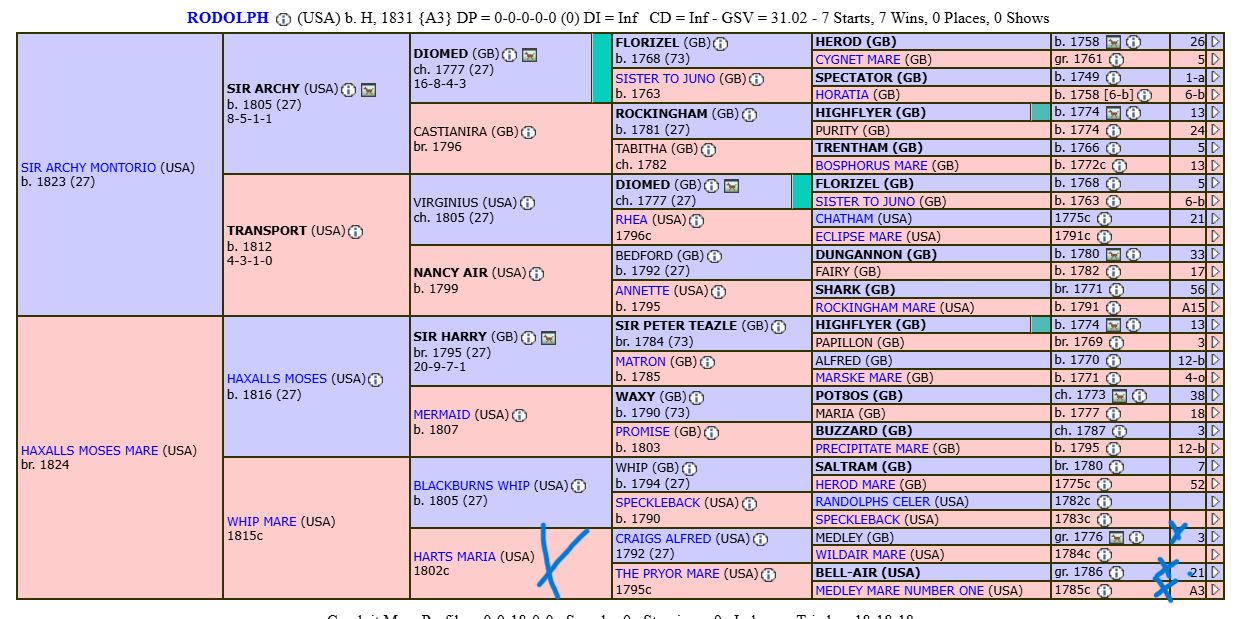
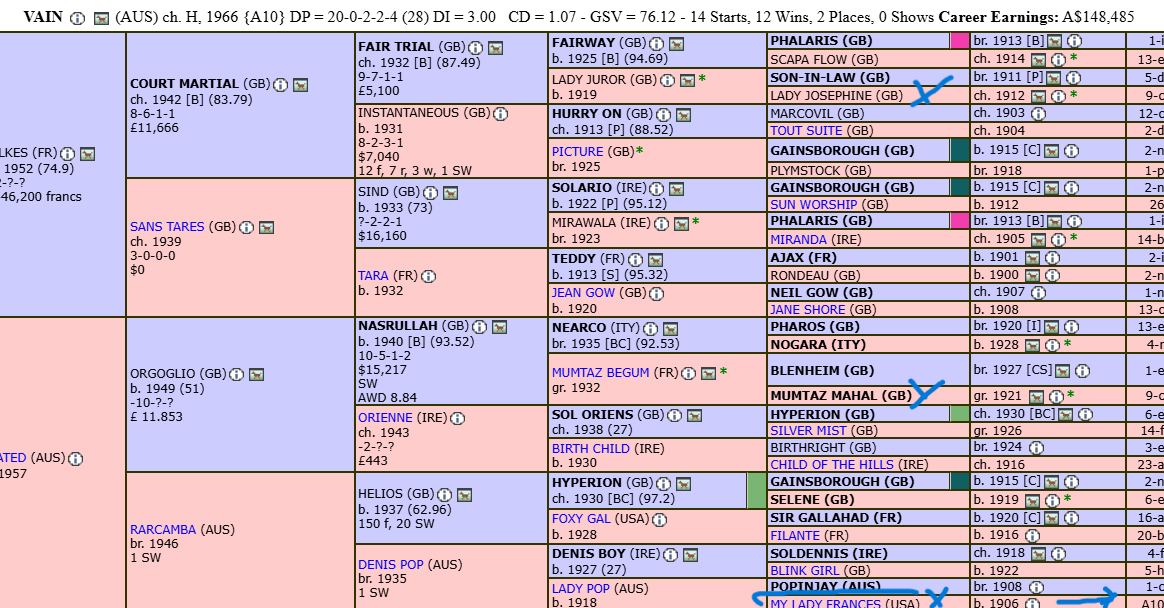
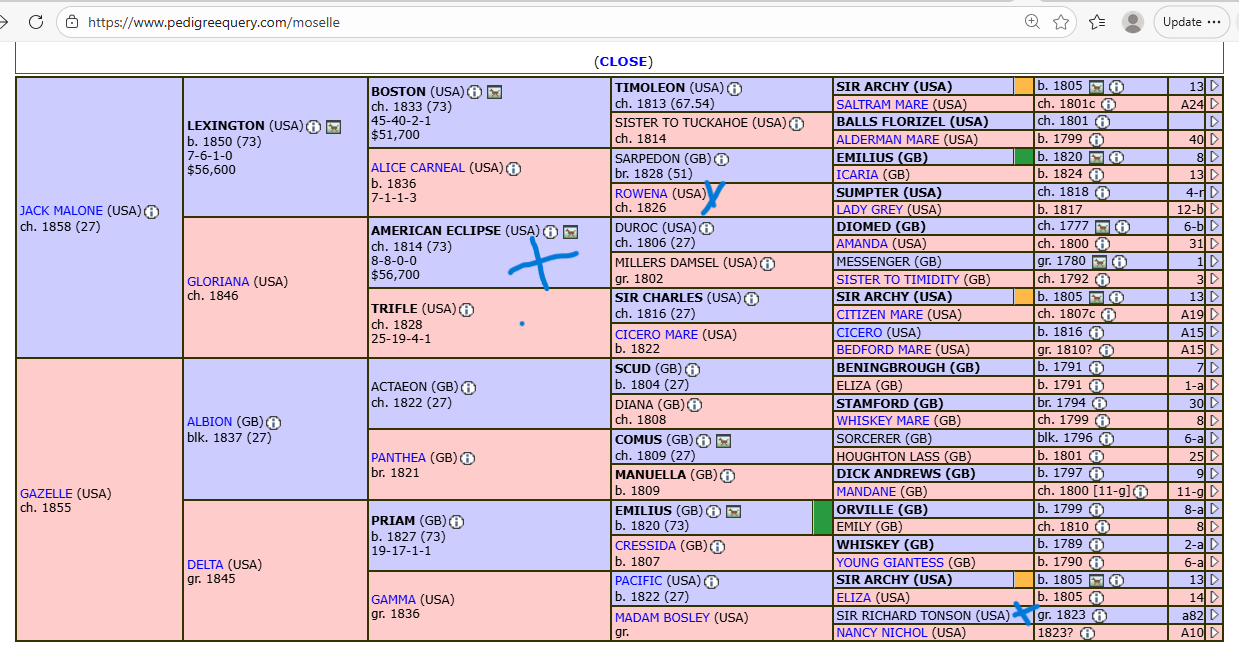
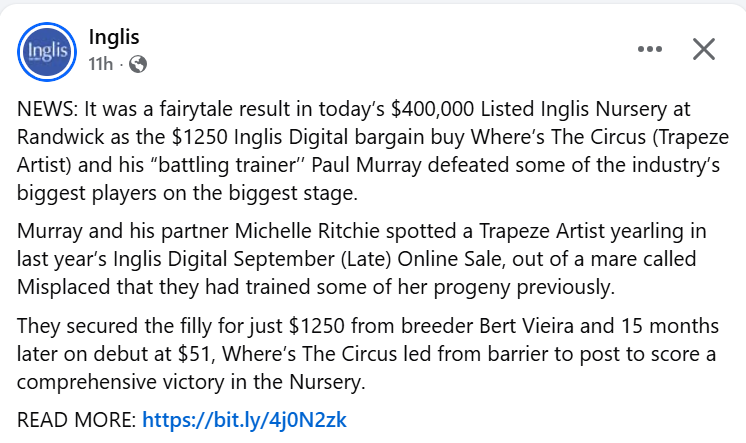
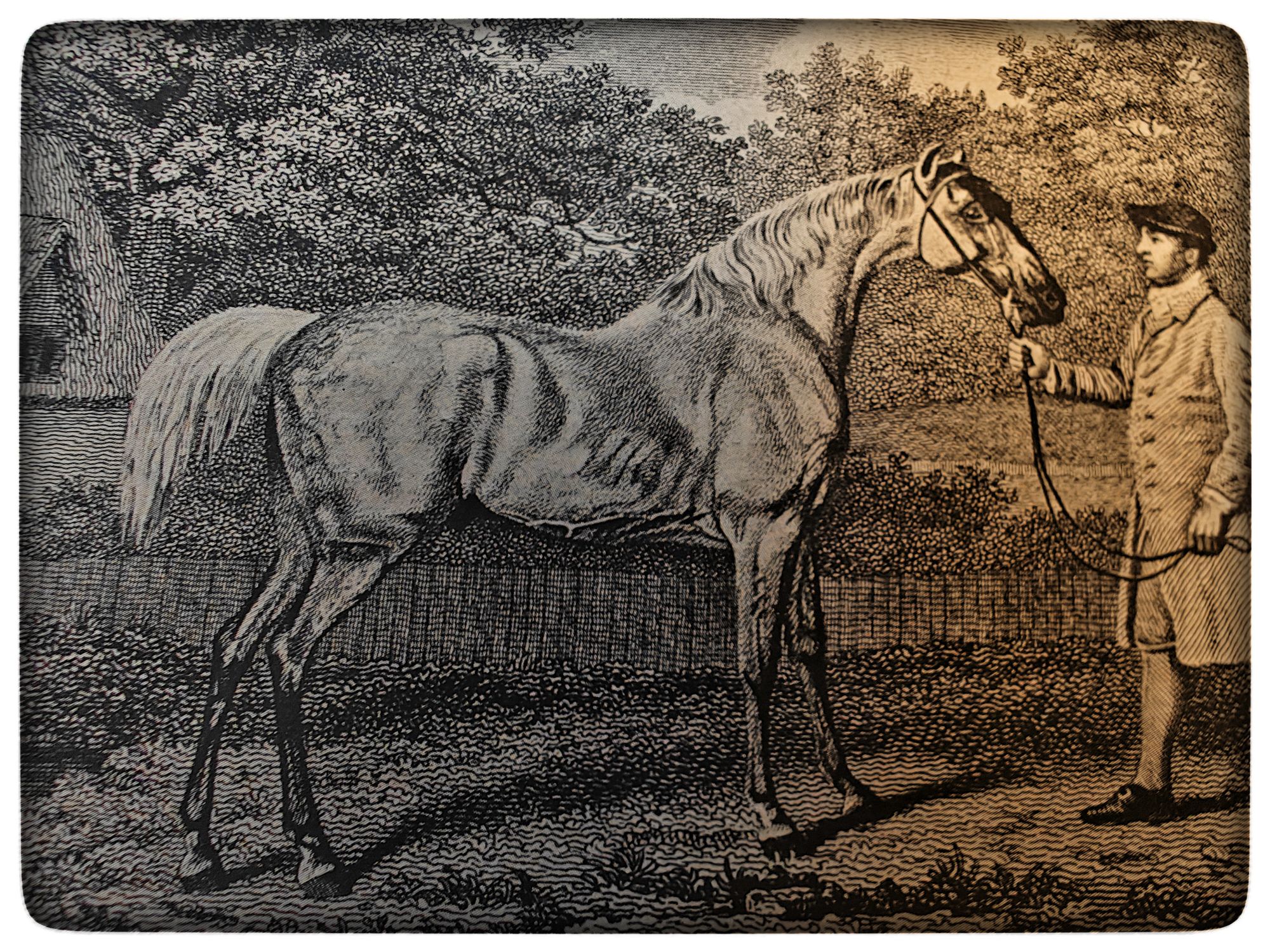
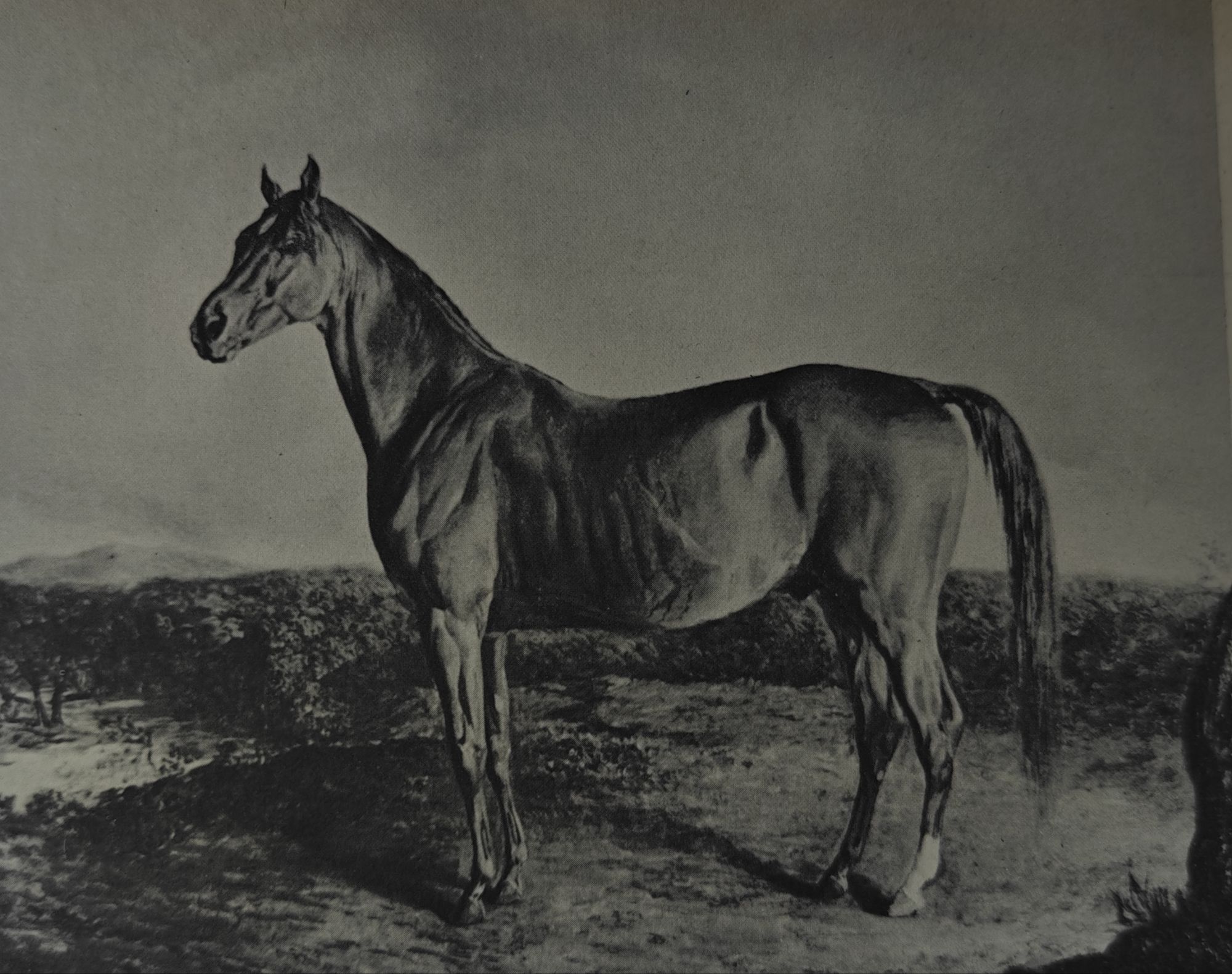
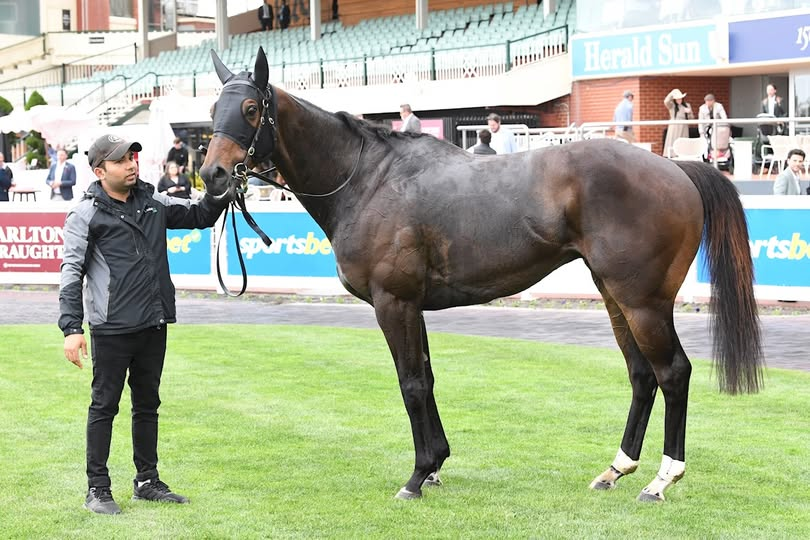
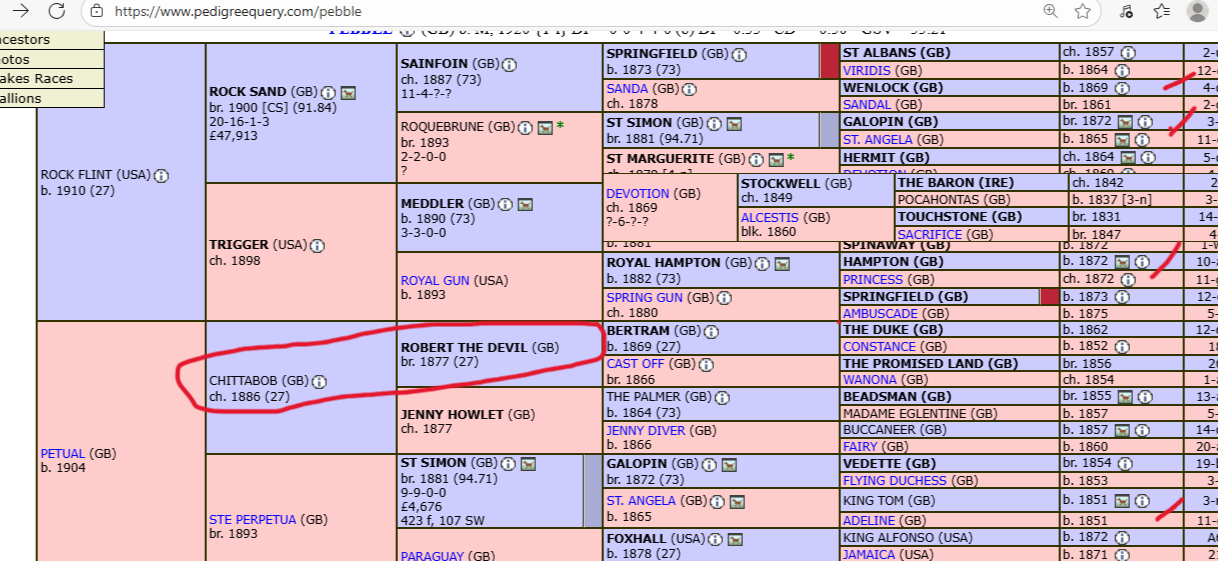
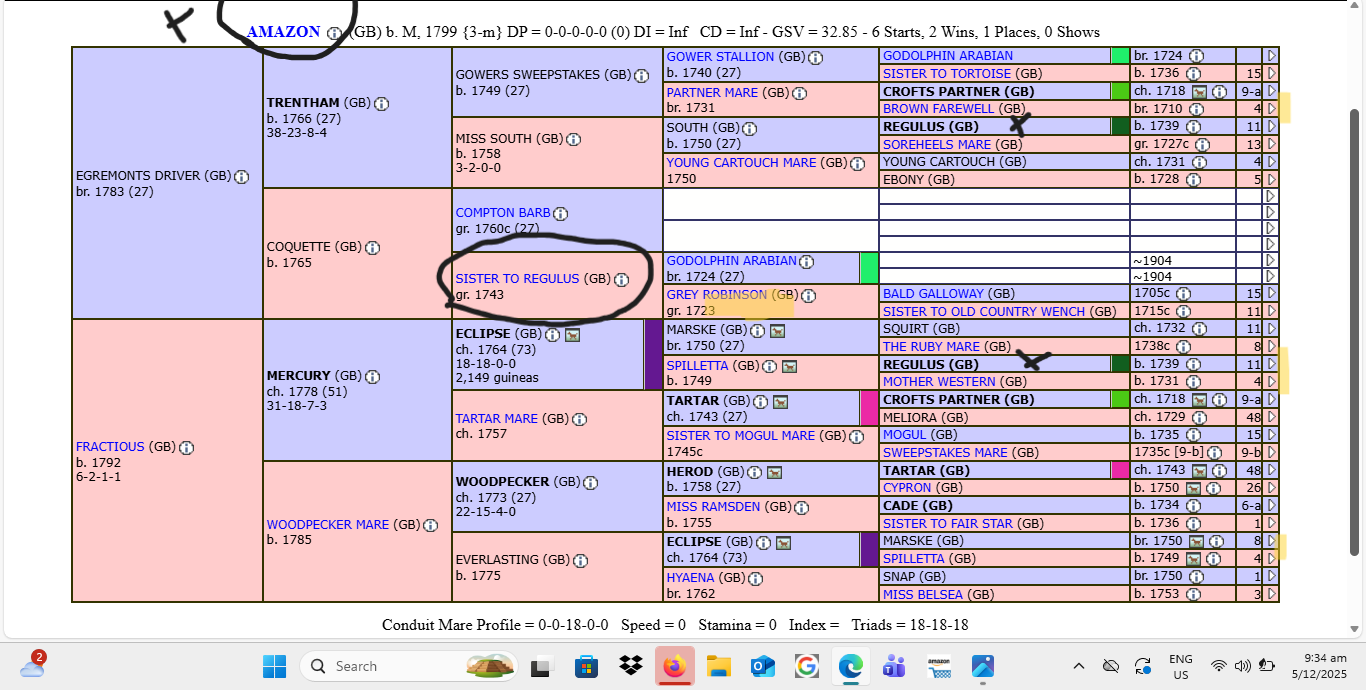
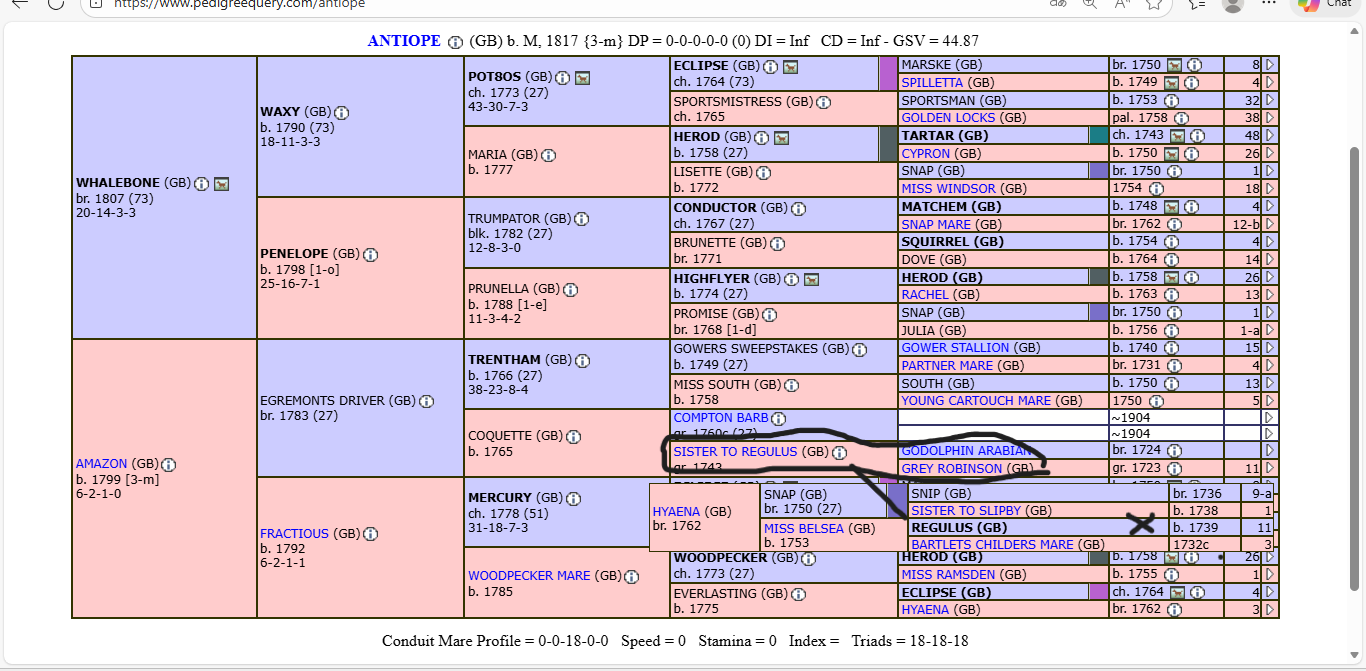
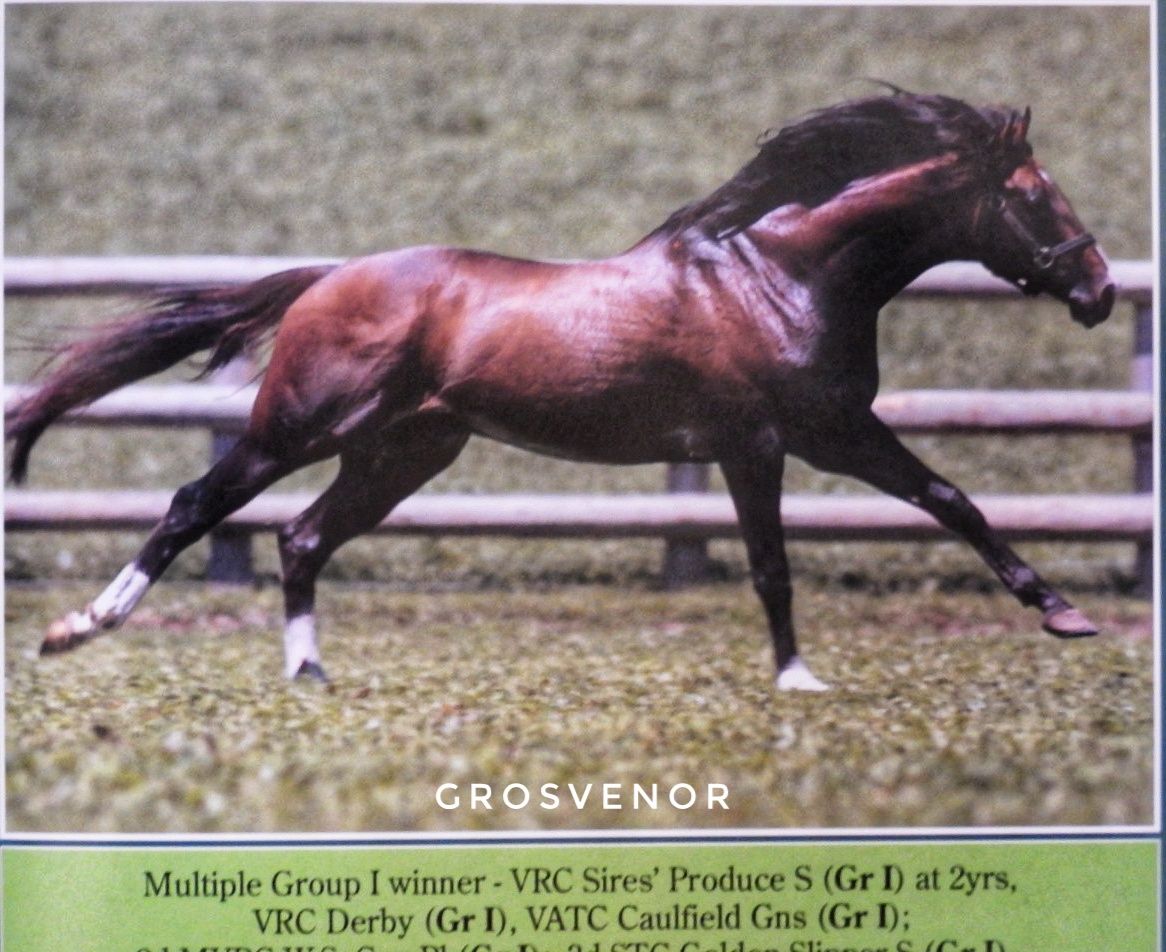
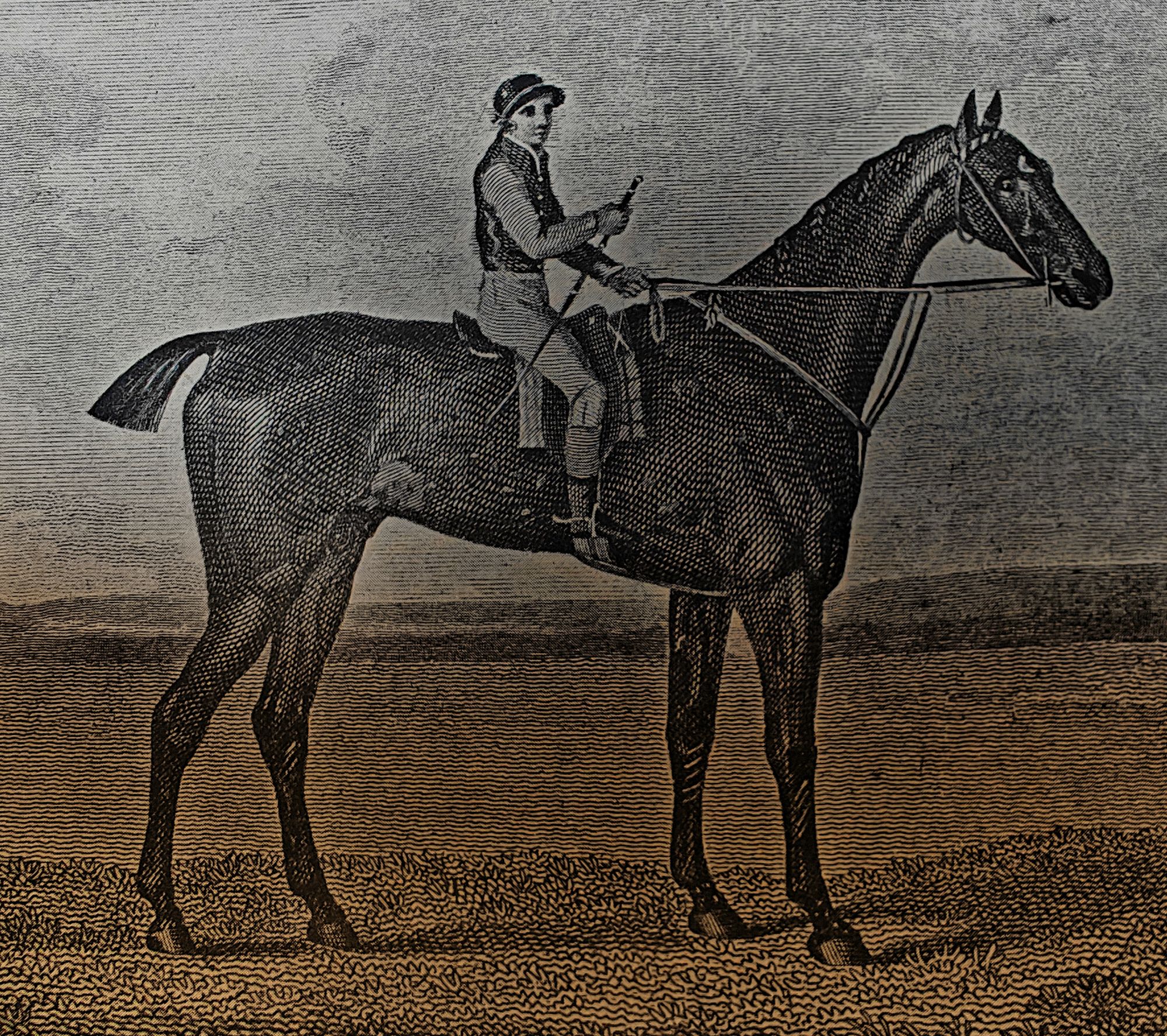
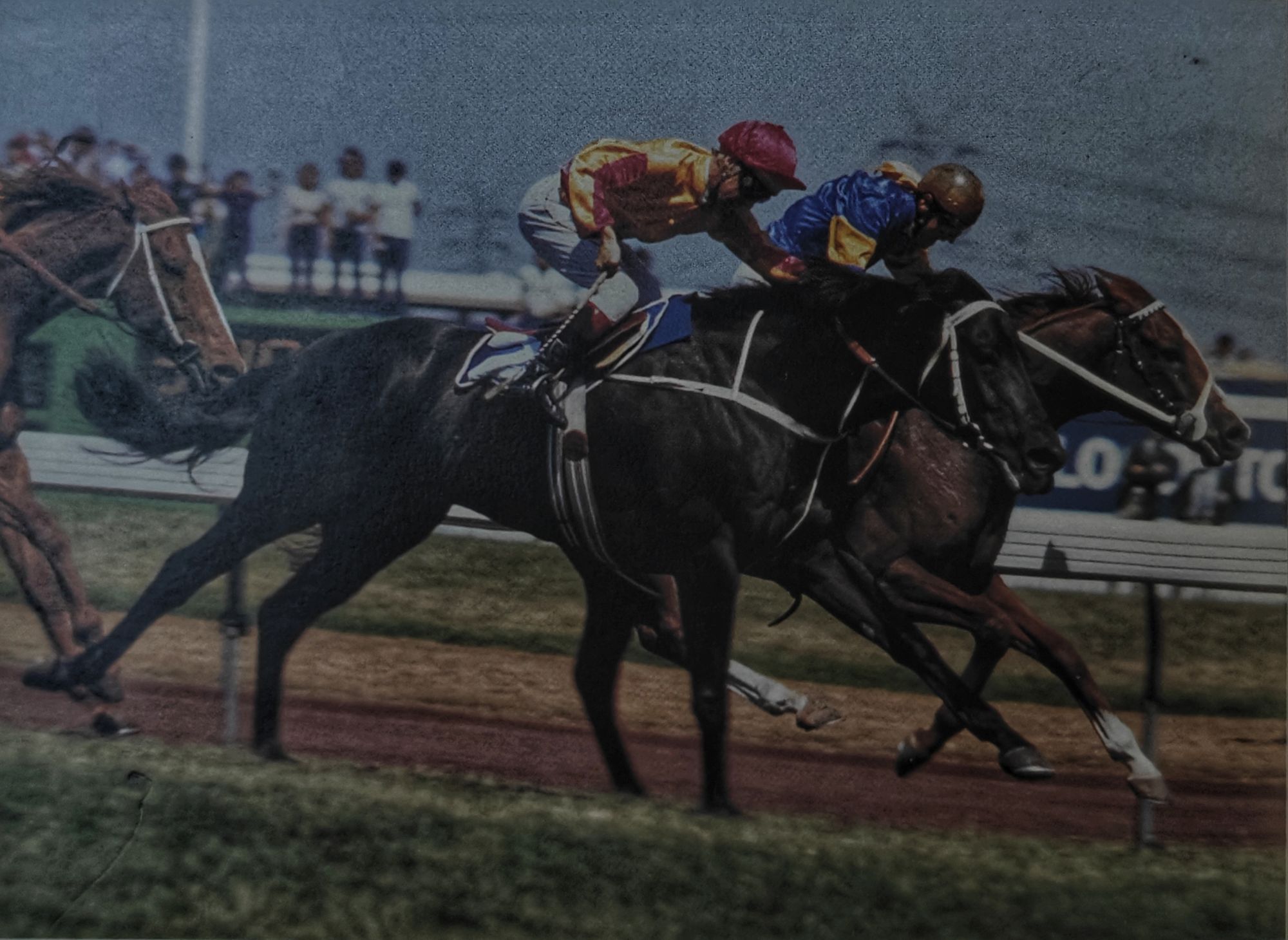
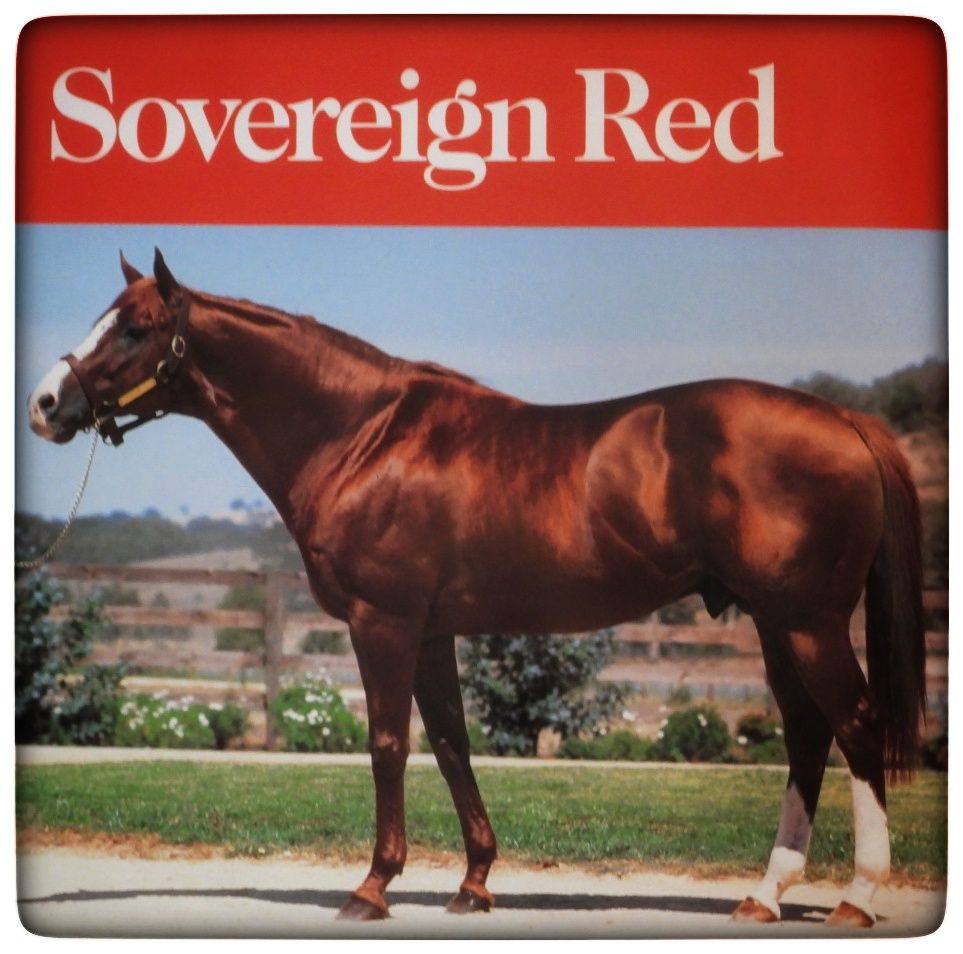
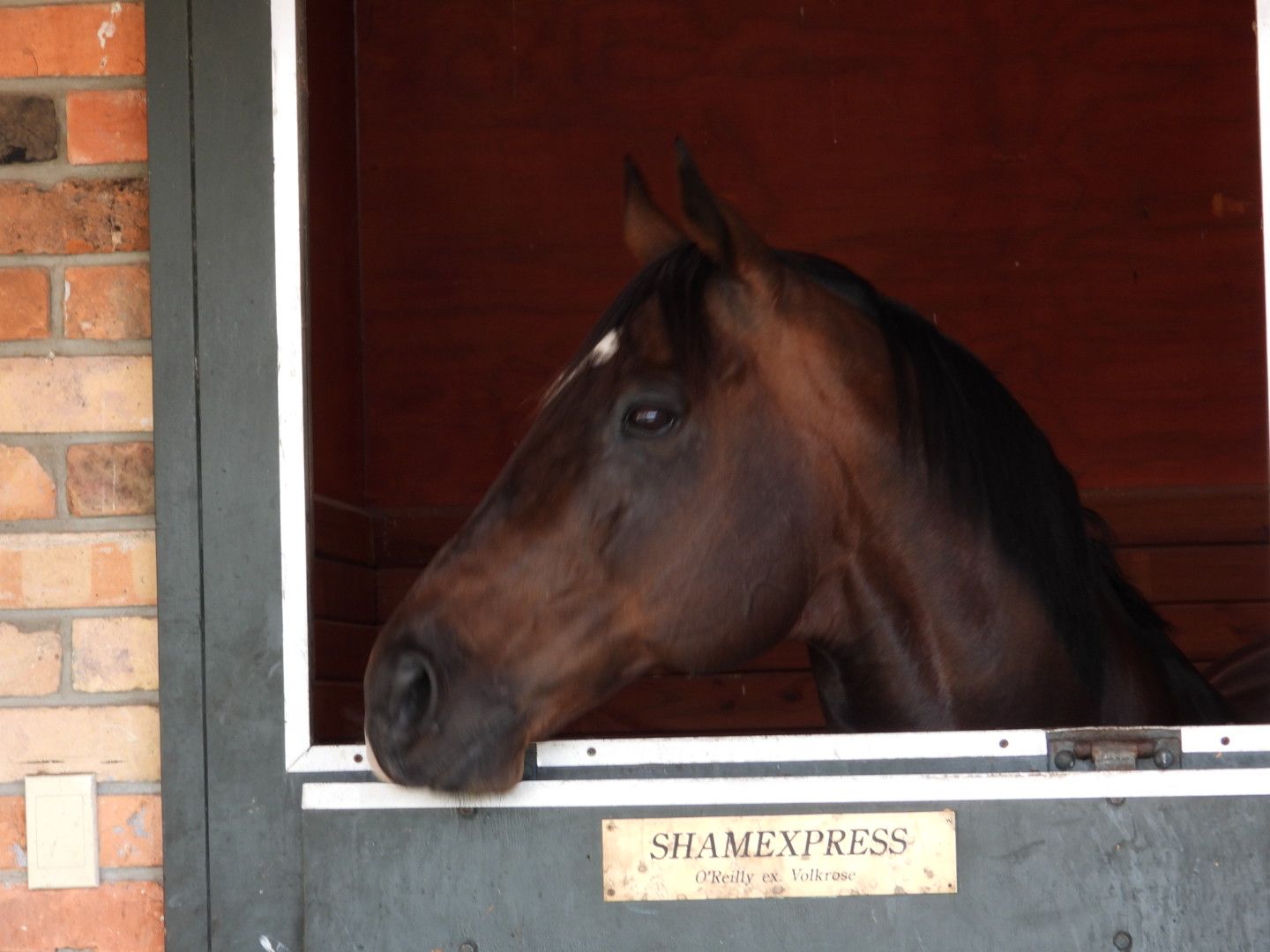


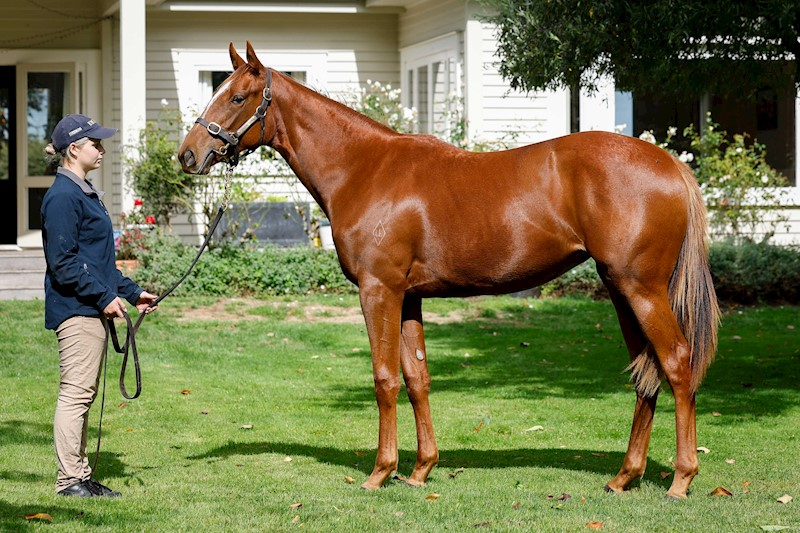

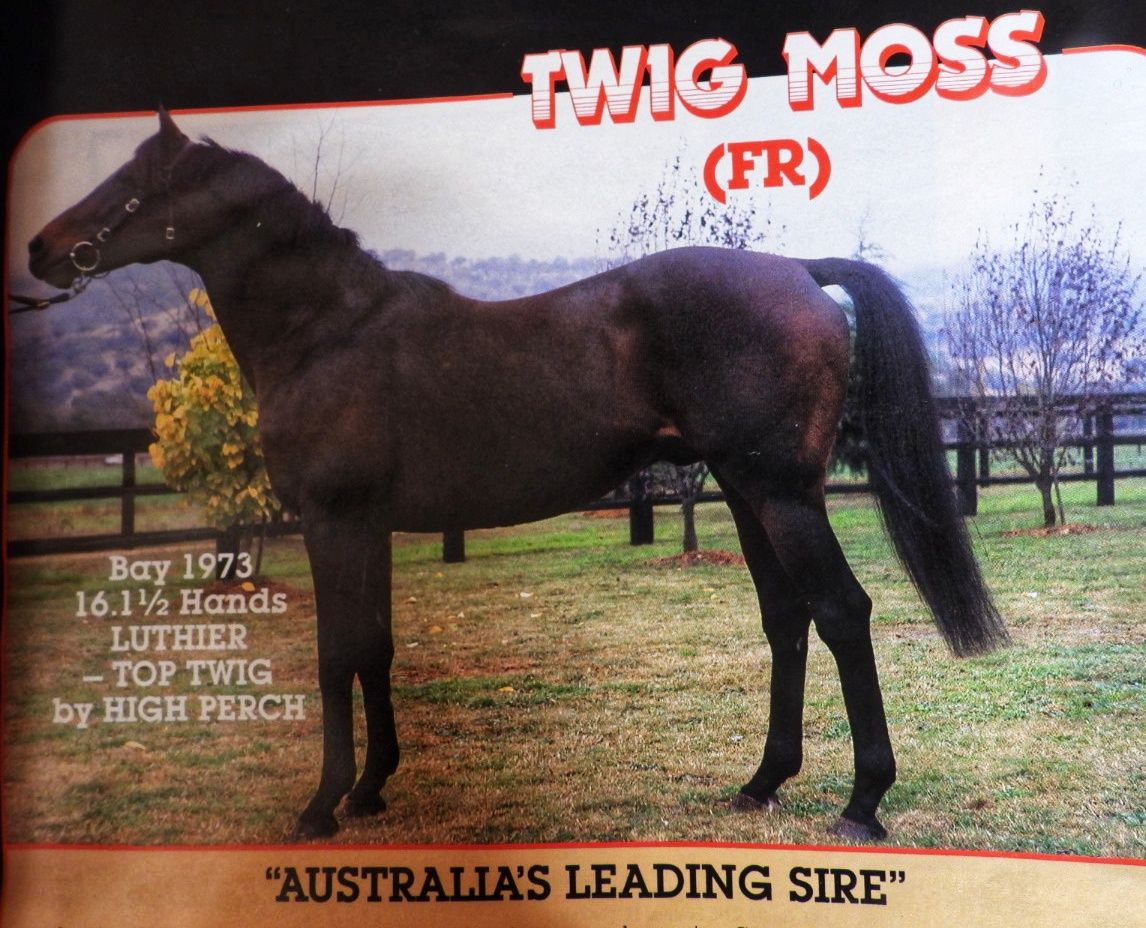
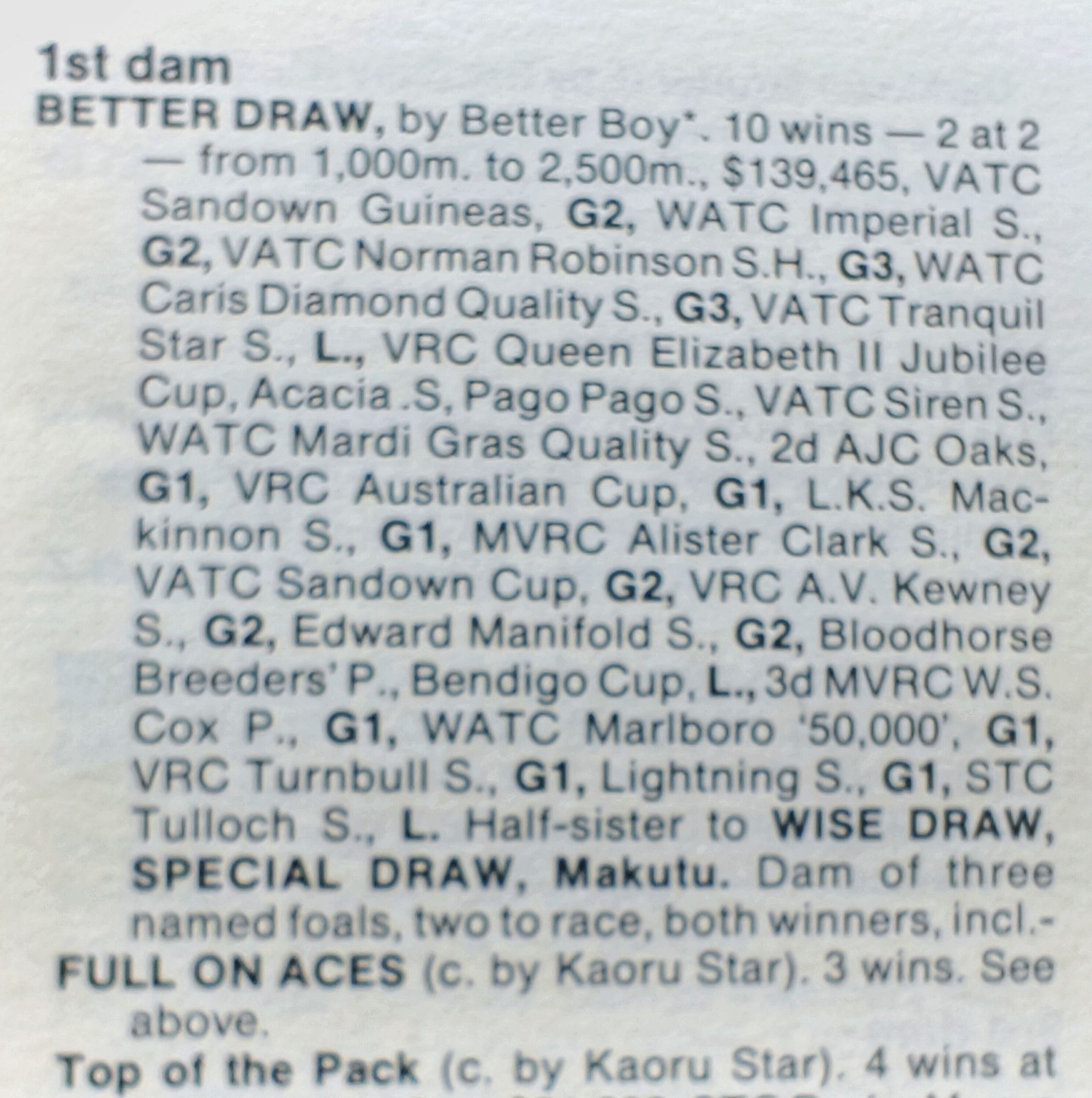
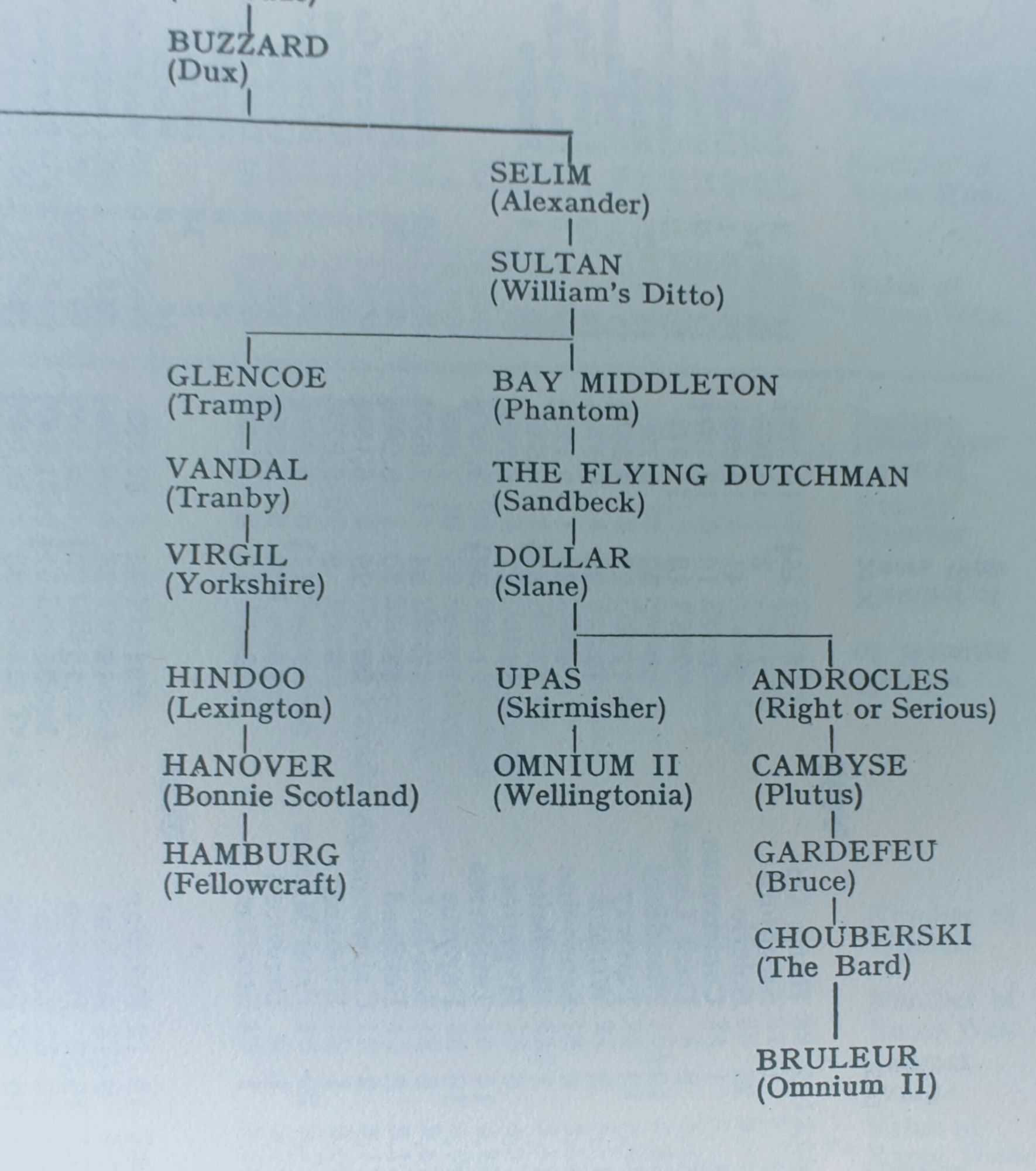

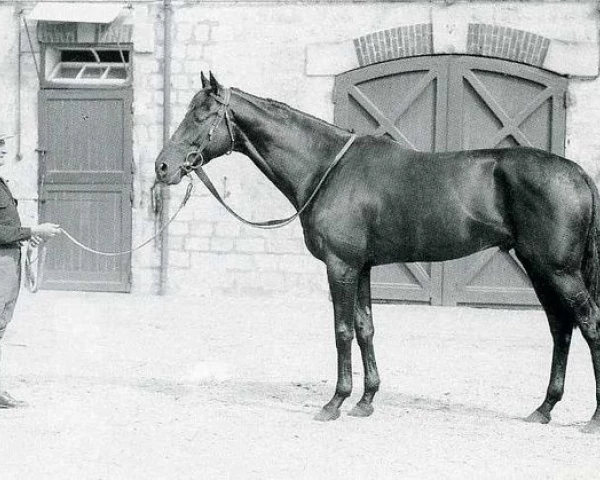

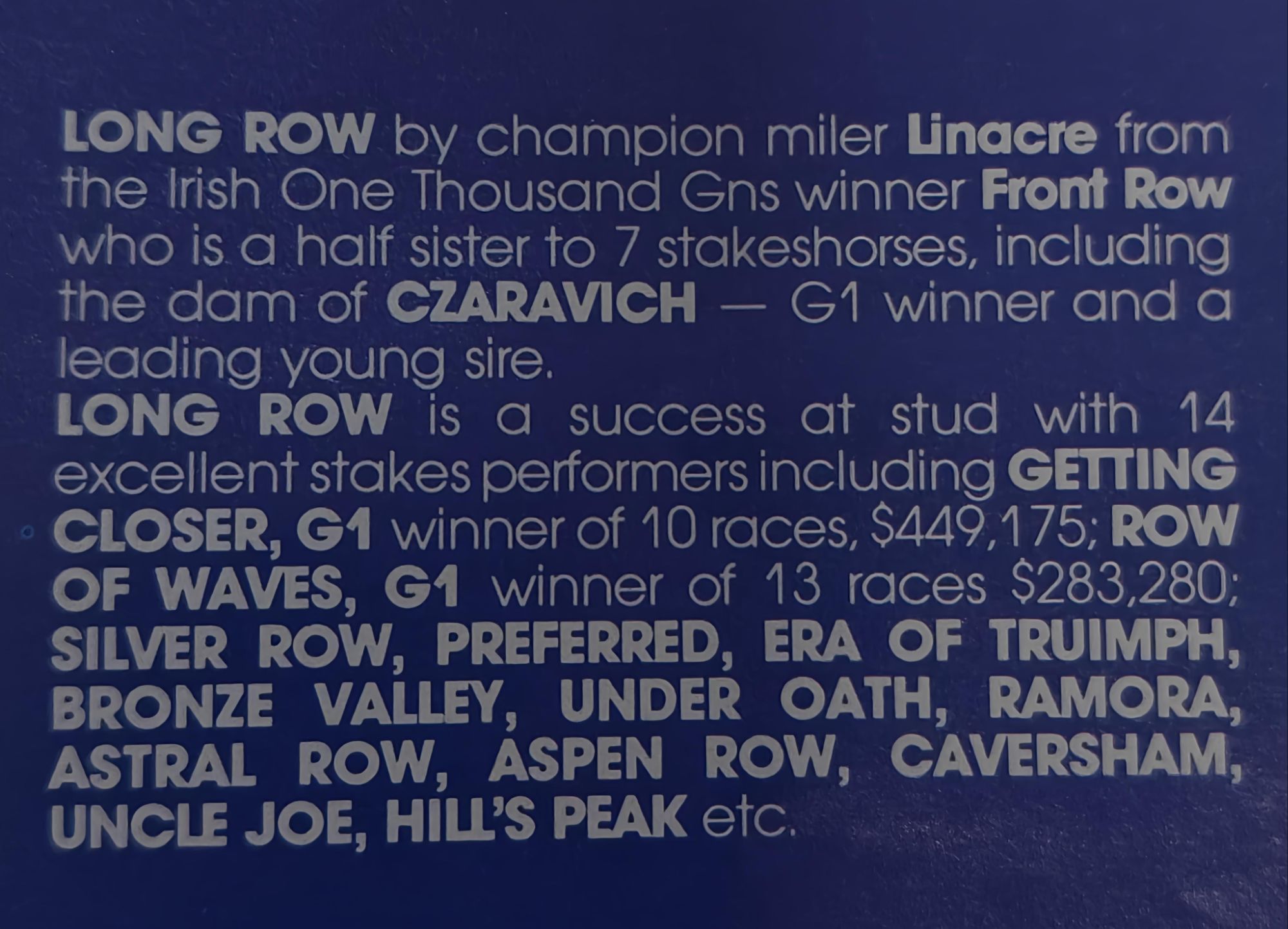
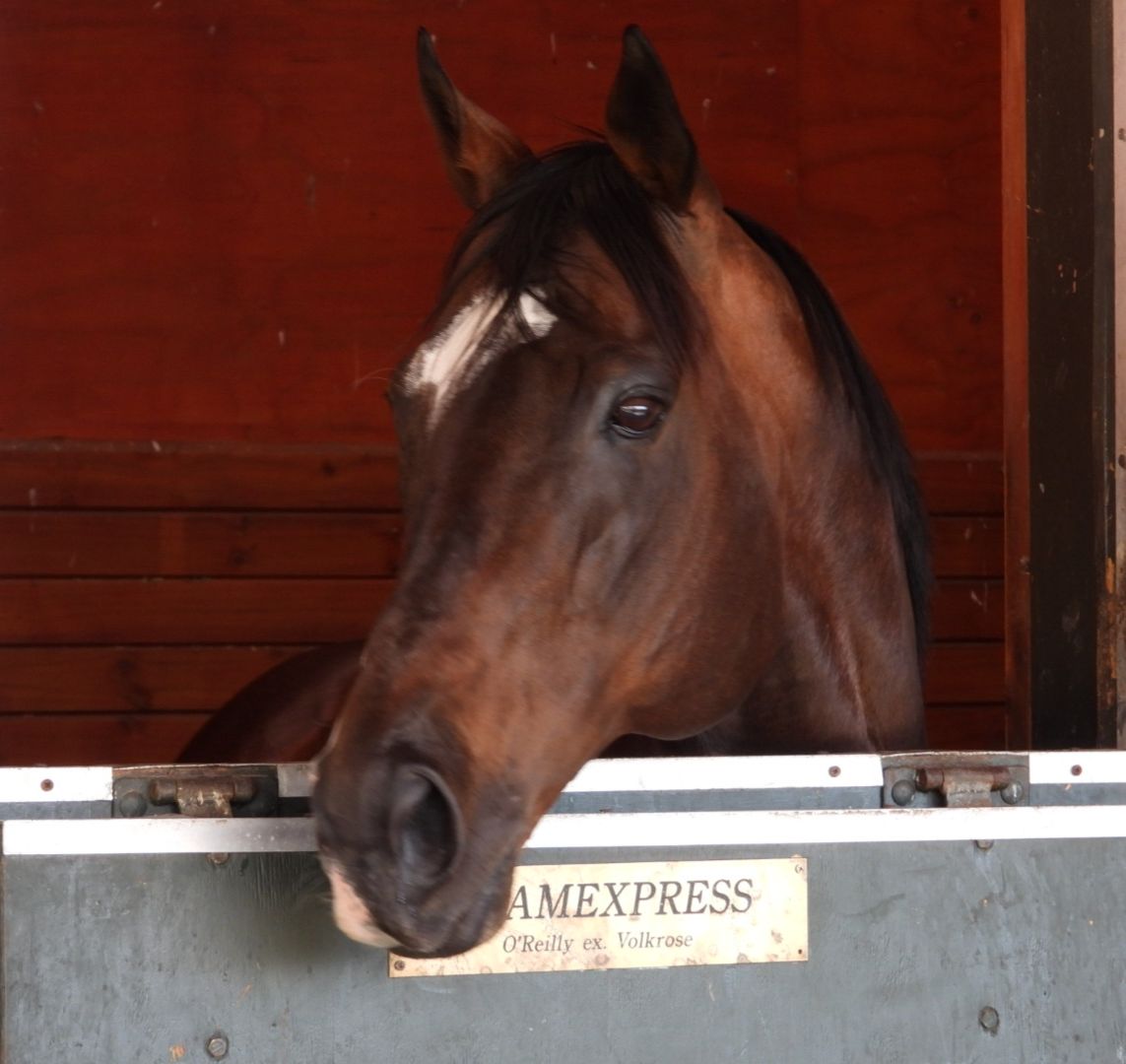


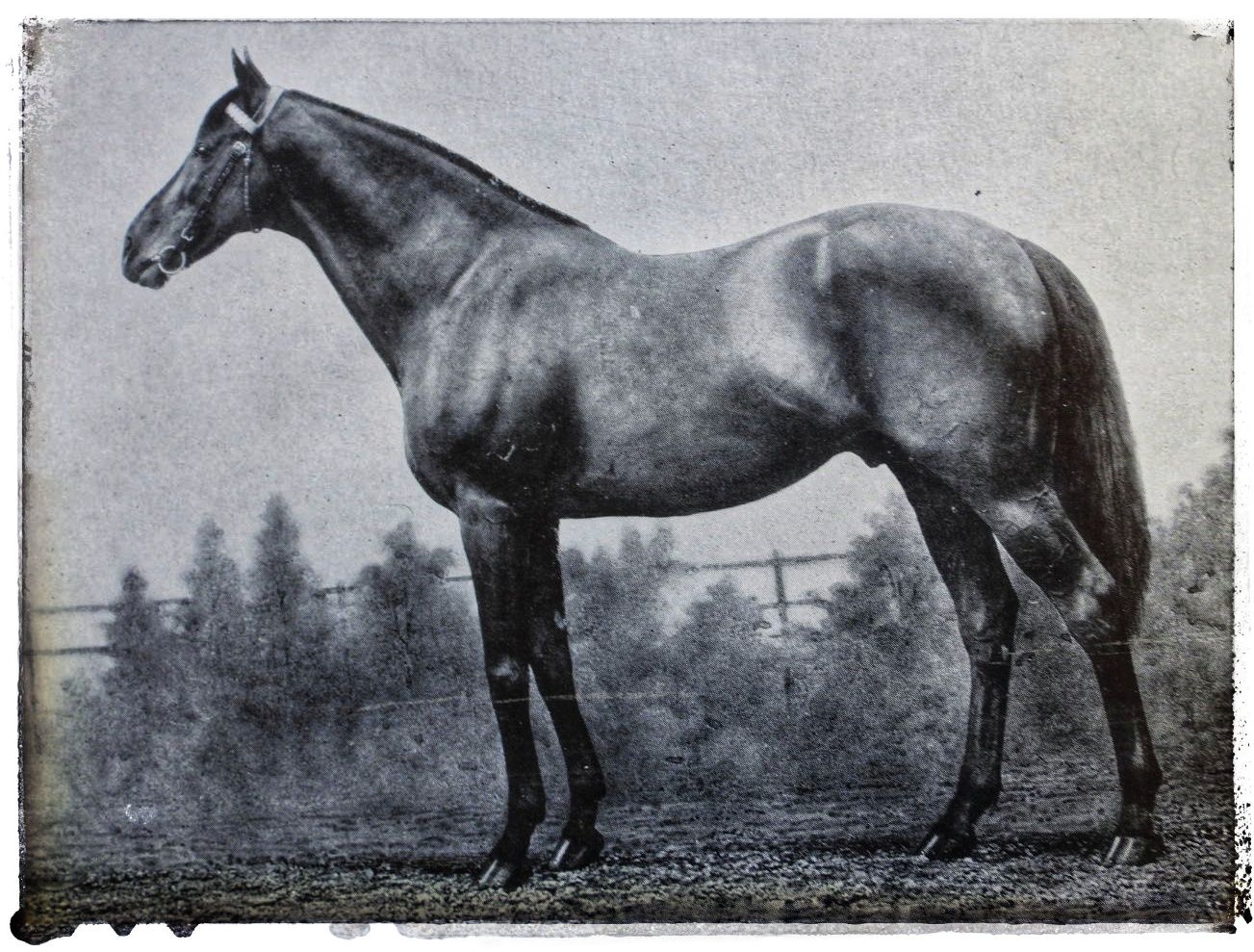


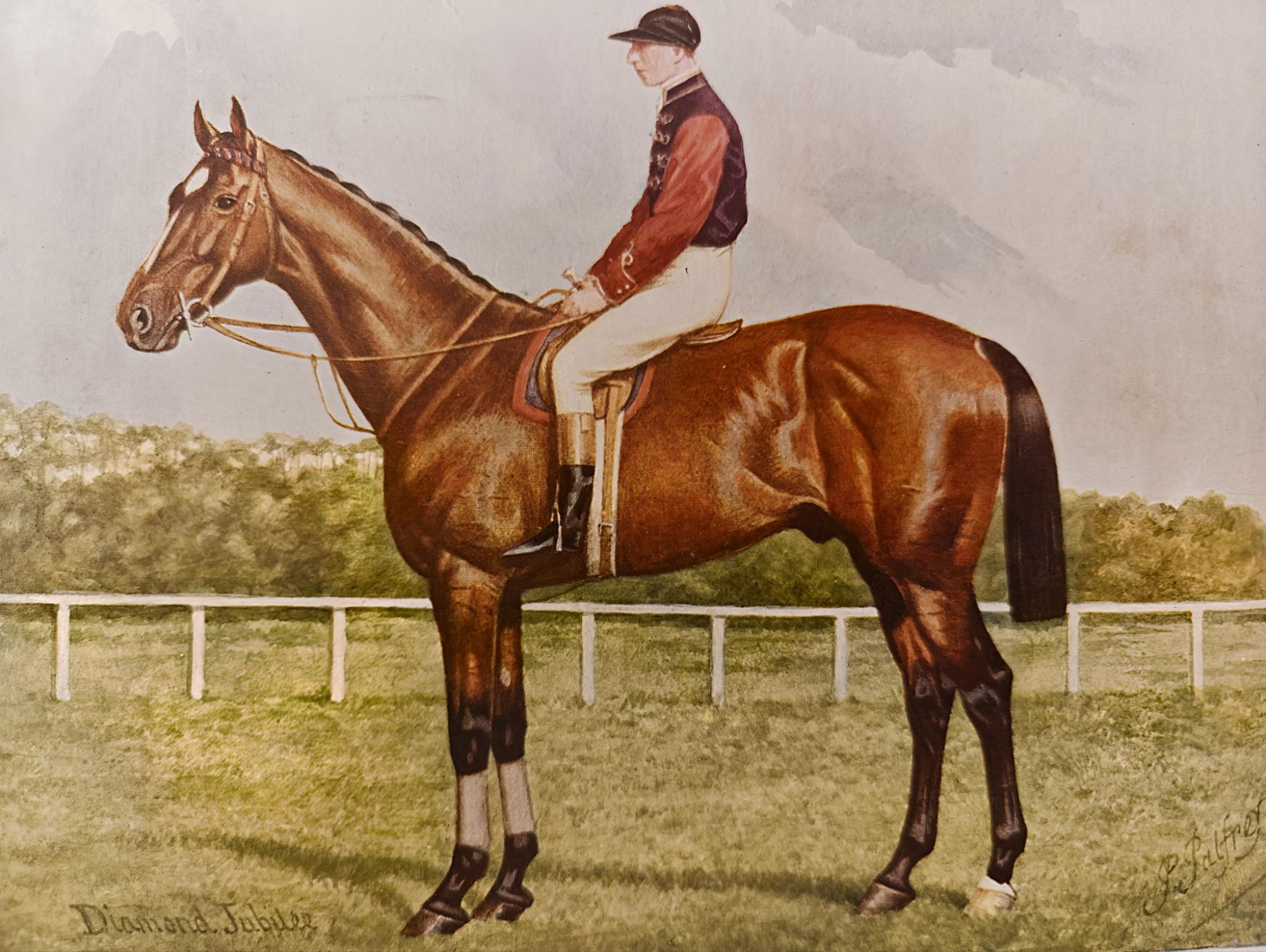


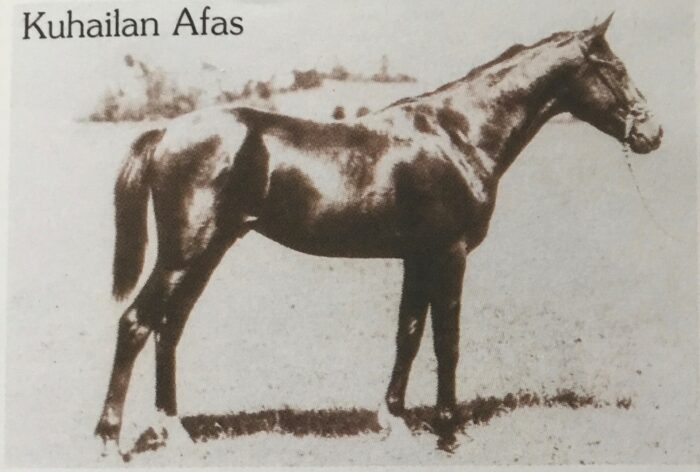

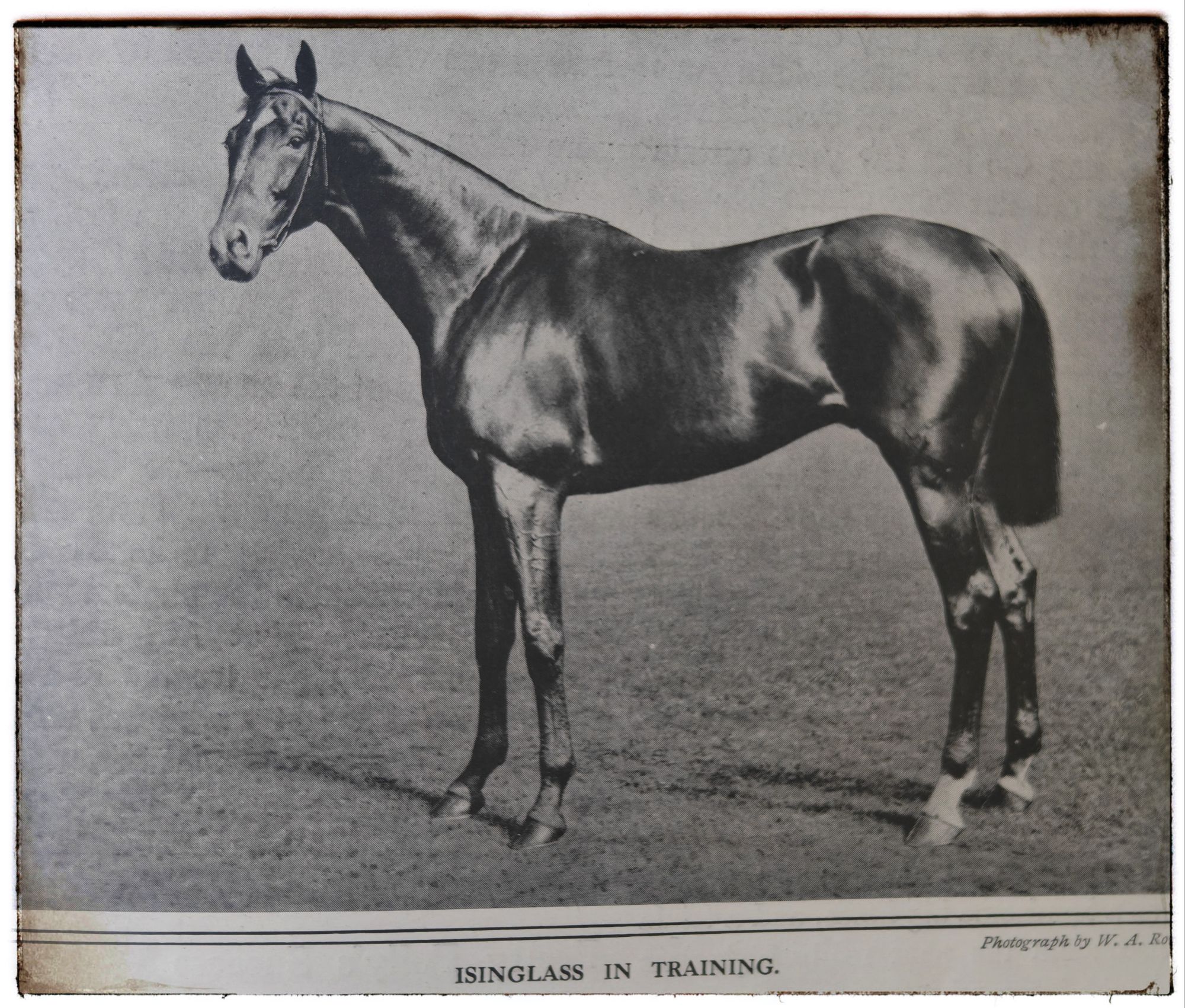

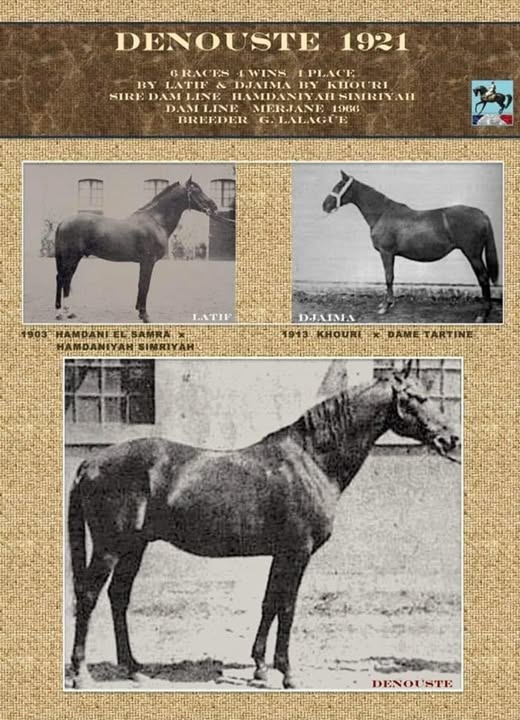
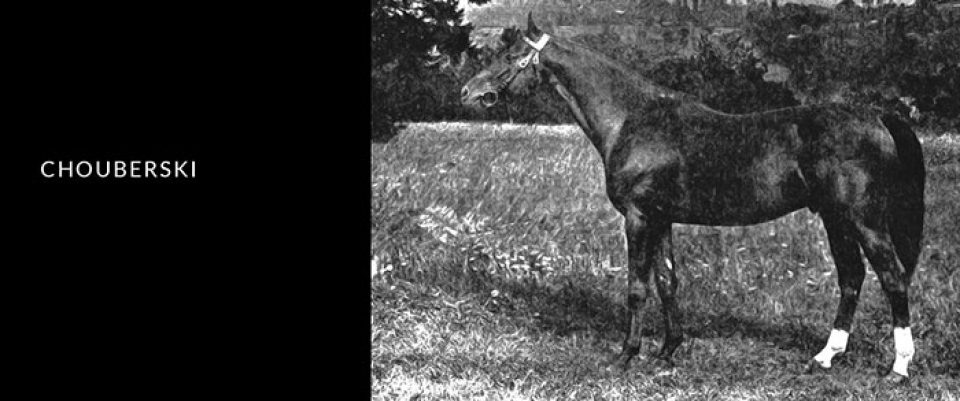
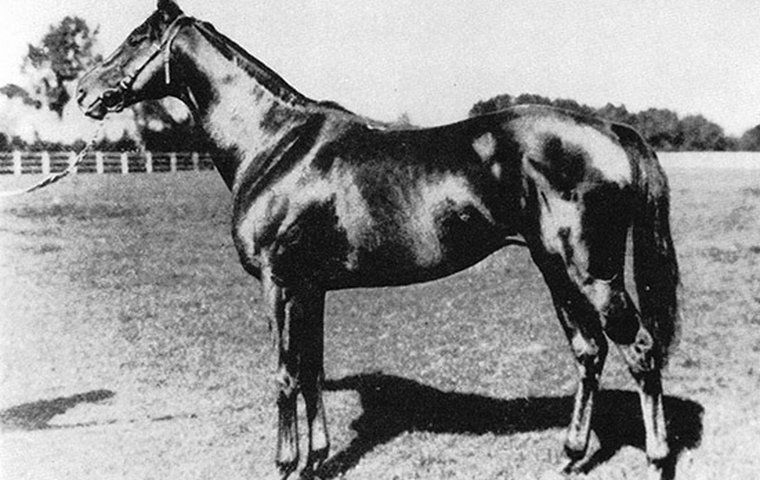

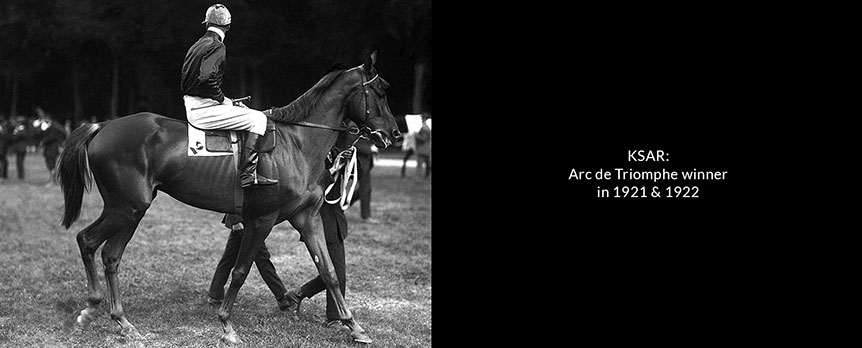

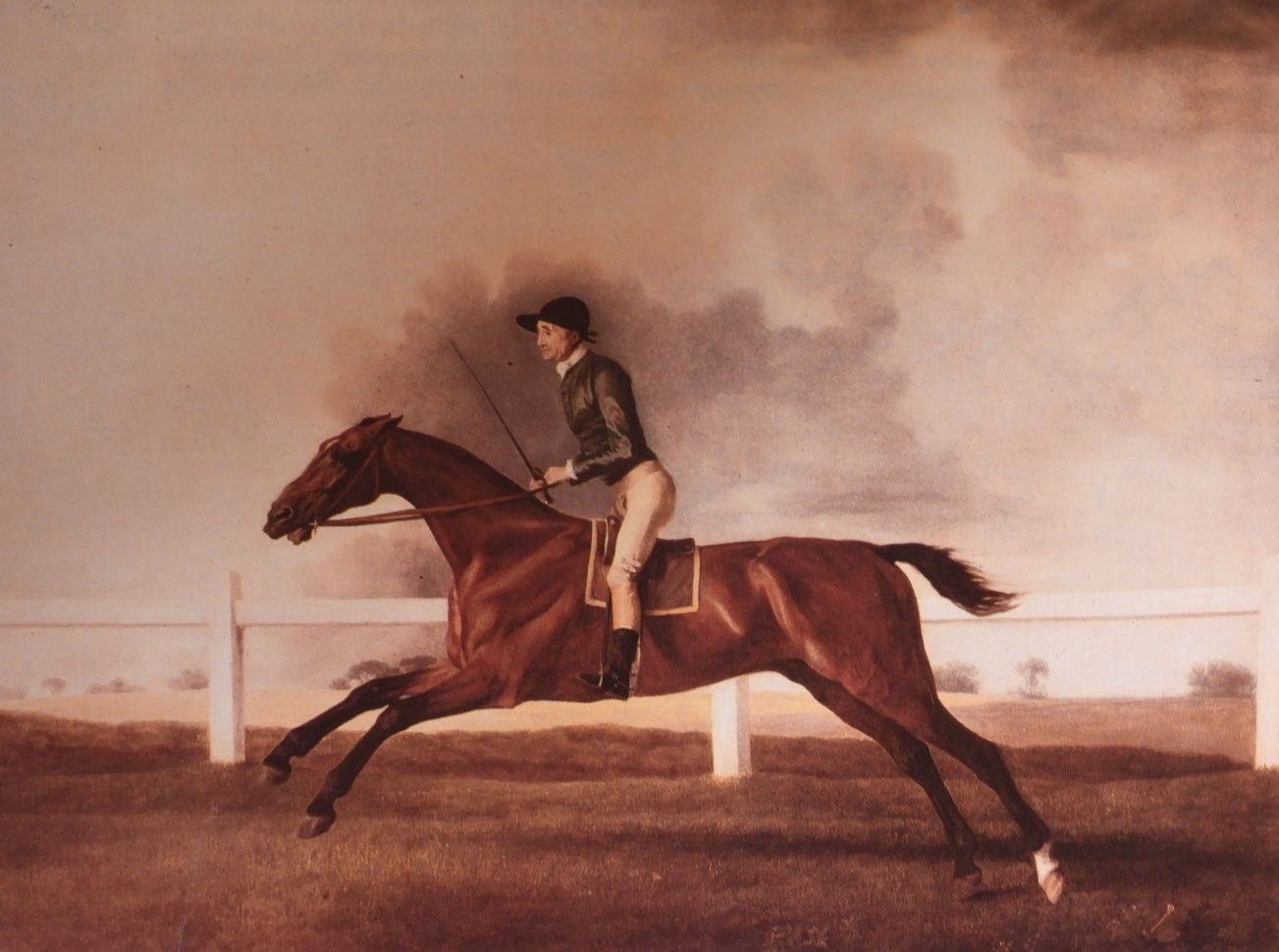
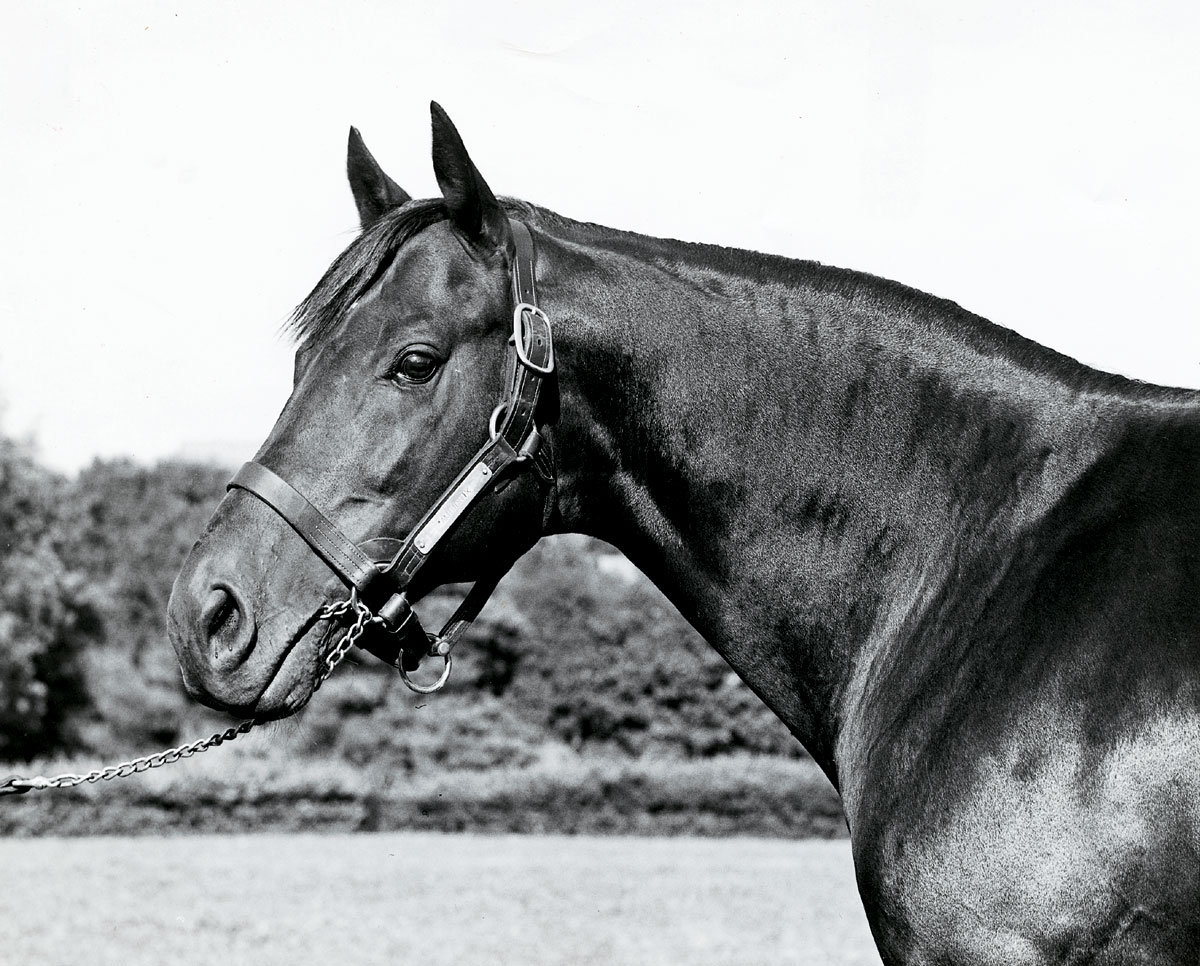
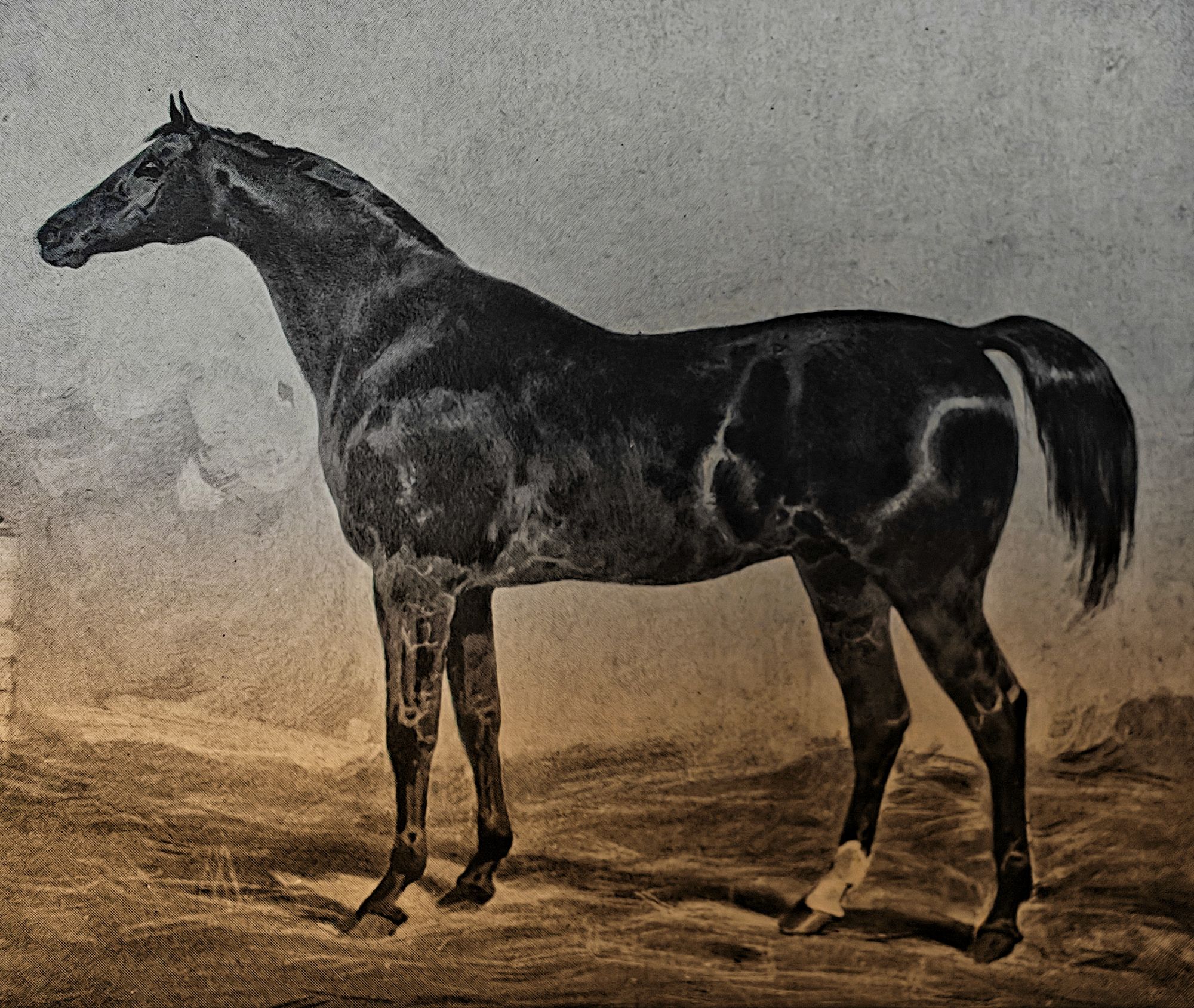
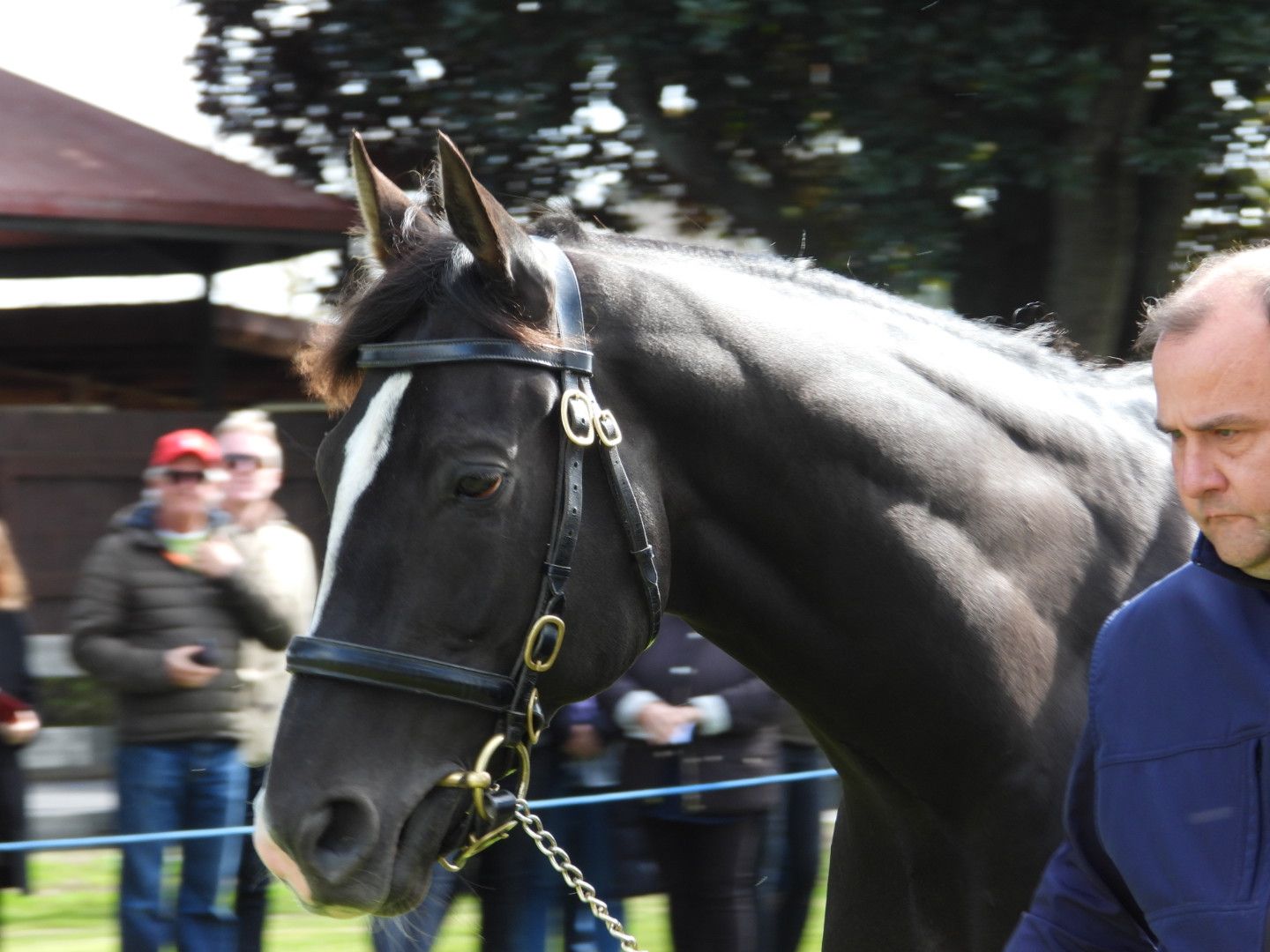

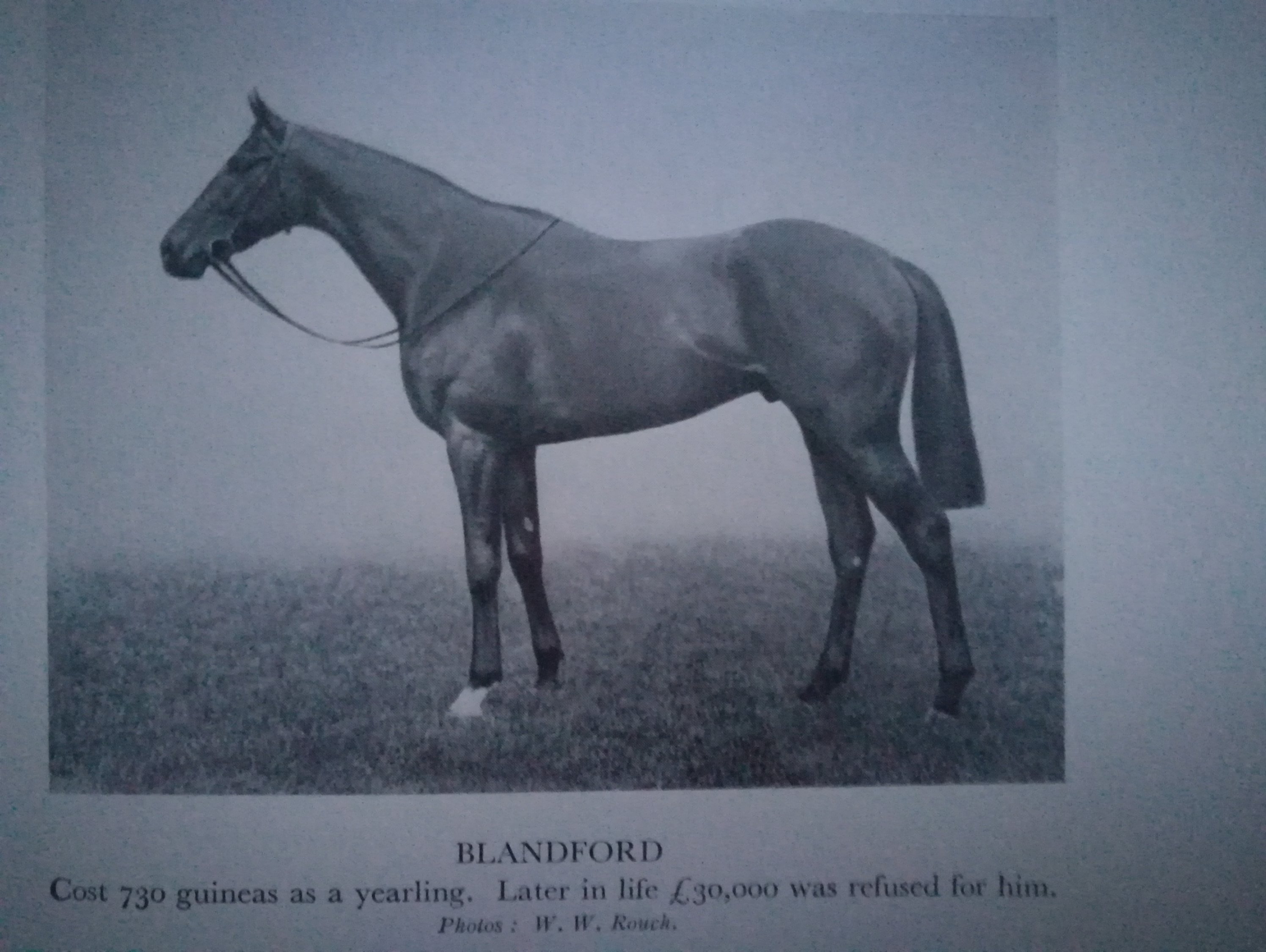

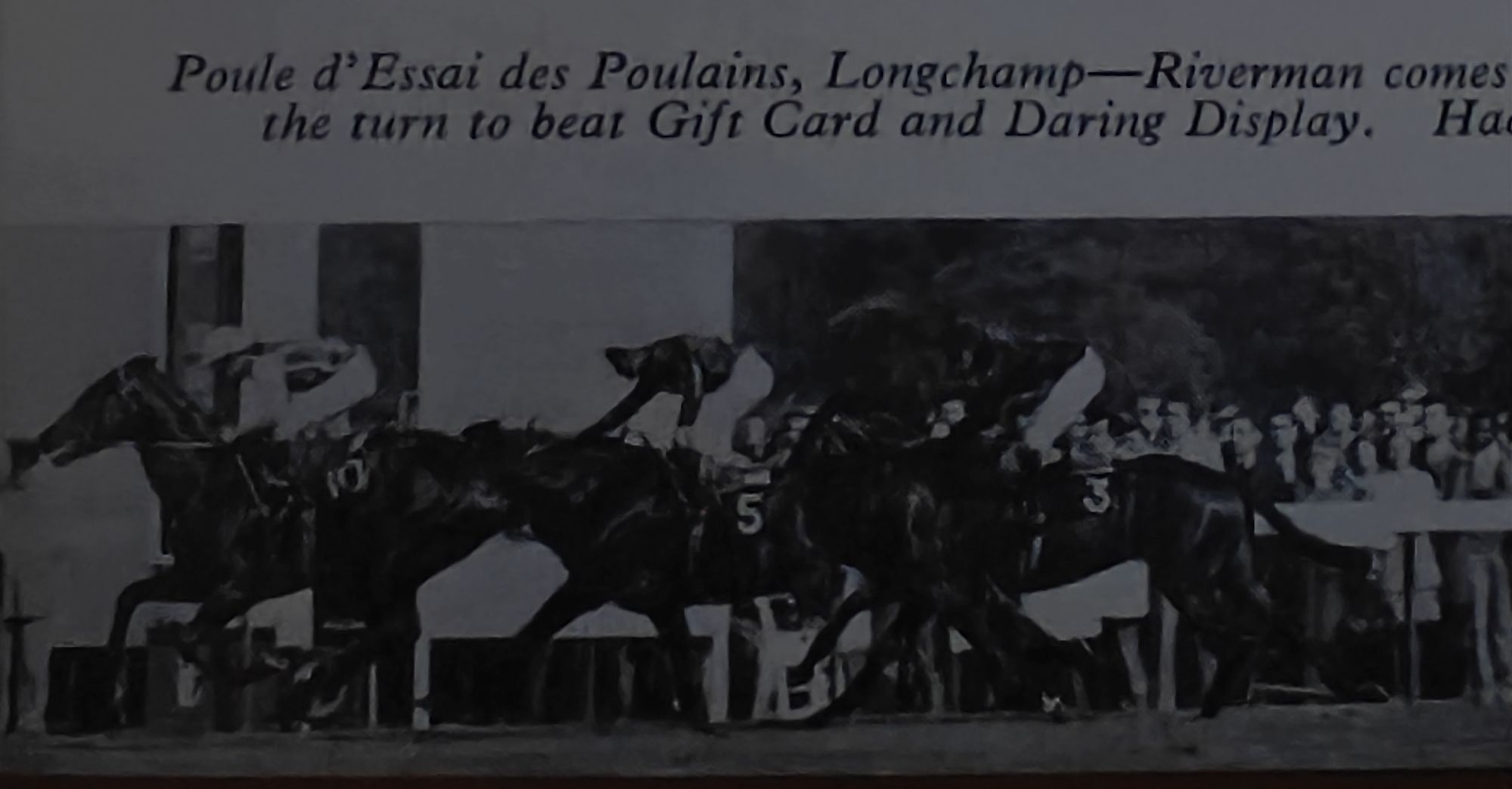
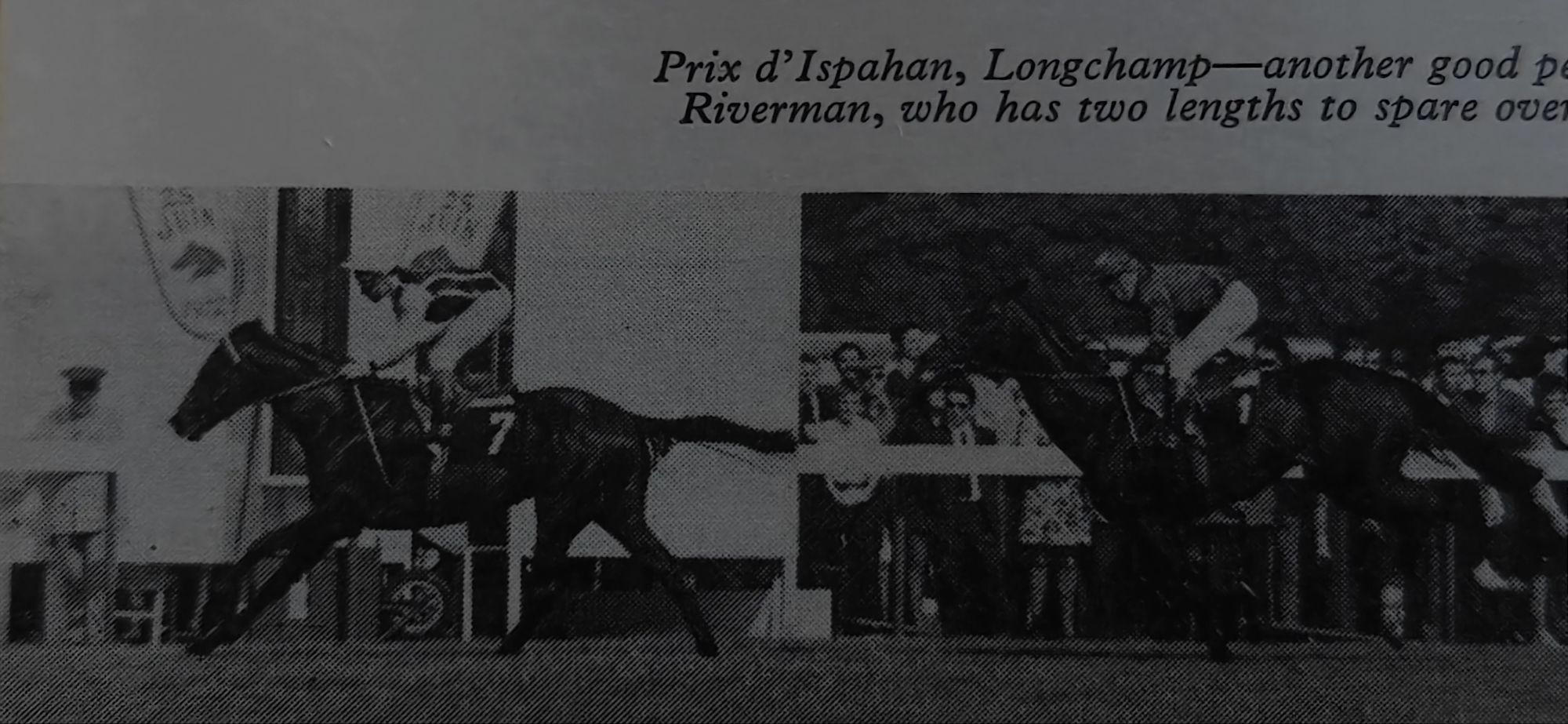
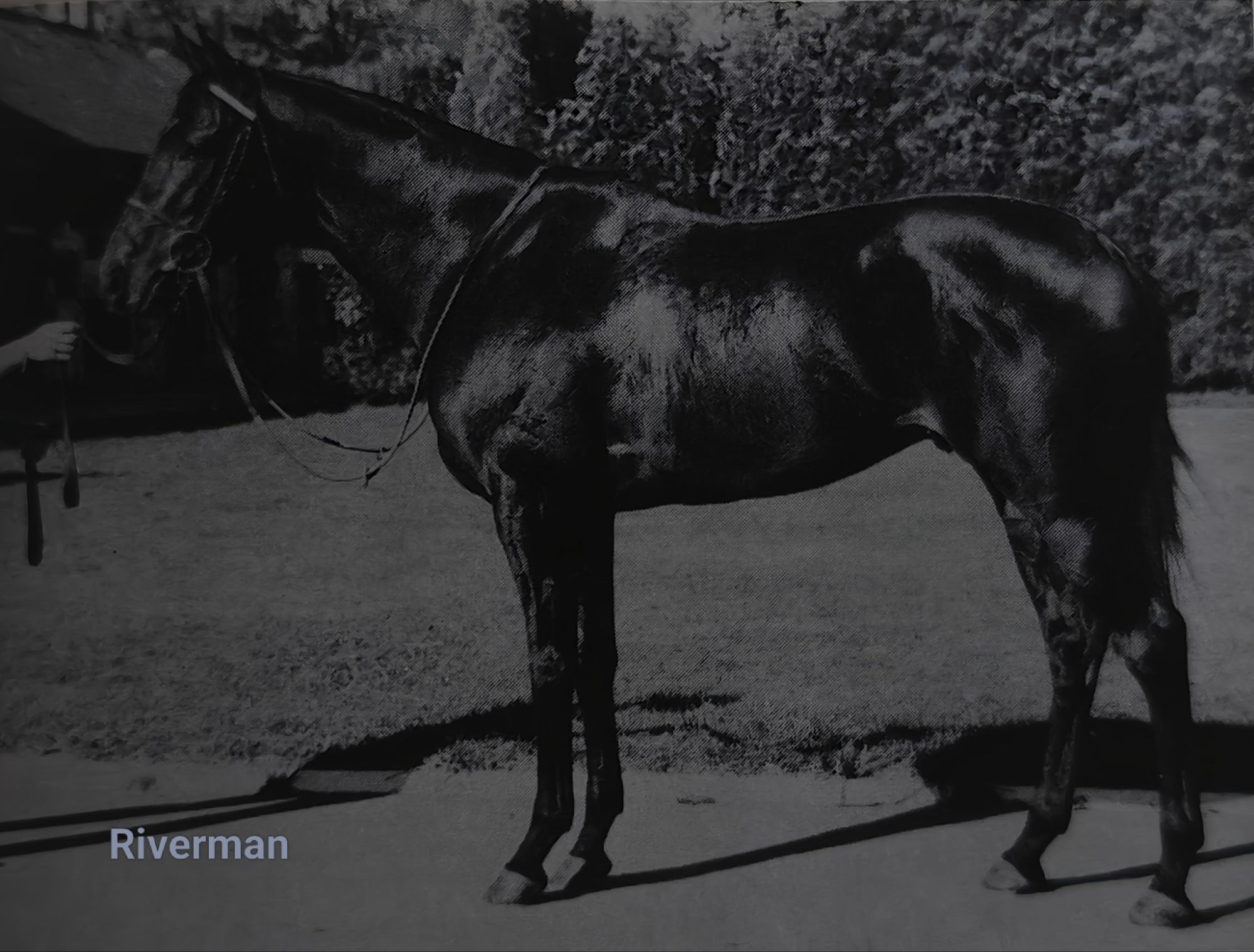


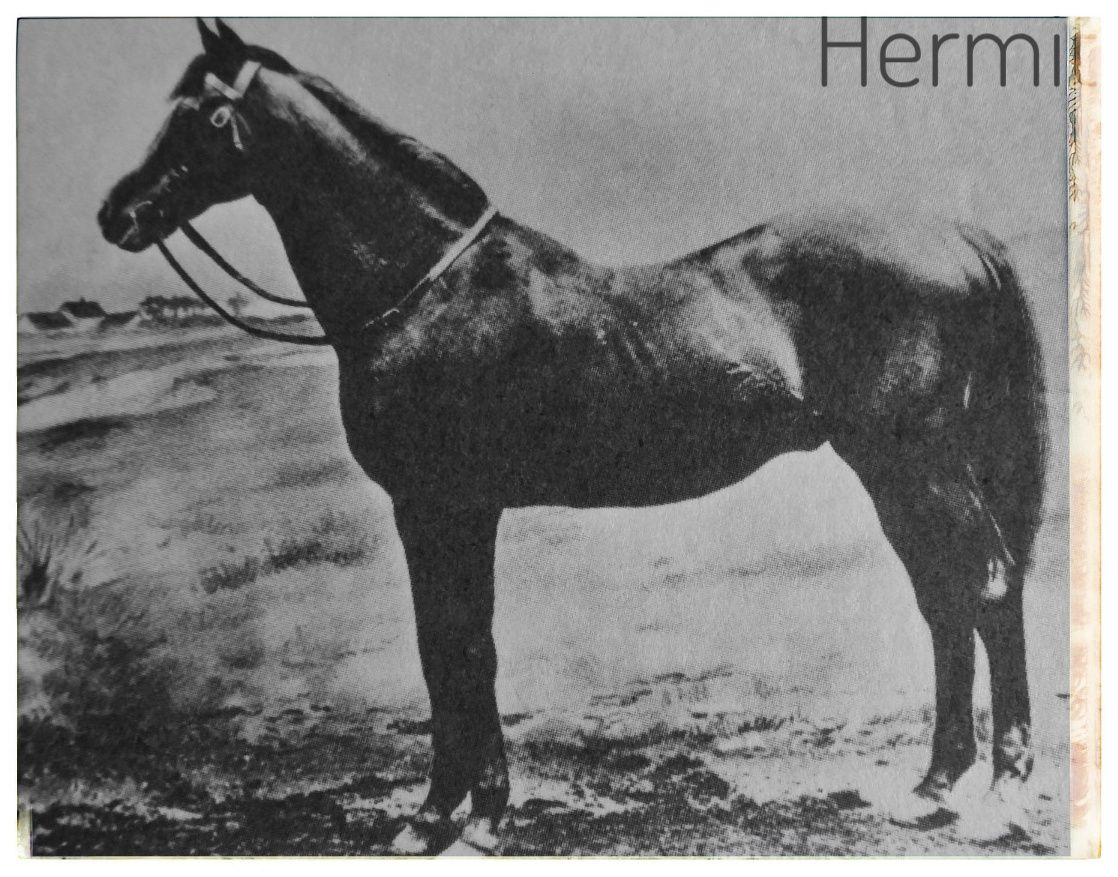


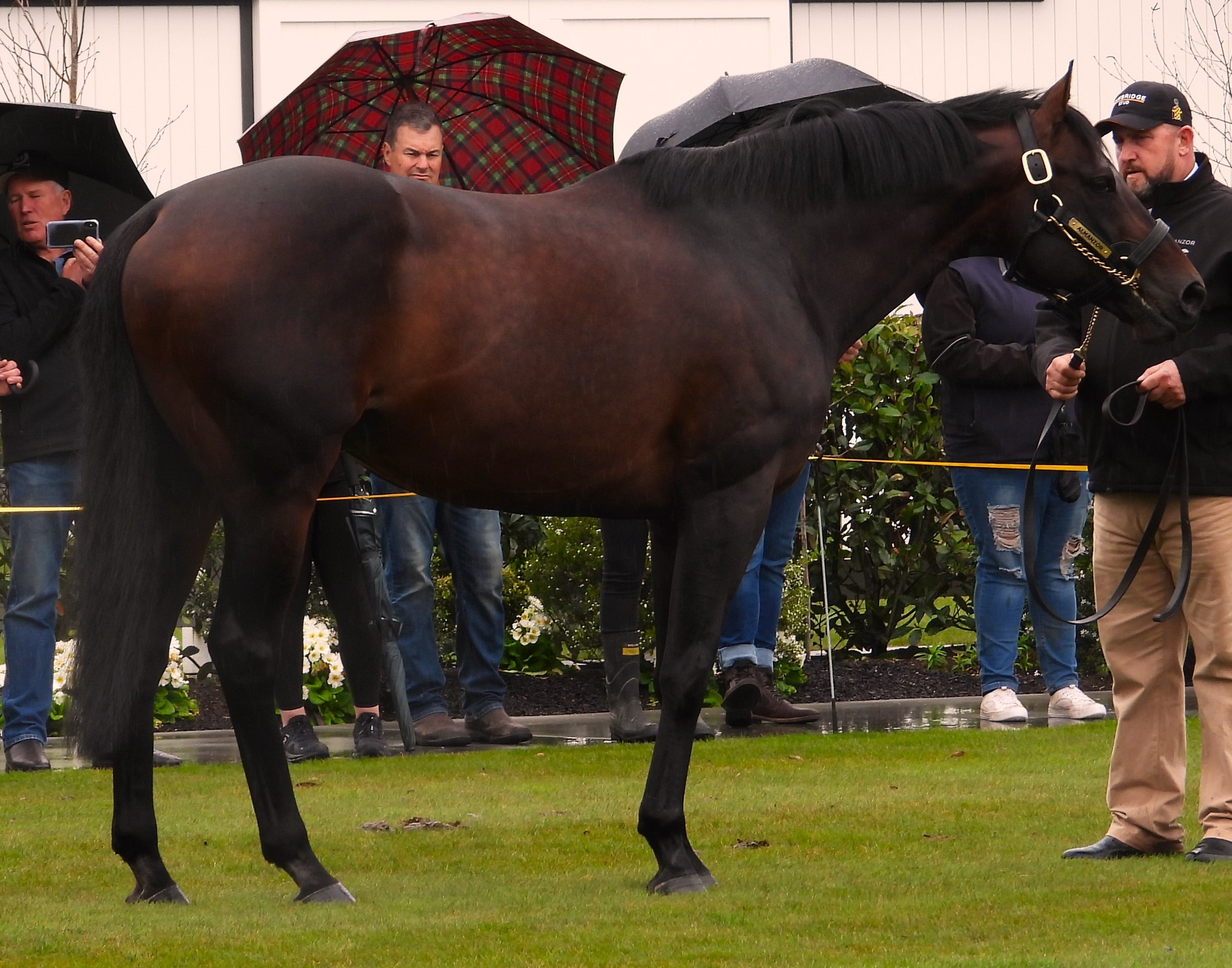


 what was apparent, then the major influences, to line @Teddy, the strain @ Carbine descendants (Spearmint) and with Hyperion from his dam @Selene (further to her sire-son influences Sickle, Pharamond, Hunter’s Moon )to another @ Bay Ronald’s line through son Dark Ronald & his son Gainsborough.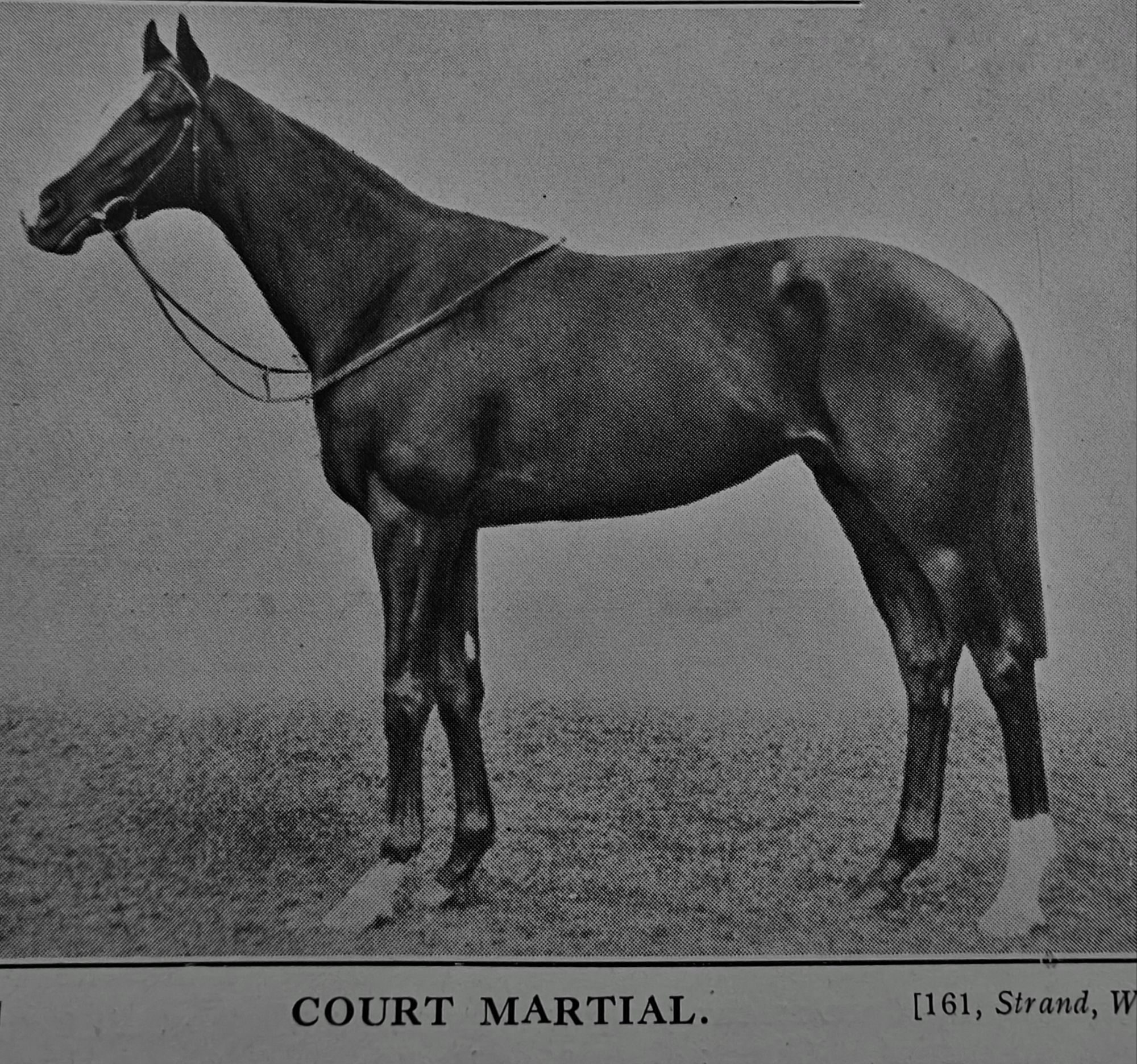



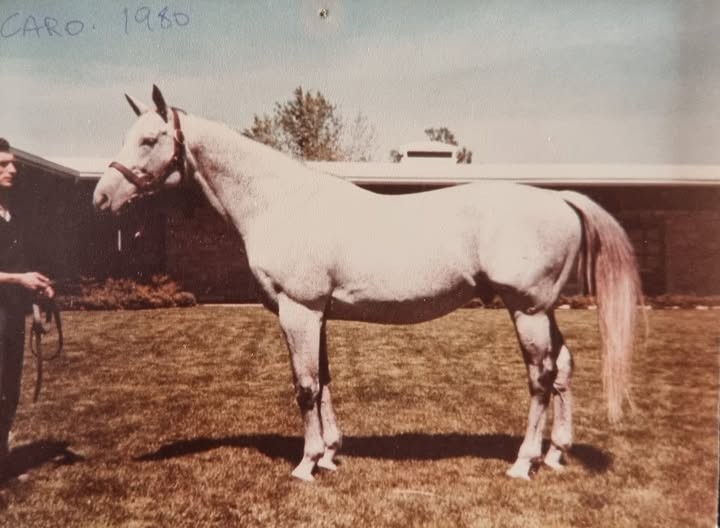



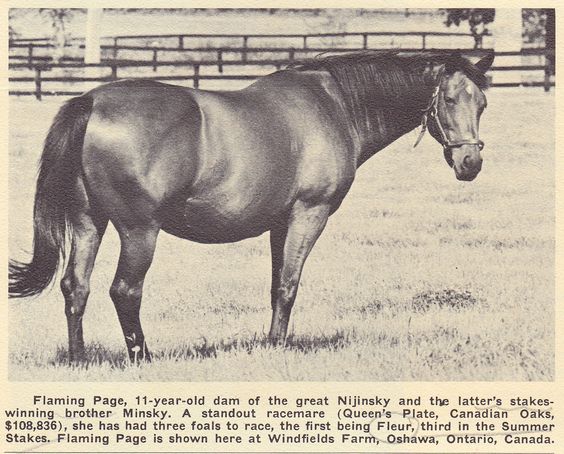
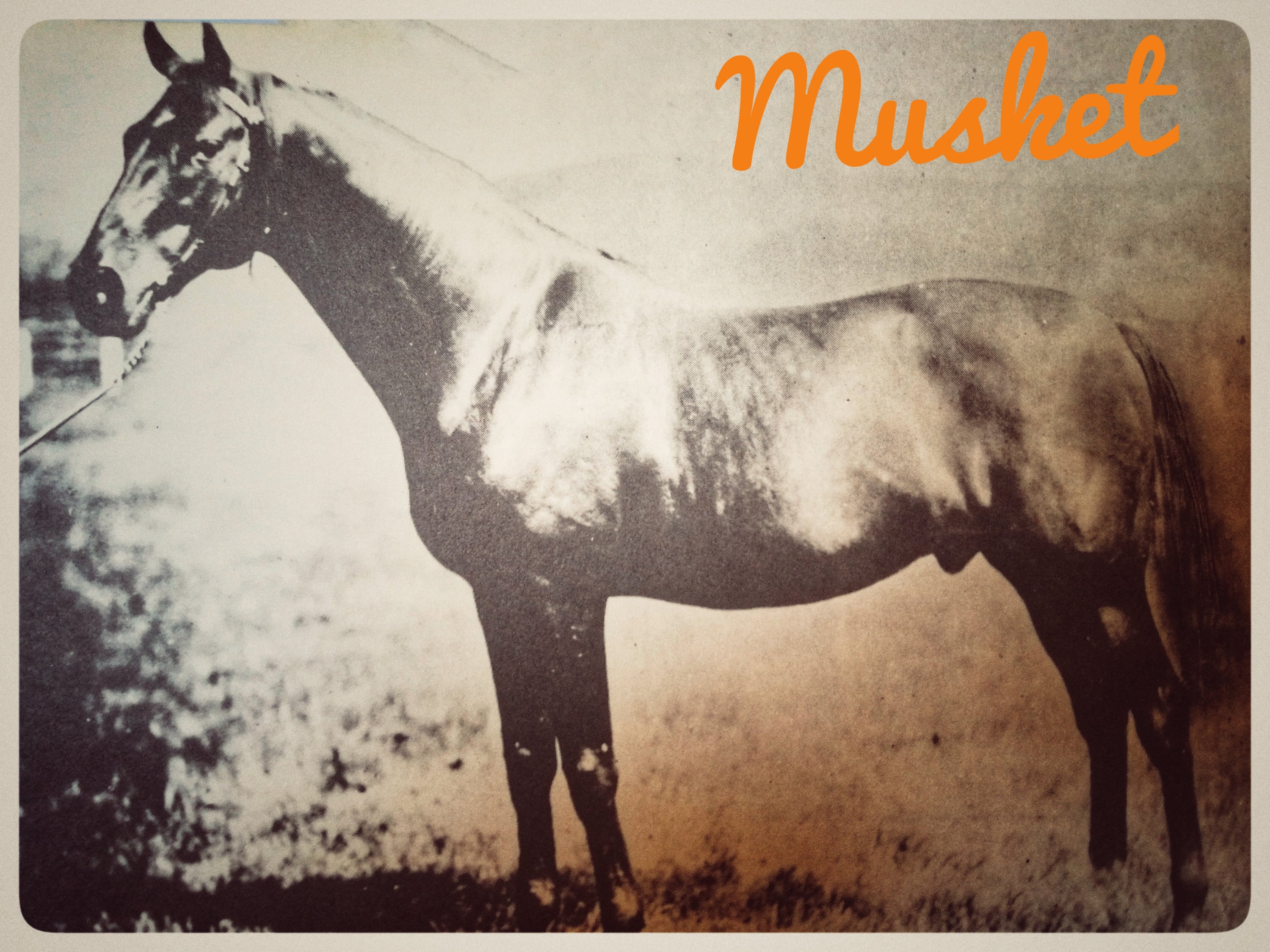


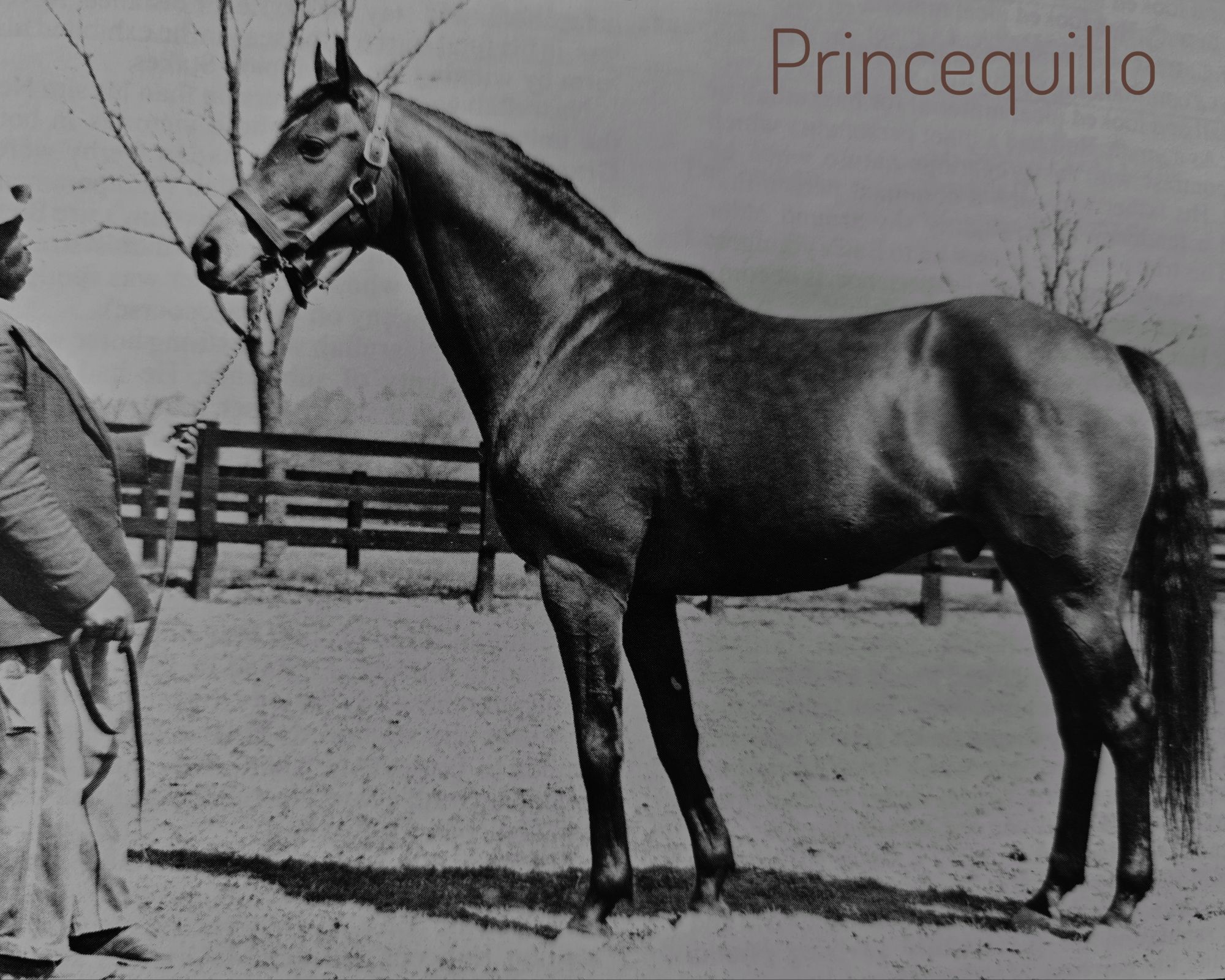


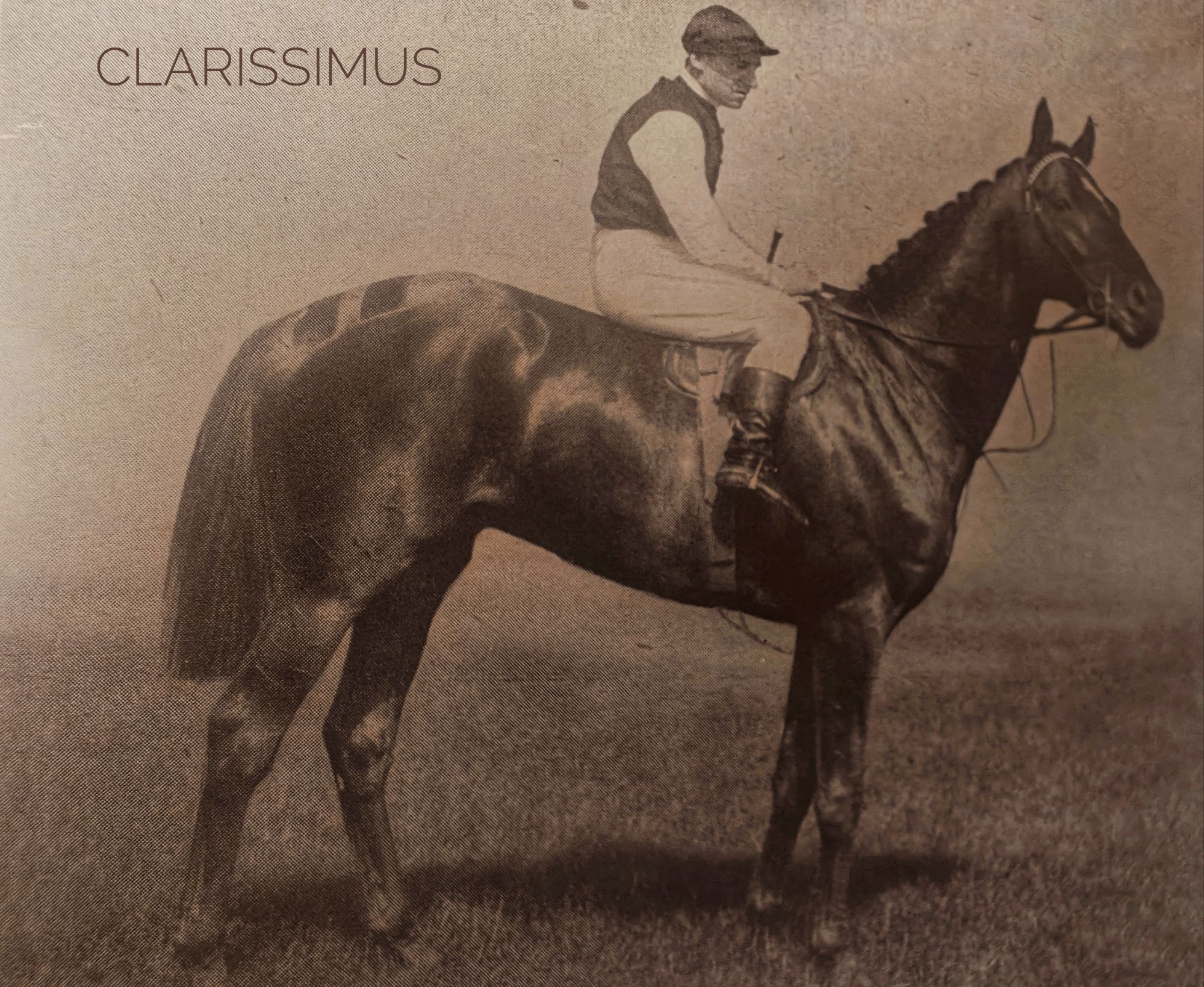
 The Thoroughbred Link